

Lasting Musculoskeletal Pain Relief in Plano: Results in 3–4 Weeks
The fastest path to musculoskeletal pain relief combines safe self-care right now (heat or ice, pacing, a topical NSAID if the pain is localized) with active, conservative treatment for lasting results: guided exercise, physical therapy, and manual therapy. Skip straight to a doctor if you notice numbness, spreading weakness, fever, or severe unrelenting pain. Major guideline bodies and many clinics that treat musculoskeletal injuries hands-on every day agree on the same order of operations: move first, medicate lightly, and save invasive procedures for when conservative care genuinely fails.
TL;DR:
- Immediate self-care methods like heat, ice, pacing, and topical NSAIDs can help manage acute pain but are not substitutes for active treatment or professional evaluation.
- Conservative approaches such as structured exercise, manual therapy, and patient education are supported by guidelines as the most effective long-term strategies before considering invasive procedures.
- Proper diagnosis relies on detailed history and physical exam, with imaging reserved for cases of suspected structural damage or systemic issues, especially when red flag symptoms are present.
- Topical NSAIDs provide modest pain relief with fewer risks than oral NSAIDs, making them the preferred initial medication outside the lower back, while opioids are rarely appropriate for routine musculoskeletal pain.
- Long-term management emphasizes strengthening, mobility, sleep, and movement habits to prevent recurrence, with response typically seen after three to six treatment visits.
Table of Contents
- What Counts as Musculoskeletal Pain?
- What Causes Musculoskeletal Pain?
- How Do Doctors Diagnose Musculoskeletal Pain?
- What Treatments Actually Reduce Musculoskeletal Pain?
- Do Topical NSAIDs and Other Medications Help?
- Practical Self-Care Steps You Can Start Today
- How Does Manual Therapy and the Fascial Distortion Model Fit In?
- When Do Injections, Surgery, or Nerve Procedures Make Sense?
- How Do You Prevent Musculoskeletal Pain From Coming Back?
- A Clinician’s View on Building a Pain Relief Plan That Sticks
- Get Hands-On, Personalized Care for Musculoskeletal Pain in Plano
- Sources
- FAQ
What Counts as Musculoskeletal Pain?
Musculoskeletal pain comes from the tissues that hold you together and let you move: muscles, tendons, ligaments, joints, bones, and fascia, the connective webbing that wraps around all of it. When any of these structures gets injured, inflamed, or overloaded, the nervous system registers it as pain, and depending on which tissue is involved, that pain can feel sharp, deep, achy, or tight.
Doctors generally split presentations into two buckets. Acute musculoskeletal pain shows up after a specific event, a lifted box, a missed step, a hard tackle, and usually improves within days to a few weeks as tissue heals. Chronic musculoskeletal pain persists past three months, often without a clear single injury, and tends to involve a mix of tissue changes and nervous system sensitization rather than ongoing damage alone.
Symptom patterns vary by site and cause:
- Muscle strains feel like a pulling or tearing sensation, often with localized tenderness and spasm that eases over one to three weeks.
- Tendon problems (like tendinitis) produce a burning or aching pain that worsens with specific movements and can linger for months if the underlying load isn’t addressed.
- Joint pain from arthritis or injury tends to bring stiffness, especially after rest, plus swelling and a grinding or catching sensation.
- Myofascial pain shows up as tight, ropy bands of muscle with tender “knots” that can refer pain to other areas, like a shoulder blade knot that radiates into the neck.
- Ligament sprains cause instability or a giving-way feeling around a joint, most common at ankles and knees.
Knowing which pattern fits your symptoms is the first real step toward the right treatment, not just guessing at ice versus heat.
What Causes Musculoskeletal Pain?
Most musculoskeletal pain falls into one of six overlapping categories, and figuring out which one you’re dealing with changes everything about treatment. Traumatic causes are sudden: a fall, a collision, a lift gone wrong. Overuse or mechanical causes build gradually from repetitive strain, poor movement patterns, or a training load that outpaces recovery. Degenerative causes, chiefly osteoarthritis, develop over years as joint cartilage wears down. Inflammatory causes involve autoimmune or systemic processes like rheumatoid arthritis. Neuropathic causes originate from nerve irritation or compression rather than the muscle or joint itself. Myofascial causes come from chronically tight, dysfunctional muscle tissue that develops trigger points.
Timing is often the clearest clue. Pain that hits instantly during an activity points to trauma. Pain that creeps in over weeks, worse at the end of a workday or after a new exercise routine, usually signals overuse. Morning stiffness that eases with movement over 30 to 60 minutes is a classic osteoarthritis pattern. Pain that radiates in a line down an arm or leg, especially with tingling or numbness, suggests a nerve is involved somewhere along that path.
Three often-overlooked factors keep musculoskeletal pain going longer than the original injury deserves:
- Poor sleep raises pain sensitivity by disrupting the body’s natural anti-inflammatory and pain-modulation cycles, so a bad week of sleep can make an old ache flare for no obvious reason.
- Mood and stress amplify pain signaling through the same neural pathways that process emotional distress, which is why pain often feels worse during a hard week at work.
- Prolonged inactivity, ironically the thing many people do to “protect” an injury, weakens supporting muscles and stiffens joints, often making pain worse over time rather than better.
This is part of why chronic pain rarely responds to rest alone. The tissues have often finished healing, but the surrounding system, sleep, mood, movement habits, hasn’t caught up.
How Do Doctors Diagnose Musculoskeletal Pain?
Diagnosis usually starts with a conversation, not a scan. A clinician asks when the pain began, what makes it better or worse, whether it radiates, and how it’s affecting daily function. That history alone narrows the likely cause considerably before anyone touches you.
The physical exam follows a logical sequence:
- Observation and palpation to find swelling, warmth, deformity, or specific tender points.
- Range-of-motion testing to see which movements reproduce or ease the pain.
- Strength and neurological testing to check for muscle weakness, altered reflexes, or sensory changes that suggest nerve involvement.
- Special orthopedic tests specific to the joint or region in question, like stress tests for ligament stability.
Imaging and lab work have a narrower role than most people assume. X-rays, MRIs, and blood tests are genuinely useful when the history or exam suggests something structural, a suspected fracture, significant trauma, or signs pointing to an inflammatory or infectious process. Ordered reflexively for ordinary back or shoulder pain, though, imaging frequently finds incidental findings (disc bulges, minor arthritis) that have nothing to do with the current pain and can actually delay recovery by making patients afraid to move.
Certain signs mean skip the wait-and-see approach entirely and get evaluated promptly:
- Fever or chills accompanying joint or muscle pain.
- Progressive weakness or numbness, especially spreading down a limb.
- New bowel or bladder changes alongside back pain.
- Severe, unrelenting pain that doesn’t ease with rest or position changes.
- Unexplained weight loss paired with persistent pain.
Any one of these warrants a same-week medical evaluation rather than a wait-and-see approach at home.
What Treatments Actually Reduce Musculoskeletal Pain?
Guidelines from major clinical bodies now consistently put active, nonpharmacologic care ahead of pills and procedures for most musculoskeletal pain, with useful self-management approaches detailed at Chronic Pain Management | Meddle. A comprehensive review on managing musculoskeletal pain lays out a tiered approach that starts with patient education and exercise, and only escalates to invasive procedures after conservative options have had a real trial. That’s not a cost-saving compromise. It reflects what actually holds up in outcome data over months and years, not just days.
The American Psychological Association’s practice guideline summary makes a similar point from a different angle: prioritizing manual therapy, physical therapy, and structured exercise reduces long-term reliance on medication, which matters given how often chronic pain management drifts toward daily pill-taking without addressing the underlying movement problem.
Structured exercise is the backbone of this approach, and it comes in a few distinct flavors depending on what’s driving the pain:
- Strengthening programs target the muscles supporting an injured joint or region, typically progressing over 6 to 12 weeks.
- Motor control exercises retrain how muscles coordinate around a joint, common for low back pain where the deep stabilizing muscles have essentially gone quiet.
- Graded activity programs slowly increase tolerance for movements or positions that currently provoke pain, useful for anyone who’s become fearful of moving a body part.
Frequency matters more than intensity early on. Two to three sessions a week of targeted exercise, even 15 to 20 minutes each, consistently outperforms occasional long sessions, because tissue and nervous system adaptation depend on regular, repeated stimulus.
Education and cognitive strategies play a bigger role than most people expect, especially for pain that’s stuck around past the three-month mark. Understanding that pain doesn’t always equal ongoing tissue damage, a genuinely hard concept for a lot of people, reduces fear-avoidance behavior that otherwise keeps someone from moving a joint that actually needs to move. Cognitive behavioral techniques, which teach patients to reframe catastrophic thoughts about pain and build coping strategies for flare-ups, show consistent benefit in chronic musculoskeletal pain when paired with physical treatment rather than used alone.
The strongest results tend to come from combining approaches rather than picking one. A typical effective plan might pair:
- Physical therapy sessions for structured, progressive exercise.
- Manual therapy (soft tissue work, joint mobilization) to reduce tissue sensitivity and improve short-term mobility.
- A home exercise program to maintain gains between visits.
- Brief patient education on pacing and realistic pain expectations.
Pro Tip: Don’t judge a conservative treatment plan by week one. Most structured exercise and manual therapy combinations need three to four weeks of consistent effort before you can fairly assess whether they’re working. Quitting at day five because nothing changed yet is the single most common reason people bounce between treatments without giving any of them a real chance.
Do Topical NSAIDs and Other Medications Help?
Topical NSAIDs are the most defensible first medication choice for most acute musculoskeletal pain outside the lower back, and the evidence behind them is stronger than many people assume for a drugstore gel.
The numbers: A 2020 systematic review and network meta-analysis found topical NSAIDs produce roughly a 1 centimeter reduction on a 10 centimeter pain scale for acute musculoskeletal pain outside the lower back, a modest but real effect, with a meaningfully better safety profile than oral NSAIDs or opioids.
That 1 centimeter shift sounds small until you factor in the safety tradeoff. Oral NSAIDs carry stomach, kidney, and cardiovascular risks with regular use, especially in older adults or anyone on blood thinners. Topical formulations deliver the anti-inflammatory effect largely at the site of application, with far less of the drug reaching the bloodstream. For a sprained ankle, sore knee, or strained shoulder, that makes a topical gel or patch a reasonable first move rather than reaching for a pill bottle.
Oral analgesics and muscle relaxants still have a place, but a narrower one than pharmacy shelves suggest. Short courses of oral NSAIDs can help with acute flares when topical formulations aren’t practical, like widespread muscle soreness after a hard workout. Muscle relaxants occasionally help break a severe acute spasm cycle for a few days, though they bring drowsiness and shouldn’t become a long-term crutch.
Opioids deserve a specific, cautionary note: they’re rarely appropriate for ordinary musculoskeletal pain. They don’t address the underlying mechanical or inflammatory problem, they carry real dependence risk, and guideline bodies have moved decisively away from recommending them outside of severe acute trauma or post-surgical recovery. If a clinician suggests an opioid for routine back or joint pain, that’s worth a second opinion.
Practical Self-Care Steps You Can Start Today
You don’t need a clinic visit to start reducing pain right now, though what you do in these first days shapes how quickly you recover.
- Choose heat or ice deliberately, not by habit. Ice works best in the first 48 hours after an acute injury to limit swelling; heat works better for muscle tightness, stiffness, and chronic aches by increasing blood flow and relaxing tissue.
- Modify activity instead of stopping it entirely. Complete rest beyond a couple of days for most musculoskeletal pain tends to slow recovery. Swap the aggravating movement for a tolerable version rather than doing nothing.
- Pace deliberately. Break tasks into shorter bouts with breaks before pain spikes, rather than pushing through until you have to stop.
- Start graded activity gradually. If walking aggravates a hip or knee, begin with 10 minutes at an easy pace, add 5 minutes every few days as tolerated, and back off only if pain sharply worsens rather than mildly increases.
- Protect your sleep. Stanford’s pain medicine program specifically flags improved sleep alongside gentle exercise and stretching as a core lever for symptom control, not an afterthought.
- Stay hydrated and keep moving through the day. Sitting still for long stretches stiffens joints and tightens fascia; standing or walking for a few minutes every hour helps more than most people expect.
- Apply a topical NSAID for localized pain, following label directions, and combine it with movement rather than using it as a substitute for exercise.
Pro Tip: If you’re not sure whether to push through discomfort or back off, use the “mild increase, quick fade” rule. A little extra soreness that settles within an hour of finishing an activity is generally fine to work through. Sharp pain, or soreness that lingers and builds the next day, means you scaled up too fast.
Home strategies for specific regions help too. Shoulder blade pain, for instance, often responds well to a short routine of scapular stretches and postural exercises you can do at a desk, detailed in Thetxroom’s shoulder blade pain guide. Hip pain from early osteoarthritis follows a similar logic: targeted movement, not rest, tends to preserve function longer, an approach covered in managing hip osteoarthritis without surgery.
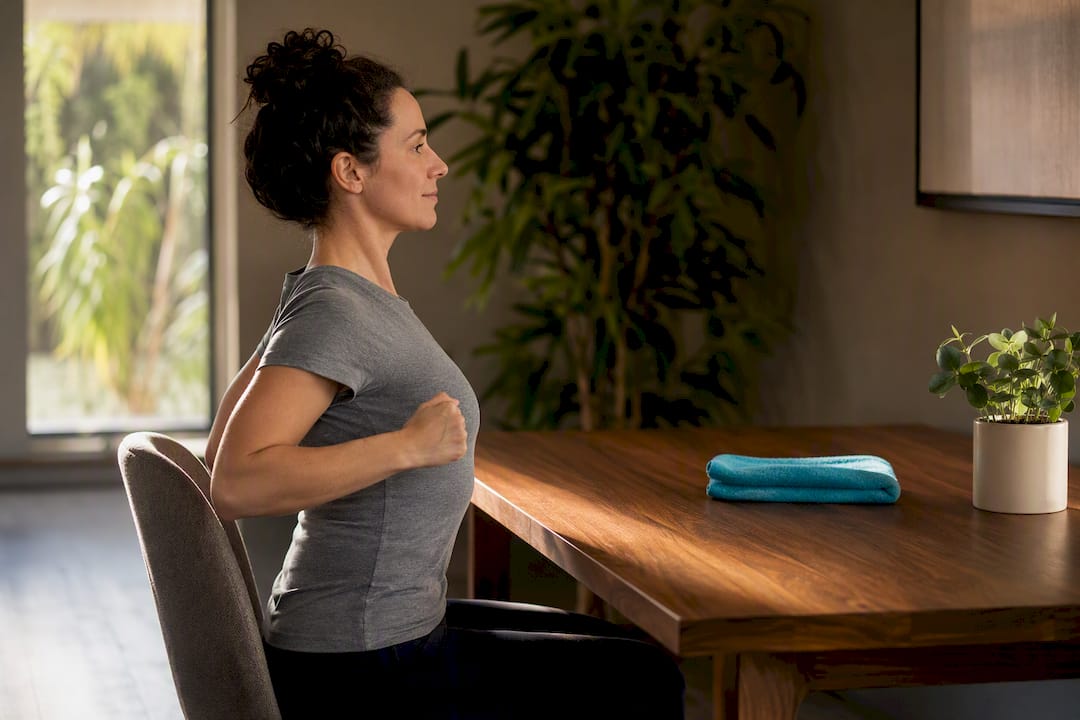
None of this replaces a clinician’s assessment if pain is severe, worsening, or accompanied by any red flag symptoms. But for the ordinary strain, sore back, or achy joint that most people deal with, these steps address the majority of what’s actually within your control.
How Does Manual Therapy and the Fascial Distortion Model Fit In?
Manual therapy works, in part, by changing how the nervous system processes pain signals from a tissue, not simply by “fixing” a structural problem with hands-on pressure. Research into the mechanisms behind manual therapy describes multisystem responses, neurological and neuroimmune, that occur when tissue is mobilized, though a living review published in PLOS One is candid that the precise mechanisms and how they translate into lasting clinical benefit aren’t fully mapped yet. That’s an honest limitation, and it’s exactly why manual therapy works best as one part of a plan rather than the whole plan.
The IASP taskforce’s 2024 review frames this well: manual therapy should be positioned as an integrative, person-centered tool that supports active patient participation, not a passive treatment someone simply receives while lying still. Hands-on techniques work best paired with exercise and self-management, not instead of them.
The Fascial Distortion Model is an approach to soft tissue injury through the lens of specific, identifiable distortions in the fascia, the connective tissue wrapping muscles, tendons, and joints. FDM treatment involves direct, hands-on manipulation of the affected fascial tissue, targeting the specific distortion pattern a patient presents with rather than applying a generic massage or stretch protocol.
FDM work is often paired deliberately with rehabilitation rather than delivered as a standalone fix. A typical course of care might involve:
- An initial assessment to identify the specific fascial distortion patterns and biomechanical imbalances contributing to pain.
- Hands-on FDM treatment sessions, often producing noticeable mobility changes within the same visit.
- A home exercise or movement program to reinforce gains between sessions.
- Reassessment every few visits to track progress and adjust the plan.
Reasonable expectations matter here. A single visit rarely resolves a chronic issue that took months to develop, and the research on manual therapy mechanisms supports pairing hands-on work with active movement retraining rather than treating it as a cure-all. For conditions rooted in longstanding muscle dysfunction, an approach like Active Release Treatment is often framed around a defined course, commonly in the range of two to six visits, with progress tracked at each session rather than left to guesswork.
When Do Injections, Surgery, or Nerve Procedures Make Sense?
Invasive interventions belong in a specific, fairly narrow lane: structural problems that conservative care genuinely cannot fix, or cases where a trial of exercise, manual therapy, and medication has failed to produce meaningful improvement over a reasonable timeframe, typically six to twelve weeks depending on the condition.
Injections, corticosteroid or otherwise, tend to make the most sense for significant inflammatory flares in a joint that hasn’t responded to other measures, or as a bridge to make exercise-based rehab tolerable when pain is otherwise too severe to participate. Surgery becomes the right conversation for structural instability, like a torn ligament that leaves a joint genuinely unstable, severe nerve compression causing progressive weakness, or a fracture requiring stabilization. Neuromodulation procedures, which target nerve signaling directly, are generally reserved for chronic pain that hasn’t responded to extensive conservative treatment and where imaging or nerve studies have identified a clear target.
The expected pathway, even when surgery or injections eventually happen, almost always includes a documented trial of conservative care first. That’s not bureaucratic gatekeeping. Insurance requirements aside, outcome data consistently shows better long-term results when patients build strength and movement capacity before or alongside an invasive procedure rather than skipping straight to it. A knee replacement, for example, tends to go better and recover faster in a patient who entered surgery with reasonable quadriceps strength.
If you’re heading into a specialist consultation for a disc injury, a tendon that’s failed conservative care, or another structural concern, worthwhile questions include: What’s the expected recovery timeline? What happens if I wait and continue conservative treatment instead? What does rehab look like after this procedure, and how does its success rate compare between patients who prepared with prehab exercise versus those who didn’t? Clinics that treat structural issues like disc injuries regularly walk patients through exactly this kind of decision tree before any referral.
How Do You Prevent Musculoskeletal Pain From Coming Back?
Long-term management comes down to keeping tissues strong and adaptable, not just pain-free in the moment. Musculoskeletal conditions rank among the leading causes of disability worldwide according to the World Health Organization, which underscores why prevention deserves as much attention as treatment.
A maintenance program doesn’t need to be elaborate. Two strength sessions a week targeting the muscles around commonly injured joints, hips, shoulders, core, plus daily mobility work for five to ten minutes covers most of what prevents recurrence. The goal isn’t building peak fitness; it’s keeping tissue resilient enough to handle everyday demands without breaking down.
Simple corrections to daily habits often prevent more pain than any single treatment:
- Set up your workstation so your monitor sits at eye level and your forearms rest roughly parallel to the floor, reducing neck and shoulder strain.
- Change positions every 30 to 45 minutes rather than holding one posture for hours, since static loading, not movement itself, is usually what irritates tissue.
- Lift with your legs and keep loads close to your body, a basic principle that prevents a large share of acute back strains.
- Warm up before activity that’s new or more intense than usual, giving tissue a chance to adapt gradually rather than absorbing full load cold.
Early signs of recurrence are worth taking seriously rather than pushing through out of frustration. Stiffness that returns in the same joint, a familiar ache after activities that previously felt fine, or pain that lingers more than a couple of days after a workout all warrant a check-in with a clinician before the pattern re-establishes itself. Catching a flare early, before it becomes a full setback, is almost always faster and easier to resolve than waiting for it to worsen.
A Clinician’s View on Building a Pain Relief Plan That Sticks
The first visit tells you more than any intake form. What matters isn’t just where it hurts, it’s what movements provoke it, what the patient has already tried, and how their daily routine either supports or sabotages recovery. Goals get set together, not handed down: a weekend athlete wants to return to their sport, a warehouse worker needs to lift safely for an eight-hour shift, and those two plans should look nothing alike even if the diagnosis is similar.
Passive-only care, ice, rest, an occasional massage, tends to plateau fast because it never asks the tissue to adapt. Pairing hands-on work with active rehab consistently outperforms either approach alone, largely because the manual therapy buys mobility and reduced sensitivity in the moment, while the exercise program builds the capacity that keeps the improvement from evaporating.
Realistic progress markers matter more than people expect. Most patients notice meaningful change within three to six visits, not one. If nothing shifts by then, the plan needs to change, not the patient’s effort.
— Chris
Get Hands-On, Personalized Care for Musculoskeletal Pain in Plano
Thetxroom treats musculoskeletal pain the way this article just laid out: hands-on Fascial Distortion Model therapy paired with a rehab plan built for your specific injury, not a generic protocol handed to everyone who walks in with back pain.
A first visit at Thetxroom starts with a thorough assessment to identify the fascial distortions and biomechanical imbalances driving your pain, whether that’s sciatica, plantar fasciitis, a stubborn shoulder strain, or a nagging low back issue. From there, treatment combines direct FDM work with a tailored exercise plan designed to get you back to your normal activity level, not just quieter pain for a week. For readers dealing with a specific structural concern, conditions like sprains and strains or tendinitis respond particularly well to this combined approach. If you’re in Plano and ready for a clinician-led plan instead of another round of guessing, book an evaluation for back pain relief and find out what a targeted, hands-on plan looks like for your specific injury.
This article is general information, not a substitute for advice from a qualified doctor. Consult a qualified healthcare professional about your own circumstances before acting on anything here.
Sources
- Topical NSAIDs systematic review — Annals/Internal Medicine (2020)
- APA practice guideline summary on chronic musculoskeletal pain (2025)
- Management of Musculoskeletal Pain: An Update (PMC)
FAQ
How Long Does Musculoskeletal Inflammation Last?
Acute inflammation from a minor strain or sprain typically peaks within 48 hours and settles over one to three weeks; inflammation tied to chronic conditions like osteoarthritis can persist intermittently for months without proper management.
What Is the Best Analgesic for Musculoskeletal Pain?
For most acute musculoskeletal pain outside the lower back, topical NSAIDs offer the best balance of modest pain relief and safety compared to oral NSAIDs or opioids, which carry higher risk for regular use.
How Do You Manage Aches and Pains as You Get Older?
Consistent, moderate strength and mobility exercise, about two sessions a week, paired with attention to sleep and posture, does more for age-related aches than rest or medication alone, according to guideline reviews on conservative chronic pain management.
How Do You Fix Musculoskeletal Pain?
There’s rarely a single fix. The most reliable path combines active treatment, structured exercise, physical therapy, and manual therapy like FDM, with self-care basics such as pacing, sleep, and appropriate use of topical medication, escalating to injections or surgery only if conservative care fails.
When Should I See a Doctor for Musculoskeletal Pain?
Seek prompt medical care if you notice fever, progressive numbness or weakness, new bowel or bladder changes, unrelenting severe pain, or unexplained weight loss alongside your symptoms.