
Pulled Muscle: First 72 Hours, Recovery Times, and Hands On Care
A muscle pull, medically called a muscle strain, is an overstretching or tearing of muscle or tendon fibers. Treat it right away by protecting the area, avoiding the motion that caused it, and starting basic self-care. Clinicians grade strains from I (mild) to III (complete rupture), so how you treat it depends on severity.
TL;DR:
- Mild strains (Grade I) typically heal within a few weeks with proper home care, while Grade II injuries may take several weeks to months to recover.
- Severe injuries, such as Grade III complete tears, often require four to six months and sometimes surgical repair for full recovery.
- Prompt medical attention is crucial if there is complete loss of function, neurological symptoms, or visible injury deformities.
- Effective home treatment involves protecting the area, applying ice, compression, elevation, and gradually reintroducing gentle movement within pain limits.
- Incorporating professional rehab and hands-on therapy can shorten recovery time, especially for persistent or complex strains.
Table of Contents
- What Counts as a Muscle Pull, and How Serious Is Yours?
- Symptoms: How to Tell a Mild Pull From a Serious Tear
- What Causes a Muscle Pull, and Who’s at Risk?
- When Should You See a Doctor for a Pulled Muscle?
- How to Treat a Muscle Strain at Home
- How Long Does It Take to Recover From a Muscle Pull?
- How to Prevent Muscle Strains From Happening Again
- When Hands-On Clinic Care Helps With a Muscle Pull
- What Actually Matters When You’re Recovering From a Strain
- Get Hands-On Treatment for Your Muscle Strain in Plano
- Sources
What Counts as a Muscle Pull, and How Serious Is Yours?
A muscle pull happens when fibers in a muscle, or the tendon connecting it to bone, get stretched past their limit or tear. That’s different from a sprain, which injures a ligament connecting bone to bone rather than muscle tissue, though the two can feel nearly identical to the person lying on the ground clutching their hamstring.
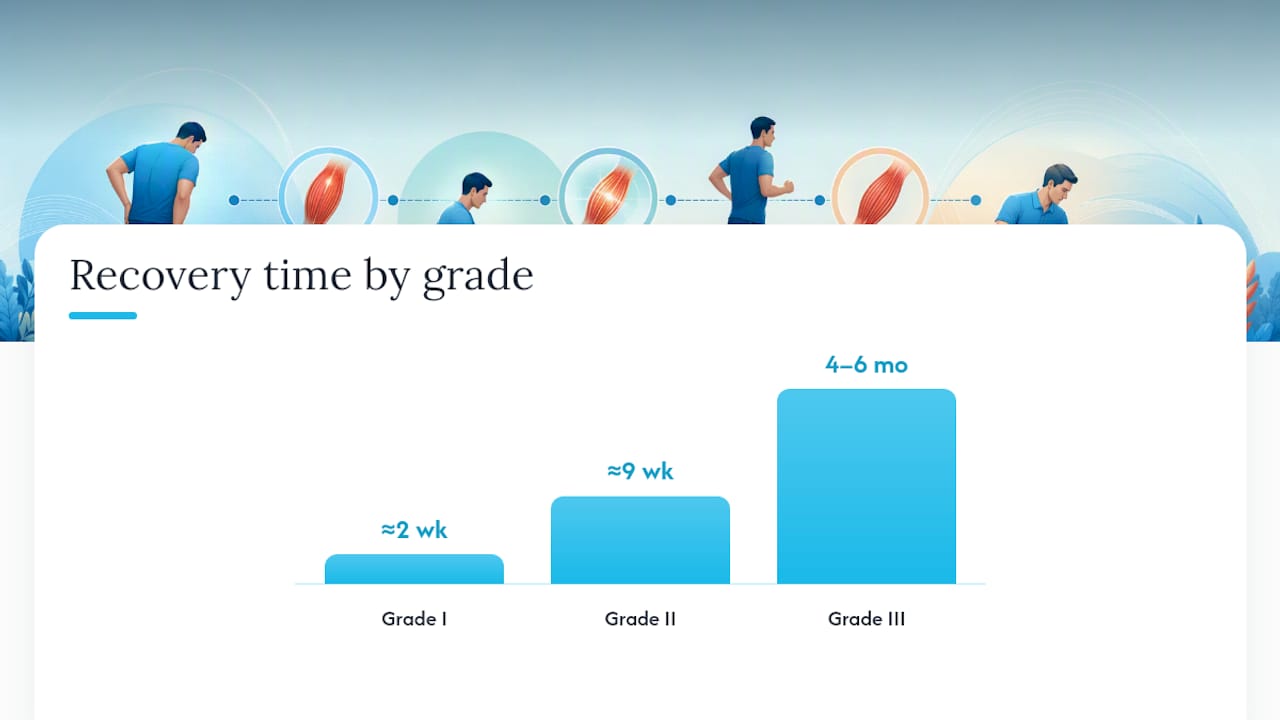
Clinicians sort muscle strains into three grades. Grade I means a mild overstretch with a few damaged fibers. It usually heals within a few weeks. Grade II involves a partial tear, more fibers affected, and a healing window that stretches from several weeks to a few months. Grade III is a complete rupture. That level of damage can take four to six months to heal and sometimes requires surgical repair.
Symptoms: How to Tell a Mild Pull From a Serious Tear
Most strains announce themselves with a cluster of familiar signs. Pain sharpens with movement, swelling shows up within hours, and bruising often follows a day or two later as blood works its way toward the skin.
Watch for these signals, since they tell you how urgently you need care:
- Sudden, localized pain at the moment of injury, sometimes described as a pull or tug
- Swelling and stiffness that worsen over the first 24 to 48 hours
- Muscle spasms or cramping near the injured area
- Noticeable weakness when you try to use the muscle normally
A few signs point to something more serious than a garden-variety pull. An audible “pop” at the moment of injury, a visible dent or gap under the skin, and the inability to move the limb at all are classic markers of a complete tear. Try a gentle, pain-free range of motion and compare strength side to side. A dramatic difference between the injured side and the healthy one is worth getting checked.
What Causes a Muscle Pull, and Who’s at Risk?
Two very different mechanisms lead to the same injury. Acute strains come from a single forceful event: sprinting off the line, lifting something awkwardly, or catching yourself in a fall. Chronic strains build slowly, usually from repetitive overuse or biomechanics that put uneven stress on a muscle group over weeks or months.
Certain factors stack the odds against you. Skipping a warm-up, training while fatigued, carrying a strength imbalance between opposing muscle groups, and returning to activity too soon after a prior injury all raise your risk. Strains tend to cluster in a handful of predictable spots, including the lower back, hamstrings, calves, and shoulders, largely because those muscles cross joints that take on heavy or repetitive loads.
When Should You See a Doctor for a Pulled Muscle?
Most mild strains don’t need imaging. A clinician can usually diagnose one from your description of the injury plus a physical exam checking range of motion, strength, and tenderness at the site. Imaging enters the picture when the diagnosis is unclear or when the injury looks severe enough to need surgical planning. Ultrasound and MRI can both show the extent of a tear, while an X-ray rules out a fracture near the injury site.
Certain symptoms deserve prompt medical attention rather than a wait-and-see approach:
- Complete loss of function in the limb or muscle
- Numbness, tingling, or other neurological symptoms
- Severe or rapidly expanding swelling and bruising
- A visible gap or deformity under the skin
If any of those show up, skip the home remedies and get evaluated.
How to Treat a Muscle Strain at Home
The first few days matter most. Standard advice follows a simple sequence, often shortened to RICE: protect the area, rest it, ice it, compress it, and elevate it above heart level when possible.
- Protect the injured muscle by avoiding the movement that caused the strain.
- Ice the area for short intervals, always wrapped in a thin towel to prevent skin damage, several times a day during the first 24 to 72 hours.
- Apply a compression wrap to limit swelling, keeping it snug but not tight enough to cut off circulation.
- Elevate the limb when you’re resting to help fluid drain away from the injury.
- Introduce gentle, pain-free movement once the sharpest pain has faded, rather than staying still indefinitely.
On medication, NSAIDs like ibuprofen can ease pain and inflammation, but they’re not right for everyone. People with kidney disease or a history of gastrointestinal bleeding should generally avoid them and use acetaminophen instead, since it controls pain without the same anti-inflammatory mechanism or the same stomach and kidney risks.
Pro Tip: Don’t confuse “rest” with “don’t move at all.” Prolonged bed rest can actually slow healing and lead to stiffness. Once acute pain eases, gentle, guided movement helps restore function faster than staying still.
Once swelling has settled, a physical therapist or chiropractor experienced in soft-tissue rehab can guide you through the strengthening phase so you don’t reinjure the area by rushing back too soon.
How Long Does It Take to Recover From a Muscle Pull?
Recovery time tracks closely with the grade of injury. A Grade I strain often resolves within a couple of weeks. Grade II injuries typically need several weeks to a few months before the muscle is back to full strength. Grade III tears are the outlier: expect four to six months, sometimes longer if surgery is part of the picture.
Rehab tends to move through three checkpoints: pain-free use during daily activity, restored strength that matches the uninjured side, and finally sport- or work-specific movements at full intensity. Skipping ahead of that sequence is the single most common reason people re-strain the same muscle. Progressive loading, adding stress gradually rather than all at once, is what separates a full recovery from a nagging injury that keeps coming back.
How to Prevent Muscle Strains From Happening Again
Prevention isn’t just about stretching before you exercise, though that helps. It’s about correcting the underlying patterns that made you vulnerable in the first place.
- Warm up with dynamic movements, like leg swings or walking lunges, rather than static stretching alone.
- Build strength progressively, giving muscles time to adapt to new loads instead of jumping straight to heavy lifting or sprinting.
- Address strength imbalances between opposing muscle groups, since uneven loading is a common root cause of repeat strains.
- Review your workload and technique with a professional if the same muscle keeps getting injured.
A stretching and mobility routine built around your specific activity, rather than a generic five-minute warm-up, does more to prevent chronic strains than any single stretch ever will.
When Hands-On Clinic Care Helps With a Muscle Pull
Home care resolves most mild strains, but some injuries respond faster with hands-on treatment. At Thetxroom, treatment uses the Fascial Distortion Model, a manual therapy approach that targets the connective tissue surrounding an injured muscle rather than just the muscle itself. Patients dealing with Grade II strains, recurring injuries, or strains that plateau despite home care tend to benefit most from an in-person assessment. Hands-on treatment doesn’t replace home rehab. It coordinates with it, often shortening the path back to pain-free movement by identifying imbalances a mirror can’t show you.
What Actually Matters When You’re Recovering From a Strain
Most people either baby a strain for too long or rush back too fast, and both mistakes extend recovery rather than shortening it. The data on controlled movement is clear enough that “just rest it” is outdated advice for the vast majority of strains.
— Chris
Get Hands-On Treatment for Your Muscle Strain in Plano
If a pulled muscle isn’t improving with rest, ice, and time, that’s usually a sign it needs more than a heating pad. Thetxroom offers direct, in-person evaluation for strains, sprains, and the soft-tissue injuries that don’t respond well to generic advice.
At your first visit, expect a hands-on assessment of the injured muscle, an explanation of what grade of strain you’re dealing with, and a treatment plan built around Fascial Distortion Model techniques paired with a tailored rehab plan for your specific injury and activity level. This approach works for athletes trying to get back to training and for anyone whose lower back, hamstring, or calf strain just won’t quiet down. If you’re dealing with a strain that’s lingering past the point it should, visit the Sprains & Strains page to see how Thetxroom treats these injuries, and book an evaluation to get a clear read on what’s actually going on with your muscle.
Sources
This article draws on clinical reference material from the Cleveland Clinic, Mayo Clinic, Harvard Health, MedlinePlus, and WebMD. These are established medical reference sources, not marketing content, and they underpin the grading system, treatment guidance, and recovery timelines described above.
This article is general information, not a substitute for advice from a qualified doctor. Consult a qualified healthcare professional about your own circumstances before acting on anything here.
- Muscle Strains: Causes, Symptoms, Treatment & Recovery — Cleveland Clinic
- Muscle strains – Symptoms and causes — Mayo Clinic
- Muscle strain A to Z — Harvard Health
- Muscle strain: Symptoms, Tests, and Treatment — WebMD