
Where Hip Pain Hurts: Try Physical Therapy 4–6 Weeks Before Imaging
Hip pain usually traces back to a handful of causes: osteoarthritis, bursitis, tendonitis, or a labral tear, most of which respond to rest, ice, and time. If the pain follows a fall, leaves you unable to bear weight, or comes with fever or visible deformity, that’s a signal to get seen right away, not tomorrow. For everything short of that, the Mayo Clinic and standard AAFP guidance both point the same direction: start conservative, and let your body’s response guide the next step.
TL;DR:
- Rest, ice, and NSAIDs are effective for most non-traumatic hip pain, but urgent care is needed if pain follows major trauma or involves fever or deformity.
- Location of pain helps determine the cause; front pain suggests joint issues, outer pain points to bursitis or tendinitis, and radiating pain often originates from the spine.
- Conservative treatments like physical therapy, activity modification, and injections should be tried for four to six weeks before considering surgery or advanced imaging.
- Persistent or worsening symptoms after conservative care, especially with red flags, require timely referral to a specialist for further evaluation.
- Proper diagnosis relies heavily on detailed pain description and targeted physical assessment rather than broad imaging or injections alone.
Table of Contents
- Common Causes of Hip Pain by Age and Activity
- How Pain Location Points to a Diagnosis
- Diagnosing Hip Pain and Red Flags That Need Urgent Care
- Treating Hip Pain: What to Try First and What Comes Next
- Why Physical Therapy Is Usually the First Real Treatment
- Preventing Hip Pain and Knowing When to See a Specialist
- The Tx Room’s Approach to Persistent Hip Pain
- What Actually Matters Once You Cut Through the Noise
- Sources
Common Causes of Hip Pain by Age and Activity
Hip pain rarely has one cause. It has a cause that fits your age, your activity level, and whether something specific happened to trigger it. A 65-year-old with morning stiffness that eases after twenty minutes is telling a different story than a 24-year-old runner with a sharp catch in the groin.
Here’s how the usual suspects break down:
- Osteoarthritis — cartilage wear that builds slowly, most common after 50, worse with activity and at the end of the day.
- Labral tears — cartilage rim damage in the joint, common in athletes who pivot or squat, often felt as clicking or catching.
- Bursitis — inflamed fluid sacs on the outside of the hip, frequently from repetitive motion or direct pressure (sleeping on that side).
- Tendonitis — overuse irritation of the tendons around the hip, common in runners and cyclists ramping up mileage too fast.
- Stress or fragility fractures — small cracks from repetitive load (athletes) or weakened bone (older adults), can worsen quickly without imaging.
- Avascular necrosis — loss of blood supply to the femoral head, less common but serious, tends to progress if missed.
- Referred spine pain — a lumbar disc or nerve issue that radiates into the hip or buttock rather than originating there.
Trauma changes the calculus fast. A twisted ankle that pulls the hip is different from a fall directly onto the joint. Fractures, avascular necrosis, and advanced arthritis are the three causes that almost always need imaging before anyone can say for certain what’s going on.
How Pain Location Points to a Diagnosis
Where it hurts narrows the list faster than almost anything else you can report to a clinician. Front-of-hip or groin pain usually points to something happening inside the joint itself, arthritis, a labral tear, or early impingement. Outer hip pain, especially the kind that flares when you lie on that side at night, tends to mean bursitis or a strained abductor tendon. Buttock or lower-back pain that radiates down the leg often isn’t a hip problem at all; it’s a spine issue referring pain into the hip region.
A few accompanying symptoms are worth flagging specifically:
- Locking or catching — suggests a labral tear or loose cartilage fragment.
- Instability or giving way — can indicate ligament laxity or a more advanced labral injury.
- Morning stiffness lasting over 30 minutes — a classic arthritis marker.
- Visible swelling — less common in hip issues than knee issues, but worth reporting immediately if present.
Pro Tip: Track exactly when the pain shows up, first step out of bed, after sitting, mid run, and where. That detail alone often tells a clinician more than a description of the pain’s intensity.
Location-based screening matters because the hip pain overview from MedlinePlus treats pain mapping as a genuine diagnostic step, not a formality. Clinicians who skip it end up chasing the wrong tissue.
Diagnosing Hip Pain and Red Flags That Need Urgent Care
Most hip pain evaluations follow the same sequence, and knowing it helps you understand what your provider is doing and why.
- History first. When did it start, what triggered it, and what makes it better or worse.
- Focused physical exam. Range of motion, strength testing, and specific maneuvers that stress different structures (labrum, bursa, tendons).
- X-ray if warranted. Usually the first imaging step for suspected fracture, arthritis, or bony abnormality.
- MRI, CT, or ultrasound when needed. Reserved for soft-tissue detail (labral tears, tendon tears) or when X-ray doesn’t explain the symptoms.
- Labs in select cases. Ordered if infection or inflammatory arthritis is suspected.
Here’s where this stops being a wait-and-see situation. Seek immediate medical attention if hip pain follows a significant fall, if you can’t bear weight or move the leg, or if it comes with fever, chills, severe swelling, or a change in skin color around the joint, all recognized emergency indicators from the Mayo Clinic. A visibly deformed or shortened leg after an injury means the ER, not a next-week appointment.
For everything less urgent, the right first call depends on the picture. Gradual onset with no trauma usually starts with primary care. Sports-related pain in an active adult fits sports medicine. Suspected arthritis or unclear joint pain often lands with orthopedics, and pain with swelling in multiple joints deserves a rheumatology look.
Treating Hip Pain: What to Try First and What Comes Next
Most hip pain that isn’t tied to trauma responds to conservative care before anything else gets considered, and skipping straight to imaging or injections is rarely necessary. The Cleveland Clinic recommends starting with the basics and giving them real time to work.
- Rest and activity modification — cut back on the motion that provokes it, but don’t go fully sedentary.
- Ice — 10 to 15 minutes every hour on day one, then every three to four hours after that.
- OTC NSAIDs — standard for inflammation, but avoid continuous use past about 10 days without checking with a provider.
- Topical anti-inflammatories — a reasonable option for people who want to limit oral medication.
If home care isn’t enough after a few weeks, injections (corticosteroid or, in some cases, PRP) sometimes get added to the plan. Here’s the practical detail most people never hear: if a targeted injection produces no improvement within about 10 days, that’s often a sign the injected tissue wasn’t the actual source of the pain, prompting a second look at the diagnosis rather than a repeat injection, per guidance from the Hospital for Special Surgery.
Surgery enters the conversation for fractures, severe osteoarthritis unresponsive to conservative care, or mechanical problems like labral tears that don’t improve with rehab. Arthroscopy addresses specific soft-tissue damage with a shorter recovery; replacement is reserved for joints too damaged to preserve. For labral-specific cases, a stepwise conservative plan is often worth exhausting first.
Pro Tip: Keep a simple log, date, activity, pain level, what helped. Bring it to your appointment. It turns a vague “it still hurts” into data your provider can actually act on.
Why Physical Therapy Is Usually the First Real Treatment
Physical therapy isn’t a placeholder before “real” treatment; for most mechanical hip pain, it is the real treatment. High-quality evidence backs PT as the primary non-surgical approach for mild-to-moderate hip osteoarthritis, with meaningful gains in function and pain reduction, according to AAFP practice guidelines.
A typical program includes:
- Progressive strengthening — targeting the glutes and hip stabilizers that often weaken quietly before pain even shows up.
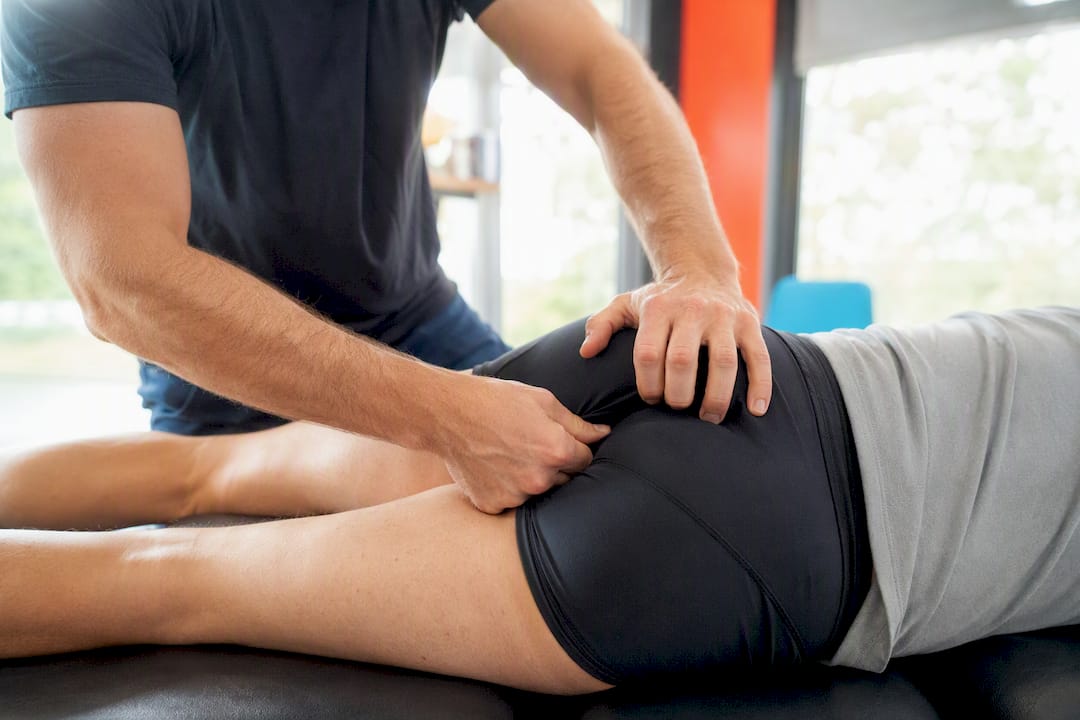
- Manual therapy — hands-on work to improve joint mobility and reduce muscle guarding.
- Gait and mechanics correction — fixing the movement pattern that’s overloading the joint in the first place.
- A home exercise plan — the part that actually determines whether gains stick.
Pro Tip: Give a PT program four to six weeks before judging it. Soft-tissue and mechanical issues improve gradually, not overnight, and bailing early is the most common reason people conclude “PT didn’t work.”
PT tends to succeed fastest in mild-to-moderate cases and pairs naturally with injections or, if needed, surgery, rather than competing with them.
Preventing Hip Pain and Knowing When to See a Specialist
Prevention comes down to load management: maintain a healthy weight, cross-train instead of repeating the same motion daily, and increase activity intensity gradually rather than in jumps. Runners and lifters ramping up volume should pay attention to how progressive loading affects joint stress, since sudden increases are a common trigger for tendonitis and bursitis. A few simple hip mobility movements done consistently can also head off stiffness before it becomes pain.
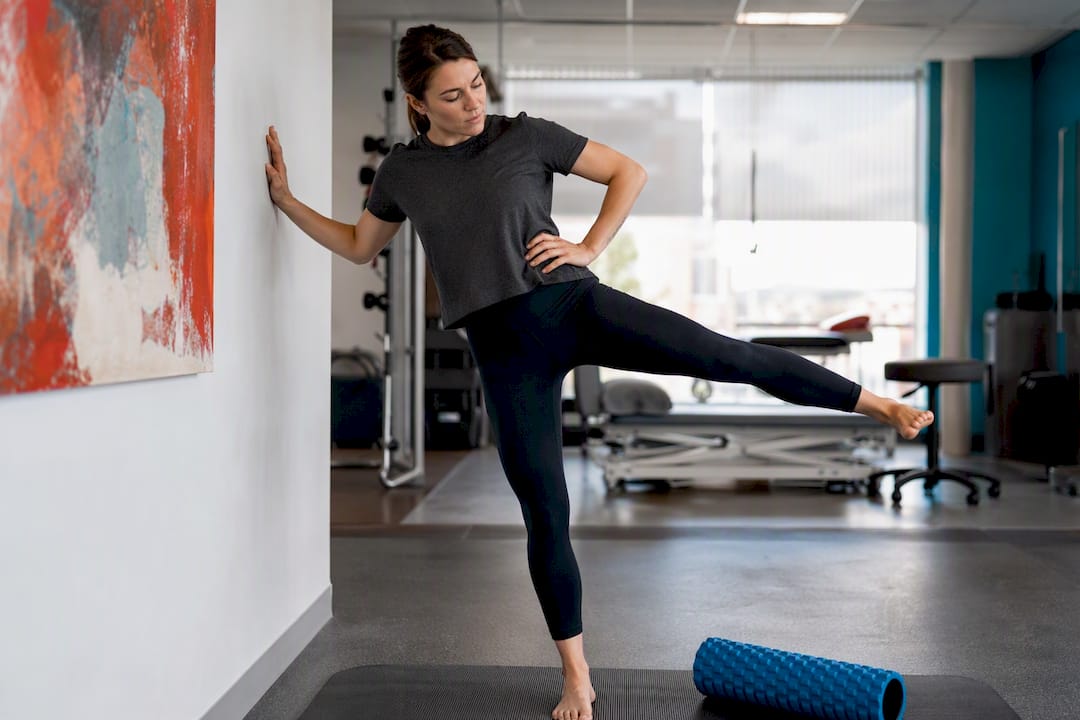
If conservative care hasn’t helped after four to six weeks, or sooner if any red flag appears, it’s time for a referral rather than more waiting. Lasting relief from chronic hip pain typically depends on mechanical and lifestyle changes, not medication alone, per Penn Medicine.
The Tx Room’s Approach to Persistent Hip Pain
For soft-tissue and biomechanical hip pain that doesn’t resolve with generic stretching, Thetxroom uses the Fascial Distortion Model alongside tailored rehab plans. Hands-on FDM work paired with progressive strengthening addresses the mechanical root, not just the symptom, which is why it fits naturally alongside standard PT rather than replacing it.
What Actually Matters Once You Cut Through the Noise
Most hip pain advice buries the one thing that actually helps: location is diagnostic gold, and almost nobody uses it that way. People describe hip pain as one vague complaint when front, side, and back pain are practically different conditions wearing the same name.
The other gap I see constantly is people treating physical therapy as a formality on the way to an injection or a surgery consult. It isn’t. For most mechanical hip pain, PT is the actual treatment, and injections that fail within ten days are telling you something diagnostic, not just something disappointing. Too many people repeat the same shot instead of asking why it didn’t work.
If you take one thing from this: give conservative care, especially PT and mechanical correction, a genuine four-to-six-week run before assuming you need a specialist. But don’t confuse patience with denial. A fall, an inability to bear weight, or fever changes everything, and that’s not a moment for home remedies.
— Chris
This article is general information, not a substitute for advice from a qualified doctor. Consult a qualified healthcare professional about your own circumstances before acting on anything here.
Sources
- Hip pain – Causes and definition (Mayo Clinic)
- Hip Pain: Causes and Treatment (Cleveland Clinic)
- Practice guidelines: hip osteoarthritis (AAFP)
- Treatment options for hip pain (Hospital for Special Surgery)
- Nonsurgical treatments for hip pain (Penn Medicine)