
First Chiropractic Visit: 30–60 Minutes, From Prep to Soft Tissue Care
A typical first chiropractic visit runs 30 to 60 minutes. Your chiropractor reviews your health history, performs a physical exam, and explains what the findings mean. Treatment may begin during the first or second visit if the assessment supports it. A careful clinician may hold off on manipulation until safety screening is complete.
TL;DR:
- Bring medication and supplement details, prior imaging reports, injury history, and a symptom timeline; ask whether scans or treatment that day cost extra.
- Imaging is not routine; clinicians may order radiographs, MRI, or CT when your history or exam suggests results could change the plan.
- Ask your clinician to explain risks, alternatives, and obtain consent before treatment; care may begin within the first two visits only if the assessment supports it.
- Disclose severe osteoporosis, spinal cancer, stroke risk, neck bone abnormalities, or weakness, numbness, and tingling; clinicians may modify treatment, while sudden worsening requires emergency care.
- Early care may involve two or three short sessions each week, tapering as symptoms improve; set measurable goals and reassess if progress stalls.
Table of Contents
- How should you prepare before you arrive?
- What happens during the consultation and health history?
- What does the physical exam involve, and are scans automatic?
- Will you get an adjustment on your first visit?
- How do we keep you safe, and what should you tell your chiropractor?
- What does aftercare look like, and how is progress measured?
- Which questions should you ask when choosing a chiropractor?
- Our first-visit approach at The Tx Room
- Book your first visit with us
- FAQ
- Sources
How should you prepare before you arrive?
Preparation lets the visit focus on your body instead of paperwork. MedlinePlus notes that a medication list, prior imaging or test reports, and a short symptom timeline make the exam and safety screening more useful.
- Bring a photo ID, your insurance card, and any billing details.
- Write down current medications and supplements.
- Bring prior imaging reports, diagnoses, and injury history.
- Jot a short timeline: when symptoms began, what worsens or relieves them, and how they affect sleep, work, or sport.
- Fill out intake forms ahead of time when the clinic allows it.
- Wear comfortable clothing that lets you move and bend easily.
Call before booking and ask what the initial fee covers, and whether imaging or same-day treatment is billed separately. Our guides to chiropractor cost and insurance coverage for chiropractic care explain what to ask. If you are new to Medicare, a Medicare agency such as Almond Insurance can help you sort out ancillary benefits.
Pro Tip: Photograph your medication bottles and prior imaging reports on your phone so nothing gets left at home.

What happens during the consultation and health history?
The visit usually opens with a conversation. Your clinician asks about your goals, how and when symptoms started, past injuries and surgeries, medications, sleep, exercise, stress, diet, and work demands. MedlinePlus describes this history-taking as coming before the physical exam.
Your answers shape everything that follows. They help the clinician form a working diagnosis and decide whether hands-on treatment makes sense that day.
- Timeline questions: a sudden onset after a fall points in a different direction than slow, creeping stiffness.
- Red-flag screening: numbness, tingling, or weakness gets extra attention, as do concerns about blood vessels or bone health.
- Lifestyle questions: desk hours, lifting, and training habits often explain why a problem keeps returning.
NCCIH describes chiropractic care as following a clinical sequence similar to conventional care: interview, history, exam, testing when needed, working diagnosis, management plan, treatment, and progress monitoring. Treat the first visit as a decision-making appointment. You can ask for explanations at any point, and you can pause if you feel unsure.
What does the physical exam involve, and are scans automatic?
After the interview, your clinician examines you. Expect checks of posture, spinal and joint mobility, range of motion, muscle tone and strength, reflexes, and orthopedic or neurologic signs. Some clinics also measure vital signs such as blood pressure.
- Posture and gait are observed while you stand and walk.
- Range-of-motion tests show which movements are restricted or painful.
- Strength and reflex tests screen for nerve involvement.
- Orthopedic tests stress specific joints or tissues to pinpoint the source of pain.
Imaging is not a routine part of every visit. WebMD notes that X-rays may be taken when indicated, and the same logic applies to MRI or CT: they are ordered when the history or exam suggests they will change the plan.
Findings can also change the plan in other ways. Concerning neurologic signs might lead to a referral, further testing, or a delay in manipulation. A clinician who postpones an adjustment is doing the job well, not holding back.
Will you get an adjustment on your first visit?
Often, but not always. MedlinePlus says treatment may begin during the first or second visit if the assessment supports it. A first visit is an evaluation first and a treatment appointment second.
Common options include:
- Spinal or joint manipulation
- Hands-on soft-tissue work
- Exercise or rehabilitation advice
- Dry needling
- Laser or shockwave therapies, where a clinic offers them
Your clinician should describe each proposed technique, what it aims to do, its risks, and the alternatives, then get your consent before starting. Mayo Clinic’s guidance on chiropractic adjustments supports asking about risks and alternatives, including whether neck manipulation or a lower-force approach is appropriate for you.
Pro Tip: Ask the clinician to tell you what each technique should feel like before it begins, so nothing surprises you on the table.
How do we keep you safe, and what should you tell your chiropractor?
Safety screening starts with you. Mayo Clinic advises telling your clinician before treatment about severe osteoporosis, spinal cancer, increased stroke risk, upper-neck bone abnormalities, or numbness, tingling, or loss of strength. In those cases manipulation may be avoided or modified.
- Minor short-term effects can include headache, tiredness, or soreness in treated areas.
- Serious complications are rare but can include worsening of a herniated disk or nerve compression.
- Stroke after neck manipulation is among the rare serious events Mayo Clinic lists.
- Sudden or rapidly worsening neurologic symptoms call for immediate emergency care, not routine adjustment.
Mayo Clinic states that serious complications after an adjustment are rare. Disclosing your full history is what keeps them that way.
Speak up if anything feels wrong during treatment. A good clinician wants that feedback.
What does aftercare look like, and how is progress measured?
Plans should be individual. MedlinePlus describes a typical early pattern of 2 or 3 short sessions per week, with visits tapering as improvement occurs, and says the schedule should be reassessed against agreed goals.
- Set measurable goals at the start: less pain, better function, improved sleep, or an easier workday.
- Agree on a timeline for reassessing, so progress is judged by results rather than by feel.
- Expect the clinician to check your range of motion and symptoms at later visits.
- If you see no meaningful progress in the agreed timeframe, review the plan together and consider other options.
Harvard Health points out that many cases of low-back pain improve within weeks regardless of treatment. That is a reason to set realistic expectations, keep monitoring, and stay willing to change course.
Which questions should you ask when choosing a chiropractor?
Use this short list when you call to book:
- Are you state licensed, and what postgraduate training do you have? NCCIH says chiropractors in the United States typically hold a Doctor of Chiropractic degree, pass national board exams, and hold a state license. Scope of practice varies by state, so verify yours. Our page on the education of a chiropractor covers the training path.
- Have you treated my specific condition or activity?
- What does a first visit look like: exam, imaging policy, and same-day treatment?
- What is billed separately, which insurance do you accept, and what are the self-pay options?
- How will you explain risks, alternatives, expected number of visits, and a measurable plan?
Clear answers to these questions tell you a lot about how the clinic will treat you.
Our first-visit approach at The Tx Room
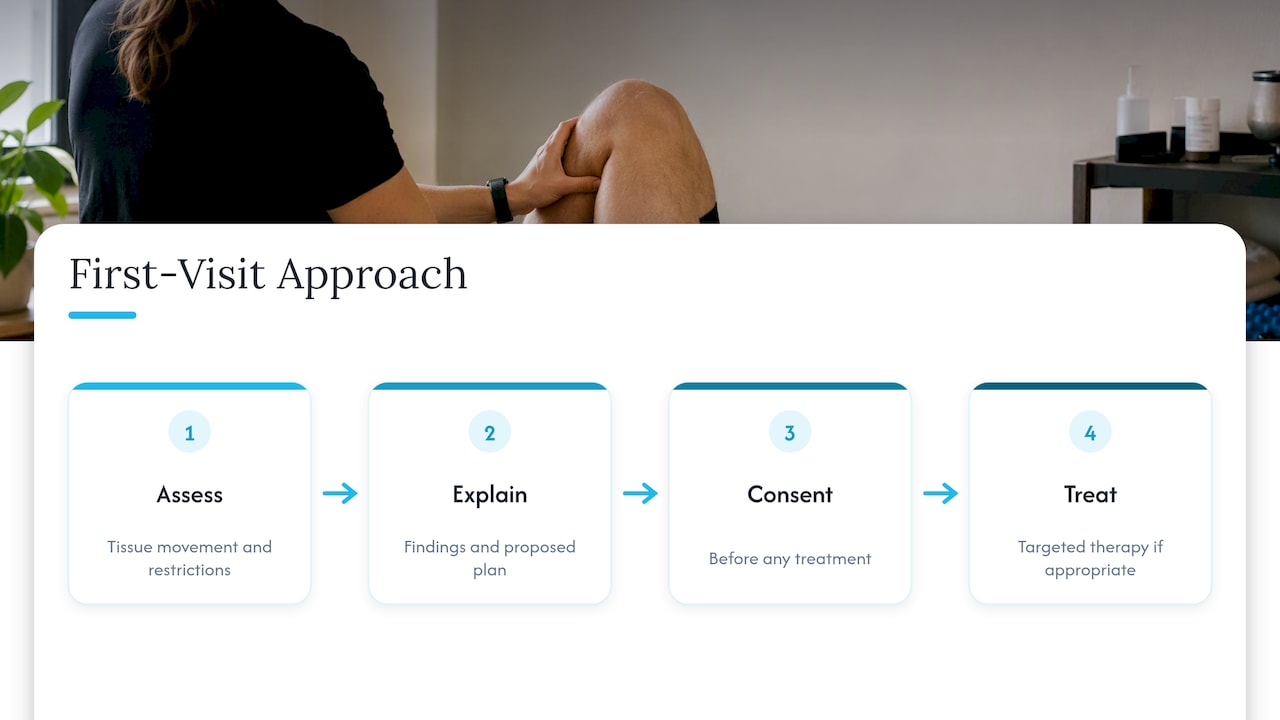
We treat the first visit as an assessment with a purpose. Our hands-on work centers on fascia and soft tissue, so we examine how the tissue moves and where it restricts. When it is clinically appropriate, we begin targeted manual therapy that day.
You can expect a clear explanation of what we find, a proposed plan, and your consent before any treatment. Prepare as outlined above, and if you have questions about your situation, contact us before you book.
— Chris
Book your first visit with us

If you are ready to book, we offer chiropractic care, the Fascial Distortion Model, soft-tissue therapy, dry needling, and MyACT focused shockwave. At your first visit our team reviews your history and explains the plan before anything begins. Our care is individualized and always consented.
- Book through our new-patient page.
- Check insurance and fees before you come in; we can answer billing questions at booking.
- Bring the items from the checklist above.
This article is general information, not a substitute for advice from a qualified doctor. Consult a qualified healthcare professional about your own circumstances before acting on anything here.
FAQ
What happens the first time you go to a chiropractor?
You complete forms, discuss your history and goals, and have a physical exam. Your chiropractor explains the findings and, if it is safe, may start treatment that day. MedlinePlus says the visit most often lasts 30 to 60 minutes.
What is the little clicker thing that chiropractors use?
It is usually an instrument that delivers a small, controlled thrust to a joint, used as a lower-force alternative to hand manipulation. Ask your clinician whether it suits your situation and what it should feel like.
What are the red flags for chiropractic adjustments?
Tell your clinician about severe osteoporosis, spinal cancer, increased stroke risk, upper-neck bone abnormalities, or numbness, tingling, or loss of strength. Mayo Clinic lists these as reasons to disclose before treatment. Seek urgent medical care for sudden or rapidly worsening neurologic symptoms.
Do you always get an adjustment at the first visit?
No. Treatment may start at the first or second visit if the assessment supports it. A clinician may defer manipulation until the exam clarifies whether it is appropriate.
Sources
- Chiropractic care for back pain: MedlinePlus Medical Encyclopedia
- Chiropractic adjustment – Mayo Clinic
- Chiropractic: In Depth | NCCIH