

5 Nerve Flossing Glides for Sciatica, Plus Clinic Backed Safety
Yes, nerve flossing can ease sciatic-type nerve irritation for some people, but it works as a symptom-management tool, not a cure. Try one gentle set of glides and pay attention to how your leg responds afterward. If numbness or weakness spreads or worsens, stop and get checked by a clinician before continuing.
TL;DR:
- Nerve flossing provides temporary relief by calming irritated nerves but cannot correct underlying issues like herniated discs or spinal stenosis.
- Most home protocols recommend starting with one to two sets of 10 to 20 gentle reps, once or twice daily, adjusting based on symptom response.
- Proper assessment by a clinician is essential before starting, especially to rule out red flags such as weakness, numbness, or sudden worsening symptoms.
- Nerve flossing works best when combined with strengthening exercises for the hips and core, and when paired with larger rehabilitation plans.
- Research shows that neural flossing added to physiotherapy can improve short-term pain and mobility but is not a cure for chronic sciatica.
Table of Contents
- What Is Nerve Flossing for Sciatica?
- Step-by-Step Sciatic Nerve Glides You Can Try at Home
- How Often Should You Do Nerve Flossing, and How Do You Progress?
- Safety, Contraindications, and Red Flags
- What the Research Shows About Nerve Flossing for Sciatica
- Building Nerve Flossing Into a Full Sciatica Recovery Plan
- A Clinical Perspective on Nerve Mobilization
- If Home Exercises Aren’t Enough: How The Tx Room Can Help
- Sources
- FAQ
What Is Nerve Flossing for Sciatica?
Nerve flossing, also called neural gliding or nerve mobilization, moves the sciatic nerve through its surrounding tissue by adding tension at one end of the nerve while releasing slack at the other. A hamstring stretch pulls muscle fibers to their end range and holds. A nerve glide does the opposite. You bend your neck while straightening your knee, then reverse both, so the nerve slides rather than stretches. Physical therapists describe it as a controlled, back and forth motion that should feel like a mild pull or tingle that settles quickly, according to physical therapists who caution against forcing the movement.
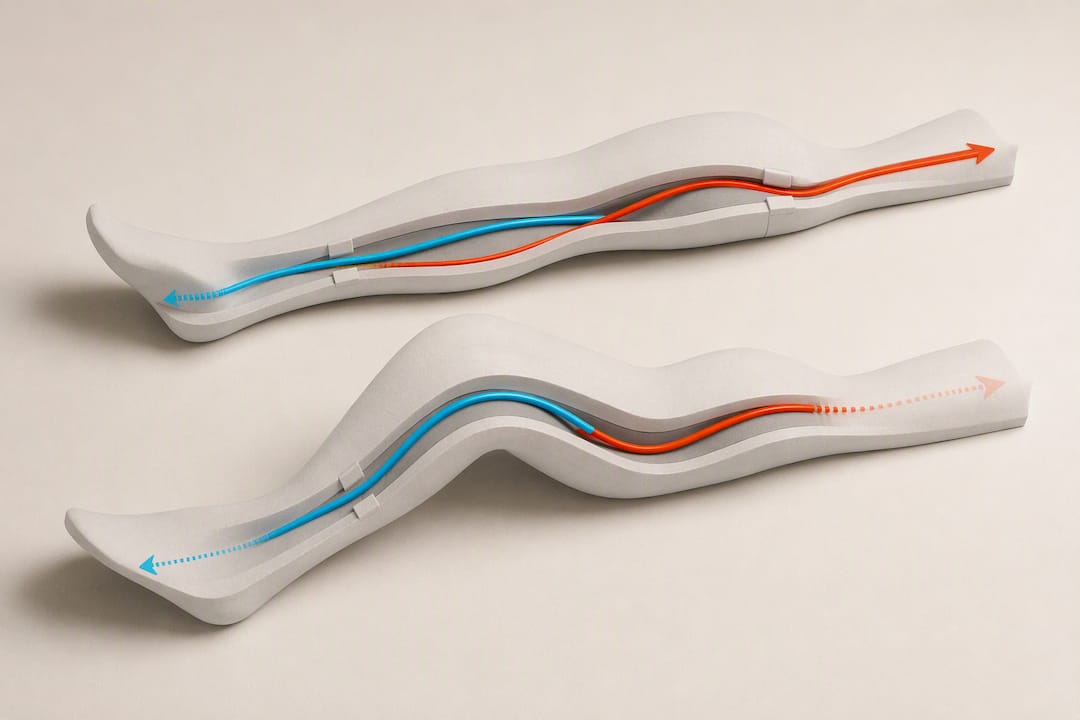
This distinction matters because sciatica often isn’t a muscle problem at all. Pain that radiates below the knee, burning or electric sensations, and tingling that follows a specific path down the leg point toward the nerve itself being irritated or compressed, rather than a tight muscle. A clinician typically confirms this with strength, sensation, and reflex testing before choosing which glide pattern fits your presentation, since proper assessment helps determine whether flossing is appropriate.
Nerve flossing won’t fix a herniated disc or reverse spinal stenosis. It calms an irritated nerve temporarily and can improve how far you can move without triggering symptoms. Think of it as turning down the volume on an alarm system, not disconnecting the wiring.
Step-by-Step Sciatic Nerve Glides You Can Try at Home
Start with these five glides in order of intensity, from seated to standing. Each one targets the sciatic nerve’s path from the lower spine through the hip and down the back of the leg.
- Seated sciatic glide with neck coordination. Sit tall in a chair, hands resting on the seat edge. Straighten one knee while lifting your toes toward you and simultaneously tip your chin down toward your chest. Then bend the knee back down while lifting your chin up. That’s one rep. The coordinated neck and leg motion is what creates the true “floss” rather than a static stretch.
- Supine straight-leg sciatic glide. Lie on your back with both knees bent. Loop a towel or strap around the ball of one foot and straighten that leg toward the ceiling until you feel a mild pull behind the knee or thigh. Flex and point your ankle five to ten times at that gentle end range, then lower the leg. This is a softer variation of the classic straight-leg raise test, meant for movement, not maximal stretch.
- Slump glide with leg extension. Sit on the edge of a chair, slump your lower back slightly, and tuck your chin. Extend one knee while keeping the slump, then release the neck position as you extend the leg further, and reverse. If symptoms increase, reduce the slump or shorten the knee extension range. This variation adds spinal flexion, so go slower here than with the seated glide.
- Standing hamstring nerve slide. Prop one heel on a low step or curb with the knee slightly bent. Hinge forward slightly at the hips while lifting your toes up, then rock back to neutral as you point the toes down. This works well as a quick reset at a desk or after a long car ride.
- Piriformis-focused seated glide. Cross the symptomatic leg over the opposite knee in a seated figure-four position. Gently lean forward from the hips until you feel a mild stretch in the buttock, hold two seconds, then sit back up. Repeat slowly, since this variation targets nerve tension near the piriformis muscle, a common sciatic pinch point.
Pro Tip: Do the movement slowly enough that you could stop mid-rep if something felt wrong. Speed and momentum are what turn a safe glide into an aggravating stretch.
Work through 10 to 15 reps of one or two glides that match your symptom pattern, once or twice a day. If a glide reduces your pain or tingling within the set, that’s a good sign the nerve is responding. If it makes things worse or symptoms linger afterward, stop that variation and try a gentler one, or skip flossing that day entirely.
How Often Should You Do Nerve Flossing, and How Do You Progress?
Most people start with one to two sets of 10 to 20 reps, once or twice daily, a dosing pattern commonly recommended for home sciatic glides. Adjust based on how your leg feels in the hours after each session, not just during it.
A sensible progression looks like this:
- Week 1 to 2: one set of 10 reps, once daily, focusing on the seated and supine glides.
- Week 2 to 3: if symptoms are stable or improving, add a second set or move to twice daily.
- Week 3 onward: introduce the standing and functional variations, and begin layering in strengthening work.
- Anytime symptoms flare or spread: drop back to fewer reps or pause for a day before restarting gently.
Flossing alone rarely produces lasting change. Consumer rehab resources note that quick relief from glides tends to be temporary unless paired with weeks of consistent practice and strength work targeting the hip and core.
Safety, Contraindications, and Red Flags
Nerve flossing isn’t safe for everyone. It’s inappropriate for people with rapidly progressive weakness, sudden severe numbness, recent trauma to the spine or leg, or a history of cancer or infection near the spine, and these situations call for medical evaluation before starting any movement routine.
Watch for these warning signs during or after a session:
- Pain that spreads further down the leg or into new areas instead of easing.
- Numbness or tingling that increases rather than settles within a few minutes.
- Cramping or weakness that lingers well after you stop moving.
- Any loss of bladder or bowel control, or numbness in the saddle area, which needs emergency care immediately.
One clinical detail worth sitting with: sciatic nerve flossing works best on nerves that are mechanically irritated, not severely compressed or damaged, which is why a proper strength and sensation check matters before you start a routine on your own, as clinical guides on nerve flossing note. If any red flag appears, stop immediately, write down exactly what happened and when, and contact a clinician the same day. For non-urgent but persistent symptoms, book a physical therapy or chiropractic evaluation rather than pushing through more reps.
What the Research Shows About Nerve Flossing for Sciatica
A 2022 review of randomized controlled trials found that neural flossing combined with conventional physiotherapy produced significant short-term reductions in pain and disability, plus improved hip range of motion, compared with physiotherapy alone. The catch is that the underlying trials were small and inconsistent in design, according to the review’s own authors.
The strongest results in the trial data came when neural flossing was added to conventional physiotherapy rather than used as a standalone treatment. Studies reported meaningful improvements in pain and disability, but sample sizes were small and study quality varied enough that the findings should be read as promising, not definitive.
That’s a realistic bar to set for yourself. Expect flossing to buy you temporary relief and a bit more range of motion, especially in the days after a flare. It’s a reasonable tool while you arrange proper rehab, not a substitute for it.
Building Nerve Flossing Into a Full Sciatica Recovery Plan
Glides work better as one piece of a larger plan than as a standalone fix. Pair them with progressive strengthening for the hips, glutes, and core, since weak hip extensors and gluteal control are common mechanical contributors to sciatic irritation that flossing alone won’t address. Daily movement habits matter too. Short, consistent stretching sessions support circulation and reduce stiffness between formal exercise days.
Consider hands-on care when:
- Symptoms persist beyond two to three weeks of consistent home glides and strengthening.
- Pain limits your ability to sit, stand, or sleep for more than a few days at a time.
- You’ve tried flossing correctly and see no change in symptom intensity or frequency.
When you do see a clinician, bring specifics: how long symptoms have lasted, whether flossing changed anything, what movements make it better or worse, and any red flags you’ve noticed. That detail helps a provider pick the right hands-on approach, whether that’s manual therapy, dry needling, or another modality suited to your case. Buttock pain that mimics sciatica sometimes traces back to a different source entirely, something worth ruling out with a targeted evaluation.
A Clinical Perspective on Nerve Mobilization
Nerve glides earn a place in most sciatica plans we see, but only as one tool among several. At The Tx Room, glides get paired with hands-on assessment using the Fascial Distortion Model to identify what’s actually restricting the nerve, whether that’s fascial tension, a joint restriction, or muscle imbalance. Home exercises alone can’t diagnose that. The exercises in this guide are a starting point for managing sciatic leg pain, not a final answer for cases that don’t improve.
— Chris
If Home Exercises Aren’t Enough: How The Tx Room Can Help
Nerve flossing can take the edge off, but it doesn’t fix what’s actually pulling on that nerve in the first place. That’s where hands-on evaluation earns its keep.

This approach specializes in cases of sciatica that haven’t fully resolved with stretching, general exercise, or standard advice. Using the Fascial Distortion Model, specific soft tissue restrictions contributing to nerve irritation can be identified, then an individualized treatment plan can be built around what’s found on assessment rather than a generic protocol. Depending on what’s driving your symptoms, that plan might include dry needling, deep tissue therapy laser, or focused shockwave therapy alongside manual work. If your sciatica keeps flaring despite doing everything right at home, visit the Tx Room’s sciatica page to learn more about scheduling an evaluation.
Sources
- Treatment of sciatica by neural flossing technique (NFT) in adults
- Everyone’s Talking About “Nerve Flossing.” Physical Therapists Say It Can Ease Pain—If You Do It Right.
- Nerve flossing: Benefits, risks, and safe use – Medical News Today
FAQ
What Is the Miracle Stretch for Sciatica?
There isn’t one single miracle stretch, but the seated sciatic glide and supine straight-leg glide are the two most commonly recommended starting points because they’re low-risk and easy to control. Results vary by person since sciatica has different root causes, so what works fastest depends on whether your irritation is more nerve-based or muscle-based.
How Often Should I Nerve Floss for Sciatica?
Most people start with one to two sets of 10 to 20 gentle reps, once or twice a day, adjusting frequency based on symptom response. Reduce frequency or stop a variation entirely if it increases pain, numbness, or tingling rather than easing it.
How Do You Unstick a Sciatic Nerve?
You “unstick” a sciatic nerve gradually, through repeated gentle glides that restore normal sliding motion between the nerve and surrounding tissue, not through one aggressive stretch. Combining glides with hip and glute strengthening addresses the mechanical causes that make a nerve feel stuck in the first place.
How Long Until Nerve Flossing Works?
Some people notice reduced tingling or a wider pain-free range of motion within the same session, since an immediate response to a glide is actually a useful diagnostic sign. Lasting improvement in pain and disability typically takes several weeks of consistent practice combined with strengthening, based on the short-term outcomes reported in randomized trial reviews.