

3 Month Clinic Backed Treatment Roadmap for Facet Joint Syndrome
Conservative, multimodal care is the standard first-line treatment for facet joint syndrome. That means targeted exercise, physical therapy, and non-opioid medication for a full trial period before anything more invasive gets considered. Most people improve without procedures. For the smaller group who don’t, diagnostic medial branch blocks and radiofrequency ablation offer a well-studied next step, though neither is a permanent fix.
TL;DR:
- Conservative, multimodal care including exercise, physical therapy, and non-opioid medication should be tried for at least 3 months before considering injections or ablation.
- Diagnostic medial branch blocks can identify pain sources but have a 30 to 45 percent false-positive rate, requiring confirmation before progressing to radiofrequency ablation.
- Imaging findings such as arthritis or cysts often do not correlate reliably with pain, making clinical evaluation and nerve blocks more important for diagnosis.
- Most relief from interventional procedures like injections or radiofrequency ablation lasts between a few weeks to 12 months, and they do not reverse joint degeneration.
- Personalized treatment plans, including manual therapy, stabilization exercises, lifestyle modifications, and careful monitoring, improve long-term management of facet joint syndrome.
Table of Contents
- Facet Joint Pain Symptoms and Causes
- How Doctors Diagnose Facet Joint Pain
- Conservative Treatments That Come First
- Comparing the Interventional Options
- When Surgery Enters the Conversation
- A Step-by-Step Plan for Getting Diagnosed and Treated
- Risks and Side Effects of Injections and Ablation
- Taking Charge of Your Own Recovery
- What to Expect Long-Term With Each Treatment Path
- Chiropractic Care, Acupuncture, and Massage Therapy
- The Hands-On, Rehab-First Approach at a Specialized Manual Therapy Clinic
- Starting Care at a Local Specialized Manual Therapy Clinic
- Sources
- FAQ
Facet Joint Pain Symptoms and Causes
The facet joints sit at the back of each spinal segment, one pair per level, guiding how much you bend, twist, and extend. They’re small synovial joints, similar in structure to a knuckle, and they take a beating over decades of standing upright. When cartilage wears down or a joint gets inflamed from injury or overuse, it sends pain signals both locally and along a referred pattern that can mimic a pinched nerve.
Osteoarthritis is the most common driver, especially past age 50, but facet joint pain also shows up after whiplash, a fall, repetitive lifting, or the kind of rotational overuse you see in golfers and gymnasts. Prior spine surgery or degenerative disc disease can shift extra load onto the facets, accelerating wear. This is why the condition tends to cluster in three regions with distinct symptom fingerprints.
- Cervical (neck) facet syndrome: stiffness and one-sided neck pain that can radiate into the shoulder or base of the skull, often worse with looking up or turning the head.
- Thoracic facet pain: a deep, band-like ache between the shoulder blades that worsens with twisting or prolonged sitting, frequently mistaken for a muscle knot.
- Lumbar facet syndrome: low back pain that stays close to the spine, sometimes spreading into the buttock or upper thigh, typically worse with standing, arching backward, or getting out of a chair after sitting.
A hallmark across all three regions is pain that eases with forward flexion and worsens with extension or rotation, the opposite pattern from a disc problem, which usually flares with sitting and bending forward. Morning stiffness that loosens within 30 minutes is common with facet-driven arthritis.
Most facet pain is manageable and not dangerous, but certain signs mean you shouldn’t wait for a scheduled appointment. Seek urgent evaluation if you develop new bowel or bladder changes, progressive weakness or numbness in a leg or arm, unexplained fever with spine pain, or pain following significant trauma. Those symptoms point toward something beyond a facet joint and need same-day medical attention, not a stretching routine.
How Doctors Diagnose Facet Joint Pain
There’s no blood test or single scan that confirms facet joint syndrome. Diagnosis is built in layers, starting with a conversation and a physical exam, and ending, for some patients, with a procedure that doubles as both a test and a treatment.
During the history and exam, a clinician looks for pain that worsens with spinal extension and rotation, tenderness directly over the joint line, and pain that eases when you bend forward. They’ll press on specific segments to localize the level and rule out hip, sacroiliac, or nerve root involvement, since those conditions can mimic facet pain closely.
Imaging plays a smaller role than most patients expect. X-rays, CT, and MRI can show arthritic changes, joint effusion, or synovial cysts, but those findings appear commonly in people with zero pain. Clinical resources consistently point out that imaging changes correlate poorly with facetogenic symptoms, meaning a scan showing facet arthritis doesn’t prove that joint is the source of your pain, and a normal scan doesn’t rule it out either. Imaging is mainly useful for excluding fractures, tumors, or severe instability, not for pinpointing the pain generator.
That’s where diagnostic medial branch blocks come in. Each facet joint is supplied by small sensory nerves called medial branches, and injecting a local anesthetic around those nerves under fluoroscopic or ultrasound guidance can temporarily numb the joint. If your usual pain drops sharply within minutes, that joint is implicated.
The catch: single blocks have a meaningful false-positive rate. Guideline sources report that 30 to 45 percent of single medial branch blocks produce a false-positive result, meaning the patient feels relief for reasons unrelated to the actual joint, like the placebo response or anesthetic spreading to nearby structures.
Because of that error rate, many pain specialists require:
- At least 50 to 80 percent pain relief on a validated pain scale immediately following the block.
- Relief that matches the expected duration of the anesthetic used.
- A second, confirmatory block on a separate day before recommending radiofrequency ablation.
Repeating the block cuts the odds of chasing a false positive, but it also adds time and cost, which is part of why guidelines emphasize exhausting conservative measures first.
Conservative Treatments That Come First
Every major guideline on facet-mediated pain lands in the same place: try conservative, multimodal care for a standard trial period before moving toward injections or ablation. That recommendation isn’t bureaucratic foot-dragging. Consensus practice guidelines on lumbar facet joint pain treat a structured trial of exercise, physical therapy, weight management, and non-opioid medication as the appropriate first step, and a large share of patients improve enough during that window to avoid a needle altogether.
What a real physical therapy plan looks like
Good physical therapy for facet joint pain isn’t generic stretching handed out on a photocopied sheet. It typically combines three elements working together.
- Manual therapy to restore joint mobility and calm irritated tissue, often including soft tissue work or gentle mobilization of the stiff segment.
- Stabilization exercise targeting the multifidus and transverse abdominis, the deep muscles that act like a natural brace for the spine. Weak stabilizers let more load fall on the facets themselves, so rebuilding that support is central to lasting relief.
- Directional preference testing and movement retraining, where a therapist identifies which movements (usually flexion-based positions) reduce your pain, then builds your home program around repeating that direction while retraining posture and lifting mechanics to avoid provoking extension.
Clinical guides on lumbar facet syndrome describe this combined approach, manual therapy paired with stabilization and retraining, as producing meaningful functional gains for many patients, and note that a well-timed injection can sometimes create a window where pain is low enough to finally participate fully in that exercise program.
Medication: what helps, and what to watch
Over-the-counter NSAIDs like ibuprofen or naproxen are usually the first medication tried, since they address the inflammatory component of an arthritic joint. Acetaminophen is a reasonable alternative or add-on for people who can’t tolerate NSAIDs due to stomach, kidney, or cardiovascular concerns. Short courses of muscle relaxants can help during an acute flare when muscle guarding is significant, though they’re meant for days, not months, given sedation and dependence risks. Topical NSAID gels or lidocaine patches offer a lower-risk option for localized pain, particularly useful for people managing multiple health conditions where oral medication interactions are a concern.
Opioids are not recommended as routine treatment for facet joint pain. If chronic pain has already led to long-term opioid use, coordinating with a provider experienced in pain management and opioid-sparing strategies is worth pursuing alongside the conservative measures described here.
Lifestyle measures that quietly matter
Pacing activity, meaning breaking up long stretches of standing or sitting rather than pushing through until pain spikes, reduces the cumulative load on irritated joints. Ergonomic adjustments at a desk or in a car seat can shift posture out of the extended positions that provoke facet pain. Because excess body weight increases mechanical load on the spine, gradual weight management is one of the few lifestyle levers with a direct mechanical payoff for facet-related pain. Sleep quality and mood also deserve attention: poor sleep amplifies pain perception, and untreated anxiety or low mood tends to prolong recovery timelines in chronic musculoskeletal pain generally.
Pro Tip: Keep a simple weekly log of your exercises, pain levels, and any medications you take. It sounds tedious, but if your case eventually needs insurance authorization for an injection or ablation, that log becomes evidence that you completed a genuine conservative trial, not just a formality you rushed through.
Know when to back off an exercise. Sharp, shooting pain, new numbness, or pain that spreads further down a limb during a movement means stop and reassess, ideally with your therapist, rather than pushing through on the assumption that more repetitions equal more progress. Dull, familiar soreness that settles within a day is a normal part of building tolerance; anything new or worsening is not.
Comparing the Interventional Options
Once a genuine conservative trial hasn’t gotten you far enough, the interventional toolbox has three main tiers, and they aren’t interchangeable. Understanding what each one actually does changes how you evaluate a doctor’s recommendation.
Intra-articular steroid injections deliver corticosteroid directly into the joint capsule to calm inflammation. These are mostly used when synovitis or joint swelling is suspected, and relief tends to run from several weeks to a few months. Evidence for using them repeatedly or expecting long-term benefit is mixed, and clinical reviews note that repeated steroid injections carry a cartilage risk, which is why most clinicians cap frequency at three or four injections per joint per year.
Medial branch blocks serve a dual purpose: diagnostic first, sometimes therapeutic second. As a diagnostic tool, they confirm which joint level is generating pain. Some patients also get weeks to months of relief from the anesthetic and any steroid included, but the primary value of this step is identifying candidates for the next tier, not delivering standalone long-term treatment.
Radiofrequency ablation (RFA) uses heat generated by radio waves to disable the medial branch nerve, interrupting the pain signal from that joint. Because nerves can regenerate, RFA isn’t a permanent solution. Consensus guidelines note that RFA commonly provides relief lasting 6 to 12 months, with some patients experiencing longer benefit when selection criteria are stringent, meaning they passed confirmatory blocks with strong, reproducible pain relief before proceeding. RFA can be repeated once the nerve regenerates and pain returns, which is one reason it’s attractive for patients who respond well: it’s a renewable strategy, not a one-time bet.
Here’s where the honest caveats matter. The same false-positive problem that complicates diagnosis, 30 to 45 percent of single blocks misleading the results, carries forward into RFA candidacy. Guidelines still disagree on exactly what percentage of relief on a confirmatory block should count as a true positive, which is part of why RFA success rates vary so widely across studies. A procedure that looks highly effective in one clinical trial with strict criteria can underperform in general practice if those criteria get loosened.
Newer, less established options round out the field:
- Platelet-rich plasma (PRP) injections into the facet joint, aiming to stimulate tissue repair rather than just block pain signals. Evidence remains preliminary.
- Hyaluronic acid injections, borrowed from knee osteoarthritis protocols, used off-label in some facet cases with limited supporting data.
- Stem cell injections, still largely experimental for facet pathology, with cost and access barriers for most patients.
- Cryoneurolysis, which freezes rather than heats the medial branch nerve; early data suggests a similar mechanism to RFA but it’s used far less often and lacks the same volume of research.
None of these should be treated as proven alternatives to RFA at this point. They’re worth discussing with a specialist if standard options haven’t helped, but go in with realistic expectations about the thinness of the evidence.
One insight that reframes the entire interventional category: these procedures largely treat the pain signal rather than reversing joint degeneration itself. That’s not a knock against them. It means the real value of a successful block or ablation is often the window of reduced pain it opens for you to finally do the strengthening work that provides more durable protection.
When Surgery Enters the Conversation
Surgery for facet joint syndrome is the exception, not the expectation, and it’s reserved for a narrow set of circumstances. It typically comes up only after nonoperative and interventional care has genuinely failed, or when imaging reveals a structural problem that no injection or ablation can fix.
Surgical candidates usually fall into one of these categories:
- Failed conservative and interventional treatment despite adequate trials of both.
- A large facet synovial cyst compressing a nerve root and causing progressive neurological symptoms.
- Spinal instability where the facet joints have degenerated enough to allow abnormal vertebral movement.
- Severe facet arthropathy contributing to spinal stenosis with significant nerve compression.
The surgical options range in invasiveness. Decompression procedures relieve pressure on compressed nerves without removing much bone. Facetectomy removes part or all of a problematic joint, occasionally needed for large cysts. Instrumented fusion, using rods and screws to stabilize a segment, is the most invasive route, generally reserved for confirmed instability rather than pain alone, since fusion trades some spinal flexibility for stability.
Recovery timelines vary considerably by procedure. Decompression surgery often allows a return to light activity within a few weeks, while instrumented fusion typically involves a recovery arc of several months, with formal physical therapy starting once the surgical site has healed enough to tolerate movement. Every surgical route trades some risk and downtime for a shot at a fix that outlasts what conservative or interventional care alone could offer.
A Step-by-Step Plan for Getting Diagnosed and Treated
Knowing the treatment landscape is one thing. Actually moving through it, with your insurer and your clinician on the same page, is another. Here’s a practical sequence.
- Start self-care immediately. In the first few days, that means relative rest without full bed rest, over-the-counter NSAIDs or acetaminophen if appropriate for you, and gentle movement in whatever direction (usually flexion) reduces your pain.
- Book physical therapy within the first two weeks. Waiting until pain is severe or chronic makes retraining harder. Early PT, focused on manual therapy and beginning stabilization work, sets the tone for the rest of your recovery.
- Commit to 6 to 12 weeks of structured exercise and PT. This is the meat of the conservative trial. Attend consistently, and ask your therapist to document sessions, exercises assigned, and your reported pain levels at each visit.
- Reach the 3-month mark before considering procedures. Guideline-backed recommendations treat this window as the standard trial length. If you’ve genuinely engaged with PT, medication, and lifestyle changes and pain remains disabling, it’s reasonable to discuss next steps.
- Gather your documentation before seeing a pain specialist. PT attendance records, a home exercise log, and a list of medications tried (with outcomes) all support the case that conservative care was genuinely attempted, which most insurers require before authorizing diagnostic blocks or RFA.
- Ask specific questions before agreeing to an injection or RFA. What percentage of pain relief would count as a successful confirmatory block? What’s the expected duration of benefit if this works? What happens if the first block gives ambiguous results? Is a repeat block planned before RFA, or would we go straight there? What’s the plan if RFA relief fades in six months, is it repeatable?
Pro Tip: Bring a written list of these questions to your appointment. Pain specialists see a lot of patients in a short window, and a clinician who takes the time to answer specific, informed questions is often the same clinician who will manage your case carefully going forward.
Insurance authorization hinges almost entirely on paper trails. A clinician’s note that simply says “patient tried PT” carries far less weight than one specifying dates, session counts, exercises performed, and objective progress measures. If your provider’s documentation feels thin, it’s fair to ask them to be more specific, since that detail protects your ability to move forward if conservative care doesn’t fully resolve things.
Risks and Side Effects of Injections and Ablation
Every interventional procedure for facet joint pain carries some risk, even though most complications are minor and temporary. Medial branch blocks and intra-articular injections commonly cause brief soreness at the injection site, temporary numbness or weakness if the anesthetic spreads slightly beyond the target nerve, and a small risk of infection or bleeding at the needle site. Fainting or a vasovagal response during the procedure itself is possible but usually resolves quickly with monitoring.
Steroid injections add their own considerations. Blood sugar can spike temporarily in people with diabetes, and repeated dosing raises the theoretical risk of cartilage thinning, part of why frequency gets capped. Rare but serious risks across all spinal injections include nerve damage, spinal infection, or dural puncture leading to a headache, though these occur infrequently when procedures are done under proper imaging guidance.
Radiofrequency ablation carries similar procedural risks plus a few unique ones: temporary increased pain or numbness in the treated area for one to two weeks as the nerve responds to the heat lesion, and occasionally a burning neuropathic sensation that typically resolves within weeks. Because RFA disables a sensory nerve rather than a motor one, muscle weakness is not an expected outcome, though patients sometimes report an unusual, transient skin sensitivity over the treated segment.
None of this means the procedures are unsafe when performed by an experienced specialist under imaging guidance. It means going in in with realistic expectations about the recovery bumps, not just the potential benefit.
Taking Charge of Your Own Recovery
Understanding your own pain pattern is one of the most useful tools you have. Facet pain that consistently worsens with extension and eases with forward bending gives you and your clinician a reliable signal to track over time, and noticing when that pattern shifts (say, pain starting to radiate further down a limb) is often the first clue something has changed and needs reassessment.
Self-management isn’t a consolation prize handed to patients who don’t qualify for procedures. It’s the foundation every other treatment builds on, including the interventional ones. Learning your directional preference (which movements calm your pain versus provoke it) turns daily activities like getting out of bed, loading a dishwasher, or sitting through a long meeting into things you can actively manage rather than just endure.
Pacing remains one of the most underused tools. Alternating between sitting, standing, and walking every 30 to 45 minutes prevents the kind of prolonged static loading that tends to aggravate facet joints. Simple posture cues, like avoiding prolonged neck extension while looking up at a screen mounted too high, or supporting the low back’s natural curve while driving, cost nothing and compound over months.
Tracking your symptoms doesn’t need to be elaborate. A basic note on your phone logging pain level, activity, and what helped or worsened it gives you (and any clinician you see) a clearer picture than memory alone ever provides, especially months into a chronic condition when flares and improvements start to blur together.
What to Expect Long-Term With Each Treatment Path
Outcomes for facet joint syndrome vary by treatment path, and setting realistic expectations up front prevents a lot of frustration later. Most people who commit to a genuine conservative trial, meaning consistent PT, exercise, and lifestyle adjustment for the full 6 to 12 week active phase, see meaningful improvement, though conservative therapies overall tend to show modest rather than dramatic effect sizes in chronic low back pain research. That’s not a discouraging statistic; it’s a reason they remain the recommended first step regardless, since the risk and cost stay low while the benefit, even if moderate, tends to be durable.
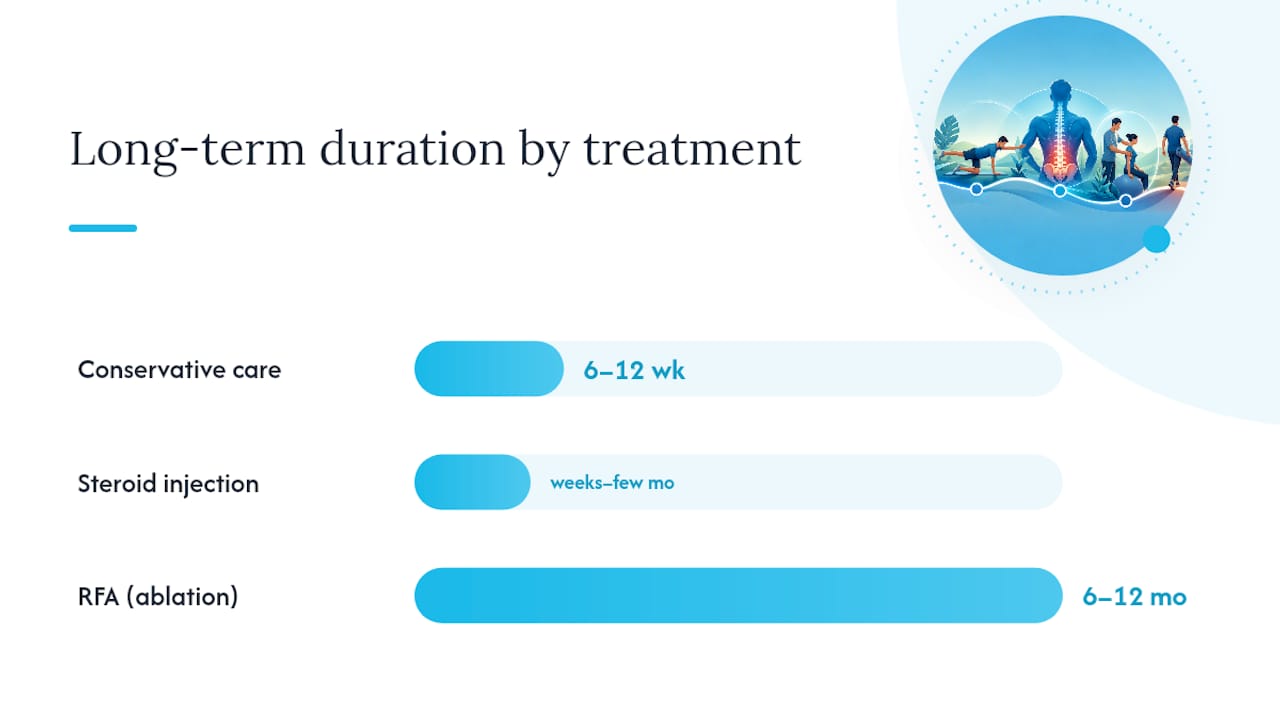
For patients who move to interventional care, expectations shift toward temporary but meaningful relief rather than a cure. Steroid injections typically buy weeks to a few months. RFA, in appropriately selected patients, commonly delivers 6 to 12 months of relief and can be repeated as the nerve regenerates. Neither erases the underlying joint degeneration; both create a window.
There’s no single “gold standard” that works identically for everyone with this diagnosis. Response to any given treatment, conservative or interventional, varies enough between individuals that ongoing reassessment matters more than rigid adherence to one plan. Facet joint pain does often improve substantially with the right combination of approaches, and for many people it becomes a manageable, intermittent issue rather than a constant one, particularly once strengthening work catches up with whatever pain relief got them moving again.
Chiropractic Care, Acupuncture, and Massage Therapy
Alternative and complementary therapies are frequently used alongside, not instead of, the conservative care described earlier, and for good reason: many people find hands-on work helps them tolerate the exercise program that provides longer-term stability.
Chiropractic care for facet joint syndrome typically focuses on restoring mobility to stiff or restricted segments, which can reduce compensatory strain on the facets themselves. Manual adjustment combined with soft tissue work often complements, rather than replaces, a structured exercise plan.
Acupuncture is used by some patients as an adjunct for pain modulation, particularly during flares when exercise tolerance is temporarily lower. It’s not a substitute for the strengthening component of recovery, but it can make participation in that strengthening more tolerable for some people.
Massage therapy addresses the muscle guarding and tension that commonly develops around an irritated facet joint. Reducing that secondary muscle tightness doesn’t fix the joint itself, but it often improves range of motion enough to get more out of a given PT session.
The common thread across all three: they work best as one piece of a broader plan that still includes the stabilization exercise and movement retraining covered earlier, not as a stand-alone treatment for facet-driven pain.
The Hands-On, Rehab-First Approach at a Specialized Manual Therapy Clinic
Manual therapy and exercise-based rehab work better together than either does alone, and that’s the premise behind how care gets structured at Thetxroom. The Fascial Distortion Model treats the fascia, the connective tissue wrapping muscles and joints, as a frequent contributor to the restricted movement and referred pain patterns that show up in facet-related cases, particularly when a joint has been guarded and compensated around for months.
Hands-on FDM work aims to restore normal glide and tension in that fascial layer, which can reduce the mechanical irritation feeding into a stiff facet joint. On its own, that manual component tends to buy a window of reduced pain and improved mobility. Paired with the kind of stabilization and movement retraining exercise programs described earlier, that window becomes an opportunity to actually build the deep muscular support that keeps a facet joint from getting overloaded again.
Patients who tend to benefit most from a combined hands-on and exercise approach are those who have tried generic stretching or a few PT sessions without much traction, and whose pain pattern includes significant fascial restriction or compensatory guarding, not just isolated joint stiffness. That’s a meaningfully different starting point than a patient whose facet pain is purely early and mild, where basic home exercise alone might resolve things.
If your case fits that description, learning more about how the Fascial Distortion Model works is a reasonable next step before deciding whether an in-person evaluation makes sense for you.
— Chris
Starting Care at a Local Specialized Manual Therapy Clinic
If your facet pain hasn’t responded to generic stretching or a few sessions elsewhere, specialized clinics may offer a different starting point: hands-on manual therapy built specifically around restoring movement, not just managing symptoms with medication.

The clinic’s approach for facet-related pain typically draws on a few core services depending on what your evaluation shows. Fascial Distortion Model work targets restricted fascial tissue contributing to stiffness and referred pain. Dry needling addresses trigger points and muscle guarding that often develop around an irritated joint. Deep tissue therapy laser and MyACT focused shockwave offer additional noninvasive options for stubborn soft tissue involvement. All of these fit into a broader plan alongside exercise, the same multimodal principle guidelines recommend, just delivered with a hands-on emphasis.
A first visit starts with a focused history and movement assessment to identify what’s actually driving your symptoms, followed by a treatment plan with realistic short-term goals and a defined visit frequency, so you know what progress should look like and by when. Book an evaluation with The Tx Room to find out whether this approach fits your case.
FAQ
Does facet joint pain show up on an MRI?
MRI can show arthritic changes, swelling, or synovial cysts in a facet joint, but those findings are common in people without any pain. Clinical resources note that imaging correlates poorly with actual symptoms, so a scan alone rarely confirms which joint is causing your pain.
What should I avoid doing with facet joint arthropathy?
Avoid prolonged spinal extension, like arching backward or looking up for long periods, since that position tends to compress the facet joints and worsen symptoms. Skip high-impact activities and heavy twisting loads until you’ve built enough stabilizing strength through PT, and don’t push through sharp or radiating pain during exercise.
Does facet joint pain ever fully go away?
For many people, yes, especially when a genuine conservative trial of exercise and PT is completed early. Facet pain from degenerative arthritis can become a manageable, intermittent issue rather than disappearing entirely, since the underlying joint changes typically remain, but flares often become less frequent and less severe with consistent strengthening work.
What do L5-S1 facet joint pain symptoms feel like?
Pain at the L5-S1 level typically centers in the low back near the belt line, sometimes spreading into the buttock or upper thigh, and it tends to worsen with standing, extending backward, or twisting. It usually eases somewhat with forward bending or sitting, a pattern that helps distinguish it from disc-related pain, which often behaves the opposite way.
How long should I try conservative treatment before considering an injection?
Guideline-backed recommendations point to about 3 months of multimodal conservative care, meaning consistent exercise, physical therapy, and appropriate medication, before moving toward diagnostic blocks or radiofrequency ablation. Insurers commonly require documentation of that trial before authorizing interventional procedures.