
Thoracic Spine Stiffness: Causes, Relief and When to Get Help
Thoracic spine stiffness is that locked, tight feeling between your shoulder blades and across the middle of your back. It usually comes from long stretches in one position, a rib cage and shoulders that have stopped moving freely, and muscles that guard the area. It is common, it is rarely dangerous, and it usually responds to regular movement. It is worth a professional look when it lingers, keeps coming back, or arrives with symptoms that do not fit a simple tight back.
This guide covers why the upper and mid back stiffens, what the research says (some of it surprising), what you can do this week, and how to tell a stiff back from one that needs a doctor.
TL;DR
- The thoracic spine is the middle section of your spine, running from the base of your neck to the bottom of your ribs. Stiffness there usually builds from sustained postures, low movement variety and muscle guarding.
- Most mid-back pain is not serious. Frequent position changes and regular movement are the first-line approach, not bed rest.
- Chest pain, numbness, weakness, fever, unexplained weight loss, or pain after a significant fall or impact needs prompt medical attention, not a stretching routine.
- If stiffness hangs on for several weeks or keeps returning, hands-on assessment of the spine, ribs and surrounding soft tissue can help you move again with confidence.
Table of Contents
- What the thoracic spine does and why it stiffens
- What the research says (and it is not what most pages tell you)
- Stiff mid back versus something more serious
- Do you need an X-ray or MRI?
- What to do for a stiff upper or mid back this week
- When hands-on care makes sense
- Our perspective: treat the tissue, then rebuild the movement
- How we approach a stiff mid back at The Tx Room
- Related reading for neighboring areas
- FAQ
- Sources
What the thoracic spine does and why it stiffens
Your thoracic spine has twelve vertebrae, and each one connects to a rib. That makes it the most rigid region of your spine by design. The NHS describes the thoracic spine as strong and stable so you can stand upright and protect the organs in your chest. Because of the rib attachments, a little stiffness here is normal. Too little rotation and extension is where trouble starts.
When the mid back does not move enough, the neck, shoulders and lower back often move more to make up the difference. Physical therapy clinics commonly describe this compensation, and it explains why a stiff mid back so often shows up as tight shoulders, a sore neck or an achy low back.
Several things commonly feed the problem:
- Desk and screen posture. Hours of rounding forward lets the upper back settle into one shape. Our article on rounded shoulders and posture walks through this pattern in more detail.
- Low movement variety. The spine likes change. Sitting, standing, walking and reaching overhead all load it differently. Staying in one of them for hours is what stiffens it.
- Muscle guarding. After a tweak, a sleep in an odd position or a hard workout, the muscles around the ribs and shoulder blades tighten to protect the area, and they can stay tight longer than the original irritation.
- Repetitive work or sport. Overhead lifting, rowing, swimming, golf, tennis and carrying a toddler on one hip all load the mid back repeatedly.
- Stress and shallow breathing. The rib cage moves every time you breathe. Tension that keeps you breathing high in the chest can leave the back feeling rigid.
What the research says (and it is not what most pages tell you)
Most articles on this topic assume more stiffness equals more pain. The evidence is more interesting.
A 2018 PLOS One study compared people with chronic thoracic pain to healthy participants. It measured mean global stiffness of 7.90 N/mm in the pain group and 8.59 N/mm in the healthy group. In other words, the spines of people with ongoing pain were, on average, slightly less stiff on that measure, not more.
What does that mean for you? Two practical things:
- How a back feels and how it measures are not always the same. A back can feel locked because muscles are guarding it, not because the joints are fused or damaged.
- The goal is not to “crack” a rigid spine loose. It is to restore comfortable, confident movement, which includes the muscles, fascia and ribs around the spine.
On treatment, a 2026 meta-analysis of thoracic-focused interventions in people with low back pain found a small effect on pain (dppc = -0.35) and a large effect on disability (dppc = -0.71). Thoracic manual techniques generally showed larger effects than breathing exercises alone. Note the population: this review looked at low back pain, so treat it as evidence that the mid back is worth addressing, not as proof for every stiff upper back.
A separate systematic review found that thoracic interventions reduced fear of movement compared with controls, although the results varied a lot between trials. That matters because worry about moving is one of the things that keeps a stiff back stiff.
Stiff mid back versus something more serious
The reassuring news first: the NHS notes that spinal pain is rarely a sign of a serious underlying problem, in fewer than 1% of cases according to its mid-back pain guidance. Most people improve with regular movement, changing positions and avoiding long spells in a single posture.
Still, the mid back sits behind your heart, lungs and many abdominal organs, so know the warning signs. Seek urgent care (call 911 or go to an emergency room) for:
- Chest pain or pressure, shortness of breath, sweating, or pain spreading into the arm or jaw. These can signal a heart or lung problem.
- Sudden, severe back pain that does not ease with rest, especially after a fall, car accident or other significant impact.
- New numbness, tingling or weakness in the legs, or trouble with bladder or bowel control.
Book a prompt appointment with your primary care physician for stiffness that comes with fever, unexplained weight loss, a history of cancer, night pain that wakes you and does not change with position, or pain that keeps getting worse over weeks. The American College of Radiology’s thoracic back pain guideline lists red flags such as suspected fracture, malignancy, infection, cord compression or severe neurological deficit as the reasons to escalate to imaging and specialist work-up.
Two less obvious points are worth knowing:
- Abdominal pain can come from the thoracic spine. A published case review describes abdominal pain mimicked by thoracic spine dysfunction, which is uncommon and often diagnosed late. Do not assume your belly pain is your back, though. Get new abdominal pain checked by a physician first.
- Impact exercise can injure a hunched back. A case series of seven patients reported mid-thoracic compression fractures after regular mini-trampoline exercise, linked to a hunched posture and not absorbing impact through the legs. If you get sharp, localized mid-back pain after jumping or bouncing exercise, see a physician rather than stretching it out.
Do you need an X-ray or MRI?
Usually not at first. The ACR guidance says imaging is not recommended for uncomplicated acute thoracic back pain (0 to 4 weeks) without red flags. It is generally considered after a trial of conservative care, such as about 6 weeks of physical therapy, has not helped, or when red flags are present.
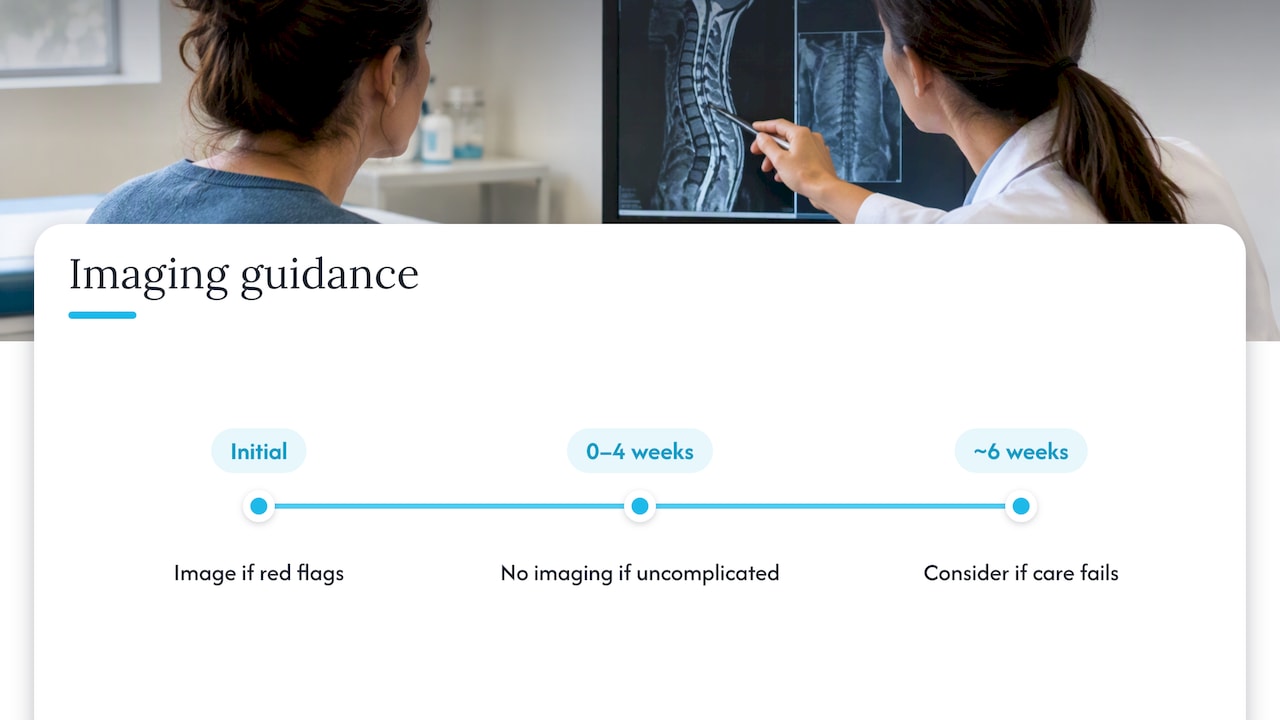
There is a second reason to be cautious. The same ACR document notes that disc bulges, herniations and facet joint changes are frequently found in people with no symptoms, so a scan result often does not match the pain a person feels. A scary-sounding report on an otherwise normal back can add worry without adding useful information.
What to do for a stiff upper or mid back this week
You do not need an elaborate program. You need frequent, gentle, varied movement.
- Change position every 30 to 45 minutes. Stand, walk to refill water, reach overhead. Small breaks beat one long workout after eight still hours. This follows the NHS advice to avoid long periods in a single position.
- Add gentle thoracic range of movement. Hospital physiotherapy handouts, such as this NHS thoracic range of movement exercise sheet, describe gentle exercises that maintain the flexibility and movement of your joints. Start small and stay within comfort.
- Breathe into your ribs. Place your hands on the sides of your lower ribs and breathe so they widen slightly. Do five to ten slow breaths a few times a day.
- Walk. Easy walking moves the spine and ribs through gentle rotation and tends to calm guarded muscles.
- Do not rest for days. Staying active is the consistent message in current guidance. If you want a plain-language read on this, a practical guide on managing chronic pain (in German) covers varying posture and avoiding fixed positions and long rest.
- Set up your workstation. Raise your screen to eye level, keep the keyboard close, and stand up for calls.
Expect the first signs of easing within days for simple desk stiffness. If a week or two of consistent movement changes nothing, or the pain is getting worse, move to the next step.
A note on how we talk about backs
The words used about a spine affect how people move. Experts advise clinicians to avoid terms like “wear and tear” or “degeneration” and to explain that spinal pain is common, fluctuates and often settles, as the nocebo-language guidance describes. A clinician-oriented article on describing pain types (in German) makes a similar point about describing what you feel clearly before an appointment. Practically: write down where it hurts, what makes it better or worse, and how long it lasts. A clear description helps any provider help you faster.
When hands-on care makes sense
Self-care is the right start. Hands-on care is worth considering when:
- Stiffness has lasted more than a few weeks despite regular movement.
- It keeps returning after each flare, usually in the same spot.
- It limits training, sleep, lifting a child or a full workday.
- Your neck, shoulder or low back keeps getting sore and you suspect the mid back is not moving.
- Fear of moving the area is stopping you from doing the exercises that would help.
A good assessment looks beyond the spine itself. It checks how your ribs, shoulder blades, hips and soft tissue move together, screens for red flags, and tells you plainly if you should see a physician instead. A good clinician also explains what is going on in calm, non-alarming terms and gives you something to do between visits.
Our perspective: treat the tissue, then rebuild the movement
At The Tx Room, we see many people in Plano who have been told their stiff back is “just posture,” or who have stretched for months with little change. Our view is simple.
First, we do not assume stiffness means a joint is stuck. The research above shows that the relationship between how a back feels and how it measures is not straightforward. So we start with a hands-on exam of the whole picture: spine, ribs, shoulders, hips and the soft tissue linking them.
Second, we treat the soft tissue directly. Our approach centers on the Fascial Distortion Model, a hands-on method for soft tissue injuries, alongside myotherapy and individualized rehabilitation plans. We focus on cases that have not improved with standard medical or physical therapy approaches. Depending on what the exam shows, we may also use tools like dry needling, deep tissue therapy laser or focused shockwave.
Third, we send you home with movement. Hands-on work can open a window of easier motion, and the exercises are how you keep it. We are cautious about promising results, because every back is different, but we build plans around getting you back to your sport, your job and your kids sooner.
Finally, we refer out when it is not ours to treat. Chest symptoms, neurological changes and suspected fractures belong with a physician first.
— Chris
How we approach a stiff mid back at The Tx Room
If you are in Plano and your mid or upper back stiffness has hung around, our chiropractic care and soft tissue therapy is built for exactly this. Here is what you can expect:
- A hands-on exam to find where movement is limited and where tissue is guarded.
- Targeted treatment using the Fascial Distortion Model, and when appropriate dry needling or focused shockwave.
- A plan you can follow, with specific movements and desk habits for your situation.
We accept self-pay and insurance. Ready to start? Book as a new patient.
Related reading for neighboring areas
The mid back rarely acts alone. If your symptoms spread, these pages may help:
- Pain beside or under the shoulder blade: shoulder blade pain relief
- Pain lower down, plus hip tightness: low back pain care and lower cross syndrome rehab
- General guidance: beating back pain in Plano
- Tight, sticky tissue that stretching does not fix: fascia pain and self-care
FAQ
Why is my thoracic spine so stiff?
The most common reasons are long periods in one posture, low movement variety, muscle guarding after a tweak or hard workout, and repetitive work or sport. Stress and shallow breathing can add to it. If stiffness is new, severe, or comes with chest symptoms, numbness or fever, see a physician.
How do I loosen a tight thoracic spine?
Change positions every 30 to 45 minutes, walk daily, and add gentle rotation and extension movements within comfort. Breathing slowly into the sides of your ribs also helps. If a couple of weeks of consistency changes nothing, a hands-on assessment is the next step.
What is thoracic back pain a red flag for?
Most of the time it is not a red flag. When it is, the concerns include fracture, infection, malignancy, cord compression or heart and lung problems, as listed in the ACR guidance. Chest pain, breathlessness, new weakness, fever or pain after significant trauma need urgent medical evaluation.
Do I need an MRI for a stiff mid back?
Usually not. Imaging is generally not recommended for uncomplicated pain in the first four weeks without red flags, and findings like disc bulges are common in people with no pain. Your provider will decide if imaging is needed after a trial of conservative care or if red flags appear.
Sources
- Mid-back pain, NHS
- Changes in spinal stiffness with chronic thoracic pain, PLOS One (2018)
- Effects of breathing exercise and thoracic techniques on pain and disability in low back pain, PubMed (2026)
- Effectiveness of thoracic interventions on psychological factors in low back pain, PubMed
- Thoracic Back Pain, ACR Appropriateness Criteria
- Pseudoappendicitis: abdominal pain arising from thoracic spine dysfunction, PMC
- Mid-thoracic vertebral compression fracture after mini-trampoline exercise, PMC (2023)
- Thoracic range of movement exercises, Royal Devon NHS
- Guidance on avoiding nocebo language, PMC