
Text Neck: Phone Overuse Linked to 2.34x Higher Odds of Neck Pain
Text neck is a useful shorthand for the neck pain and stiffness that comes from holding your head forward over a phone or laptop for long stretches. If your symptoms match that pattern, raising your screen to eye level and taking a movement break every 20 to 30 minutes will likely bring noticeable relief within days. Seek medical evaluation if you notice pain radiating down an arm, numbness, tingling, or weakness.
TL;DR:
- A meta-analysis of seven retrospective studies involving 10,715 participants linked smartphone overuse to 2.34 times the odds of neck pain, but did not establish causation.
- Stretching alone rarely corrects forward head posture; the 10 to 15 minute routine pairs chin tucks, wall angels, and rows on most days.
- Mild posture related symptoms often settle within days to a few weeks, but worsening or persistent pain after home care merits clinical assessment.
- Physiotherapy reviews favor combining postural correction, strengthening, and manual therapy, although treatment protocols vary and higher quality trials remain limited.
Table of Contents
- What is text neck, exactly?
- How device posture strains the neck
- What the research says about screens and neck pain
- Symptoms, red flags, and how long recovery takes
- Prevent and relieve text neck with daily habit fixes
- Targeted exercises for neck strength and mobility
- Clinical treatments: what hands-on care can offer
- Our approach to text neck at The Tx Room
- Start care for text neck at The Tx Room
- FAQ
- Sources
What is text neck, exactly?
Text neck, sometimes called tech neck, describes the neck and upper back strain that builds up from looking down at a phone, tablet, or laptop for extended periods. It is not a formal diagnosis you will find in a medical textbook. It is a descriptive term clinicians and physical therapists use for a pattern of symptoms tied to forward head posture (FHP), where the head juts forward of the shoulders instead of stacking directly above them.
A few things are worth keeping straight:
- Text neck describes a posture-related pattern of strain, not a single disease with one cause.
- Forward head posture is the underlying mechanical issue, and device use is one common trigger for it.
- Device use is among the contributors to neck pain, along with stress, poor sleep posture, desk setup, and prior injury.
How device posture strains the neck
Your head weighs about as much as an average adult’s, and when it sits balanced over your spine it is supported efficiently. Tilt it forward to look at a phone, and the muscles at the back of your neck must work much harder to keep it from dropping further, as the effective load increases as the angle grows. This forward lean reduces what researchers call the craniovertebral angle, a simple measure of how far forward the head sits relative to the shoulders. A smaller angle generally lines up with more pronounced forward head posture and more strain on the neck extensors and upper trapezius.
- A deeper head-forward tilt increases the leverage your neck muscles must fight against.
- The strain is cumulative: a two-minute glance matters little, but hours spent in that position each day add up.
- Frequency and duration both matter more than any single episode of poor posture.
One scoping review found that forward head posture and prolonged flexed device use are biomechanically plausible contributors to neck pain, reinforcing why posture correction and strengthening are central to most treatment plans.
What the research says about screens and neck pain
A meta-analysis pooling seven retrospective studies and 10,715 participants found that smartphone overuse was associated with meaningfully higher odds of neck pain, with an adjusted odds ratio of 2.34 (95% CI: 1.44 to 3.82). In plain terms, that means people who overused their smartphones in these studies had roughly twice the odds of reporting neck pain compared with those who did not, though an odds ratio describes an association, not a guarantee that device use alone caused the pain. The same analysis found the risk climbed with age.
That said, the underlying studies carry real limits:
- Most were retrospective and relied on self-reported device use, which invites recall bias.
- Confounding factors like occupation, stress, and prior neck injury were not always controlled.
- Heterogeneity between studies was high, meaning results varied enough that a single number cannot capture the whole picture.
Separately, a scoping review of physiotherapy interventions for text neck syndrome reported that combined approaches, postural correction, strengthening, and manual therapy, tend to reduce symptoms, while also noting that protocols differ widely across studies and that higher-quality trials are still needed.
Forward head posture and prolonged device flexion are biomechanically plausible contributors to neck pain, and combined physiotherapy interventions show positive effects despite heterogeneous methods.
Symptoms, red flags, and how long recovery takes
Most device-related neck pain follows a recognizable pattern, and most cases respond well to simple changes.
- Common symptoms include neck and upper back stiffness, tight shoulders, tension headaches, and a reduced ability to turn or tilt the head comfortably.
- Red flags that call for medical evaluation include pain that radiates down an arm, numbness or tingling in the hands, muscle weakness, or any progressive neurologic change.
- Typical recovery runs days to a few weeks for mild, posture-related cases that respond to self-care, while pain that persists or worsens despite home adjustments is worth having assessed by a clinician.
Clinical guidance from Yale Medicine notes that this kind of strain is common and generally mild, and that it tends to improve with ergonomic changes, movement, and conservative home care, with evaluation recommended for radiating or persistent symptoms.
Prevent and relieve text neck with daily habit fixes
Most of the fastest relief comes from changing how you hold your devices, not from any special equipment.
Ergonomic adjustments make the biggest first difference:
- Raise your phone or tablet to roughly eye level instead of resting it in your lap.
- Use a laptop stand with an external keyboard so your screen sits higher without forcing your wrists into an awkward angle.
- Hold your phone closer to your face rather than bringing your head down to it.
Movement strategy matters as much as positioning, since no posture is safe to hold indefinitely:
- Take a 30 to 60 second movement break every 20 to 30 minutes, even if it is just rolling your shoulders or turning your head side to side.
- Alternate between sitting, standing, and walking when you can, rather than staying locked in one position for hours.
- Build short mobility breaks into natural pauses, like waiting for coffee to brew or a page to load.
Behavioral fixes round out the picture:
- Text with two hands and both thumbs instead of cradling the phone with your neck.
- Limit long, continuous scrolling sessions, which tend to pull your posture down gradually without you noticing.
- Use screen-time reminders or timer apps to prompt the breaks you would otherwise skip.
Pro Tip: Set a recurring timer for every 25 minutes. When it goes off, stand up, roll your shoulders back, and tuck your chin for five seconds before sitting back down.
Workplaces can take this further with structured programs. Employers looking to reduce repetitive strain claims across a whole team might look at a structured ergonomics program that builds these habits into the workday rather than leaving it to individual willpower. If your pain centers more around your desk setup than your phone, our guide to desk back pain relief covers the office-specific fixes in more depth.
Targeted exercises for neck strength and mobility
Stretching alone rarely fixes text neck, because forward head posture leaves the muscles at the back of your neck and between your shoulder blades overstretched and weak, not just tight. Building strength back into that posterior chain matters as much as loosening the front.
- Chin tucks: Gently draw your chin straight back, like making a double chin, hold for 3 to 5 seconds, and repeat 10 times, a few sessions a day.
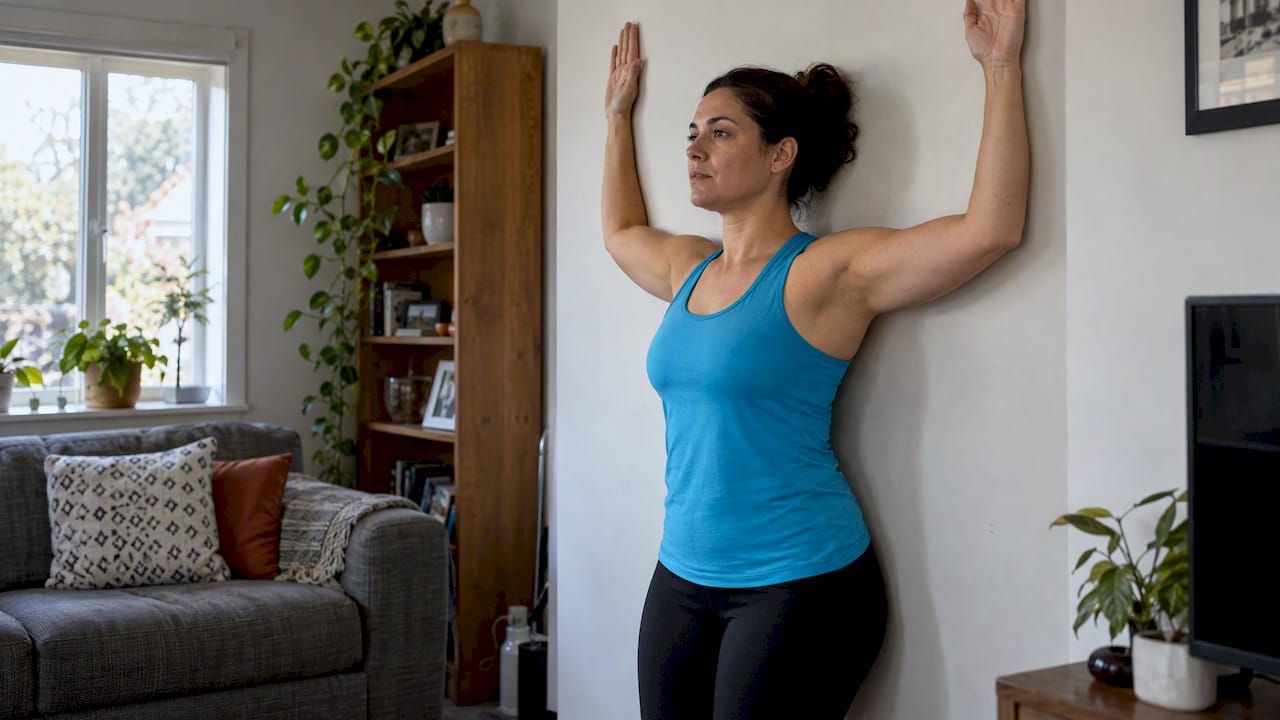
- Wall angels: Stand with your back against a wall, arms bent at 90 degrees, and slide them up and down while keeping contact with the wall. Aim for 2 sets of 10.
- Band rows: Pull a resistance band toward your torso, squeezing your shoulder blades together, for 2 sets of 12 to 15.
- Prone I, T, and Y raises: Lying face down, lift your arms into each letter shape to target the muscles between your shoulder blades, 1 set of 8 per position.
- Thoracic open-book stretch: Lying on your side with knees bent, rotate your top arm open across your body to improve upper back rotation, 8 to 10 reps per side.
- Doorway chest stretch: Place your forearm on a doorframe and lean forward gently to open the chest, holding 20 to 30 seconds per side.
Start with this routine most days of the week, spending 10 to 15 minutes total, and progress by adding resistance or repetitions once the movements feel easy. Practitioner guidance consistently places wall angels, rows, and prone I, T, Y raises ahead of passive stretching for building the postural strength that holds correction in place.
Pro Tip: Pair chin tucks with wall angels back to back. They target opposite ends of the same postural chain and take less than three minutes combined.
Stop any exercise and seek care if you notice numbness, tingling, or shooting pain down an arm. Our safe exercise and home plan for pinched nerve symptoms walks through modifications for anyone dealing with nerve-related neck pain specifically.
Clinical treatments: what hands-on care can offer
When home adjustments and exercise alone are not enough, conservative clinical care is the next step before anything more invasive. Common approaches include:
- Manual therapy to restore joint mobility and reduce muscle guarding around the neck and upper back.
- Targeted exercise programs supervised by a clinician to correct movement patterns that home routines miss.
- Soft tissue therapy to address tight or restricted fascia contributing to the forward-head pattern.
- Dry needling or laser therapy to help calm persistently irritated muscle tissue.
The evidence base generally favors combining hands-on treatment with a home rehab program rather than relying on either alone, with many people noticing meaningful improvement within a few weeks of consistent care. Imaging, specialist referral, or urgent evaluation becomes appropriate when symptoms include radiating arm pain, numbness, weakness, or signs that do not respond to several weeks of conservative treatment. Our overview of neck pain causes and treatment options goes deeper into how clinicians decide between these approaches.
Our approach to text neck at The Tx Room
Text neck can be treated using the Fascial Distortion Model, a hands-on method aimed at restoring normal movement in the soft tissue layers that get pulled tight by sustained forward posture. Every plan can start with an assessment of how your specific posture, work setup, and daily habits are driving your symptoms, then pair in-clinic sessions with a home exercise routine so the correction holds between visits. Treatment plans are built around specific patterns of strain rather than generic protocols, with the goal of getting patients back to comfortable movement without relying on an ongoing cycle of care.
— Chris
Start care for text neck at The Tx Room
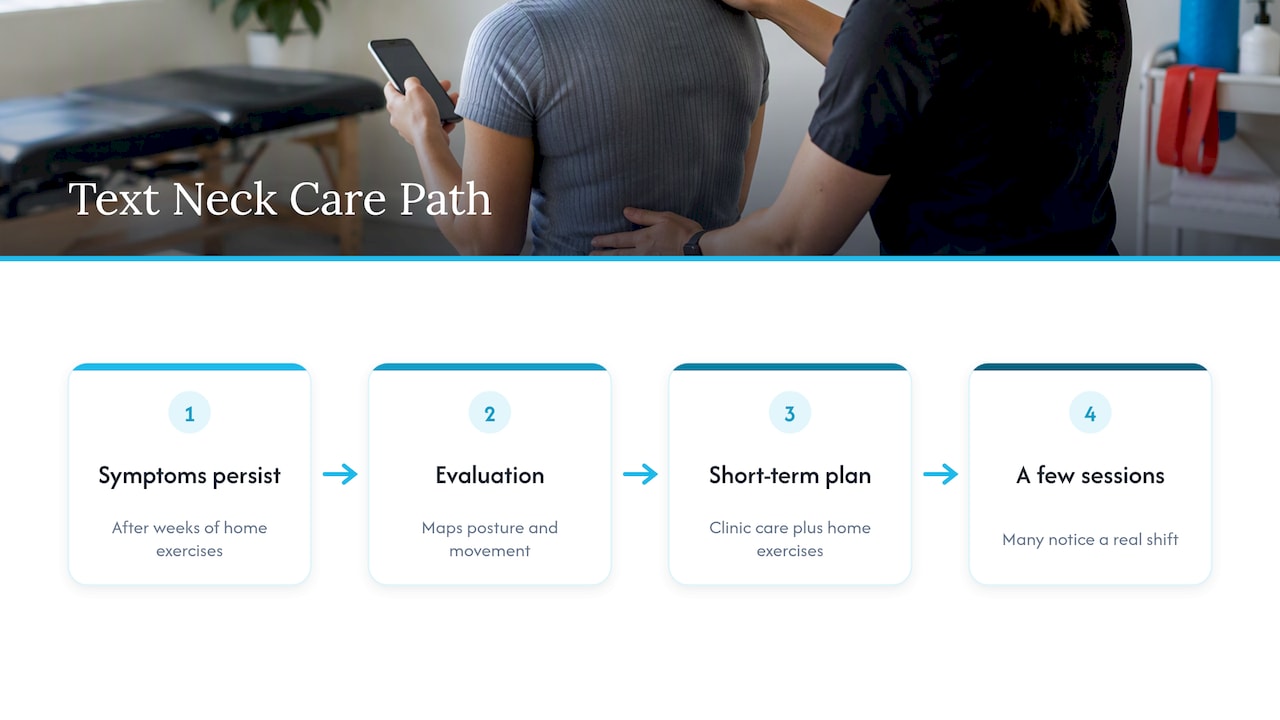
If a few weeks of posture changes and home exercises have not settled your symptoms, a hands-on evaluation can find what is actually driving the strain. An initial visit can map your posture and movement patterns, then build a short-term plan combining in-clinic treatment with exercises you do at home.

Many people notice a real shift within a handful of sessions when the plan is followed consistently. Book an evaluation at The Tx Room to get a plan built around your neck, not a generic handout.
This article is general information, not a substitute for advice from a qualified doctor. Consult a qualified healthcare professional about your own circumstances before acting on anything here.
FAQ
What are the signs and symptoms of text neck syndrome?
Common signs include neck and upper back stiffness, tight shoulders, tension headaches, and reduced ability to turn or tilt your head comfortably. Pain that radiates down an arm, along with numbness, tingling, or weakness, is not a typical text neck symptom and warrants medical evaluation.
How do I stop slouching?
Raise your screen to eye level, keep your ears stacked over your shoulders rather than jutting forward, and take a movement break every 20 to 30 minutes so no single posture is held too long. Strengthening the upper back with exercises like wall angels and rows helps your body hold the corrected position without constant conscious effort.
How long will a stiff neck last?
Mild, posture-related neck stiffness often improves within days to a few weeks once you adjust your device habits and add some gentle strengthening and movement. If stiffness persists beyond a few weeks or starts getting worse, it is worth having a clinician assess it rather than waiting it out.
What are the common symptoms of cervicalgia?
Cervicalgia simply means neck pain, and its common symptoms overlap closely with text neck: stiffness, reduced range of motion, muscle tightness, and sometimes headaches that start at the base of the skull. The underlying cause can vary from posture and muscle strain to joint irritation, so persistent cases benefit from a proper evaluation rather than guesswork.
Sources
- Smartphone overuse and neck pain — meta-analysis (Postgraduate Medical Journal / PubMed entry)
- Physiotherapy in text neck syndrome: scoping review (MDPI, 2025)
- What Is Tech Neck—and How Can You Prevent It? | Yale Medicine