
Shockwave Treatment for Active Patients: What Heals in 8–12 Weeks
Shockwave treatment is a legitimate, noninvasive option for a specific set of chronic musculoskeletal problems, particularly tendinopathies and plantar fasciitis, when conservative care like physical therapy hasn’t worked. It isn’t a cure for every ache, and it isn’t fast: most people need multiple sessions over several weeks before real improvement shows up. Whether it helps you depends heavily on getting the right diagnosis, the right device, and a provider who knows what they’re doing.
TL;DR:
- Shockwave therapy requires multiple sessions over weeks and depends heavily on accurate diagnosis, device type, and provider experience.
- Focused shockwave is better suited for deep tissues and calcific deposits, while radial pressure waves target superficial muscle and fascia.
- Improvements typically begin after eight to twelve weeks, with durable results often assessed around four months, not within the first two weeks.
- The treatment’s side effects are mild and temporary, including skin redness, minor bruising, and soreness, with serious risks being rare when performed by trained professionals.
- Manual therapy addressing biomechanical issues can often resolve conditions faster and may be combined with shockwave therapy for better outcomes.
Table of Contents
- What Is Shockwave Treatment, and What Are the Device Types?
- How Does Shockwave Therapy Work on the Body?
- Which Conditions Does Shockwave Treatment Actually Help?
- What Happens During Treatment and How Long Until It Works?
- What Are the Side Effects and Risks of Shockwave Therapy?
- How Do You Choose a Qualified Shockwave Provider?
- When Hands-On Manual Therapy Fits Alongside or Instead of Shockwave
- Why the Evidence Rarely Matches the Marketing
- A Hands-On Alternative Worth Considering First
- Sources
- FAQ
What Is Shockwave Treatment, and What Are the Device Types?
Extracorporeal shockwave therapy (ESWT) delivers acoustic energy through the skin to injured tissue, without needles or incisions. The term covers two genuinely different technologies, and the distinction matters more than most marketing pages let on.
- Focused shockwave (FSW) generates high-energy acoustic waves that converge at a specific depth, letting a provider target a deep structure like a calcific deposit in the shoulder or the bone at the heel.
- Radial pressure wave (RPW), sometimes called radial shockwave, spreads energy outward from the applicator across a broader, shallower area, which suits superficial muscle and fascia work.
Focused devices tend to get the nod for deep or precise targets. Radial devices show up more often for muscle tightness and trigger points closer to the surface. Mayo Clinic’s overview of shockwave treatment notes that FSW and RPW differ enough in their physical properties that they’re often chosen for different clinical jobs, not used interchangeably. Some clinics run both in the same visit, hitting a deep tendon with focused pulses and following up with radial waves over surrounding muscle.
How Does Shockwave Therapy Work on the Body?
The mechanism clinicians point to is mechanotransduction: mechanical energy from the shockwave gets converted into a cellular signal that triggers healing responses. That sounds abstract, but the downstream effects are concrete. Shockwaves appear to stimulate angiogenesis, the growth of new small blood vessels into the region, which brings fresh oxygen and nutrients to tissue that’s been stuck in a chronic, poorly healing state. They also seem to promote collagen synthesis, which matters because degraded tendons (tendinopathy is often a breakdown of collagen structure, not simple inflammation) need new, organized collagen to actually repair.
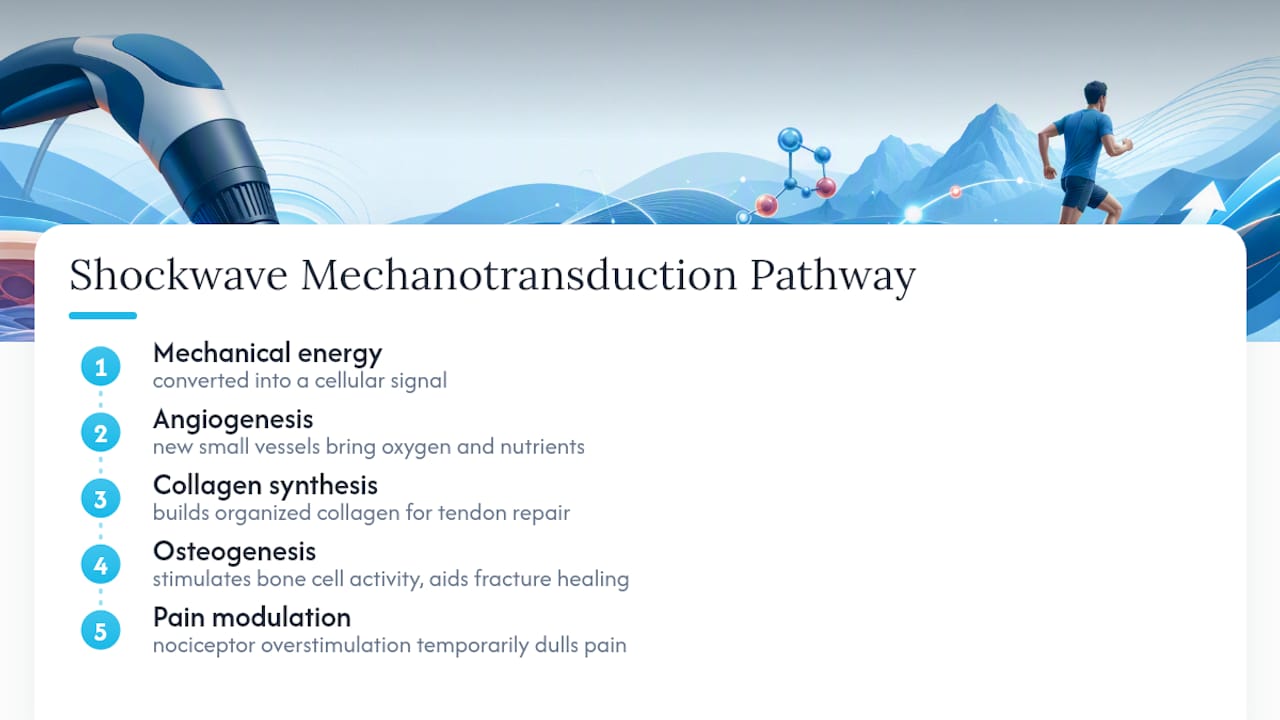
For bone, the mechanism shifts toward osteogenesis, stimulating bone cell activity to help slow or delayed fracture healing move forward. There’s also a pain component separate from tissue repair: shockwaves can overstimulate local nociceptors, the nerve endings that transmit pain signals, temporarily dulling pain perception in a way that resembles a counterirritant effect.
A narrative review of ESWT for musculoskeletal pain backs this multi-mechanism picture, though it’s honest that some of the finer cellular detail is still being worked out in animal and human studies. The mechanism isn’t fully mapped, but the clinical effect across several tissue types is consistent enough that it’s shaped treatment protocols for over two decades.
Which Conditions Does Shockwave Treatment Actually Help?
Evidence strength varies a lot by condition, and that’s the part patients most often get oversold on. Some indications rest on solid trial data. Others are supported mostly by smaller studies or clinical consensus rather than large randomized trials.
Conditions with the strongest evidence base include:
- Plantar fasciitis, one of the FDA-approved uses for ESWT and the condition most people associate with the treatment.
- Calcific tendinopathy of the shoulder, where focused shockwave can help break down and resorb calcium deposits.
- Lateral epicondylitis (tennis elbow), another FDA-approved indication with strong comparative data.
- Greater trochanteric pain syndrome (hip-side pain), often considered after failed conservative treatment.
- Delayed or nonunion bone healing, using higher-energy focused protocols to stimulate osteogenesis.
The clearest single data point comes from a randomized trial comparing shockwave against corticosteroid injection for chronic lateral epicondylitis. At 52 weeks, shockwave therapy showed 89% effectiveness compared with 50% for corticosteroid injections, a gap that widened over time rather than closing. Steroids often look better in the first few weeks, then that advantage fades or reverses. Shockwave’s benefit tends to build slowly and hold.
Other applications, including spasticity management in neurologic conditions and certain wound-healing protocols, have supportive randomized data too, though the research on shockwave for spasticity is newer and the indications are still expanding rather than settled. Clinicians generally reach for shockwave after physical therapy, activity modification, and medication haven’t resolved the problem on their own, not as a first-line move.
What Happens During Treatment and How Long Until It Works?
Most treatment plans include multiple sessions spaced roughly a week apart. The number of pulses per session and the energy level depend on the target: bone conditions generally call for higher energy flux density to drive osteogenesis, while tendinopathies and muscle work often respond to lower or medium energy.
Here’s the realistic timeline:
- During and immediately after treatment, some patients feel short-term pain relief from the overstimulation effect on nerve endings, though this fades within hours.
- The first two to four weeks are often unremarkable. This is the point where people assume it isn’t working and quit, which is usually premature.
- By eight to twelve weeks, more durable improvement typically shows up as tissue remodeling catches up with the initial stimulus.
- A four-month mark is a common point for clinicians to formally reassess, since durable gains take longer to appear than the fast, temporary relief a steroid shot can produce.
Providers following established best-practice guidance generally skip local anesthetic during focused treatment, because the patient’s pain feedback helps the provider confirm they’re hitting the right spot. Over-the-counter acetaminophen is usually preferred over NSAIDs around treatment days, since NSAIDs can blunt the inflammatory signaling the therapy is trying to provoke. Activity restrictions afterward are typically minimal, which is part of why active patients like it.
Pro Tip: Don’t judge shockwave therapy at the two-week mark. If your provider planned three or four sessions, give the full protocol time to work before deciding it isn’t for you.
What Are the Side Effects and Risks of Shockwave Therapy?
The side effect profile is generally mild, and that’s one of the more consistently reported facts across the literature. Expect some combination of these after a session:
- Skin redness (erythema) over the treated area, usually gone within a day or two.
- Minor bruising, especially with focused high-energy protocols.
- Temporary soreness or aching at the application site.
A review of ESWT for musculoskeletal disorders confirms that serious complications like hematoma, nerve irritation, or the theoretical risk of tendon rupture from misapplication are uncommon, especially when a trained provider handles the procedure.
Contraindications matter more than side effects. Shockwave should not be used over a pregnant abdomen or pelvis, over a known malignant tumor, in patients with severe bleeding disorders, or with high-energy focused devices near the lungs, brain, or spinal cord. A thorough intake exam before your first session isn’t a formality. It’s how a qualified provider rules these out.
How Do You Choose a Qualified Shockwave Provider?
Not every clinic offering shockwave treatment is equally equipped to deliver it well, and the questions you ask before booking can save you months of wasted sessions.
- Ask about credentials and hands-on device experience. A provider whose run hundreds of focused-shockwave sessions for plantar fasciitis handles the equipment differently than one who bought a radial unit last month.
- Ask for the specific protocol, including device type, energy settings, pulse count, and whether they use imaging guidance to confirm placement.
- Ask how they’ll measure progress and when they plan to reassess, ideally with a defined timeline rather than a vague “come back if it’s not better.”
- Ask what happens if it doesn’t work, including whether they have a follow-up plan or referral path.
Treat a few answers as warning signs: promises of a guaranteed cure, routine numbing injections before focused treatment (which undercuts the pain-feedback localization that makes focused shockwave accurate), or no clear plan for reassessing your progress. A provider confident in their protocol will walk you through it without hesitation.
When Hands-On Manual Therapy Fits Alongside or Instead of Shockwave
Shockwave targets tissue with acoustic energy, but it doesn’t address the biomechanical imbalances, joint restrictions, or fascial adhesions that often caused the injury to begin with. Manual approaches like the Fascial Distortion Model work directly on those structural drivers, which is why many patients do better with combined care: hands-on work plus rehab, with shockwave added only if a specific tissue problem, like a calcific deposit or a stubborn plantar fascia, needs its own targeted stimulus. For some patients, manual therapy alone resolves the problem before a device ever gets involved.
Why the Evidence Rarely Matches the Marketing
The biggest gap between shockwave’s reputation and its reality is timeline expectations. Marketing materials imply quick relief. The actual research says something closer to: expect a slow build over two to three months, with a real reassessment point around four months, not two weeks. Patients who quit early because they don’t feel different after one session are abandoning a treatment before it had a chance to work.
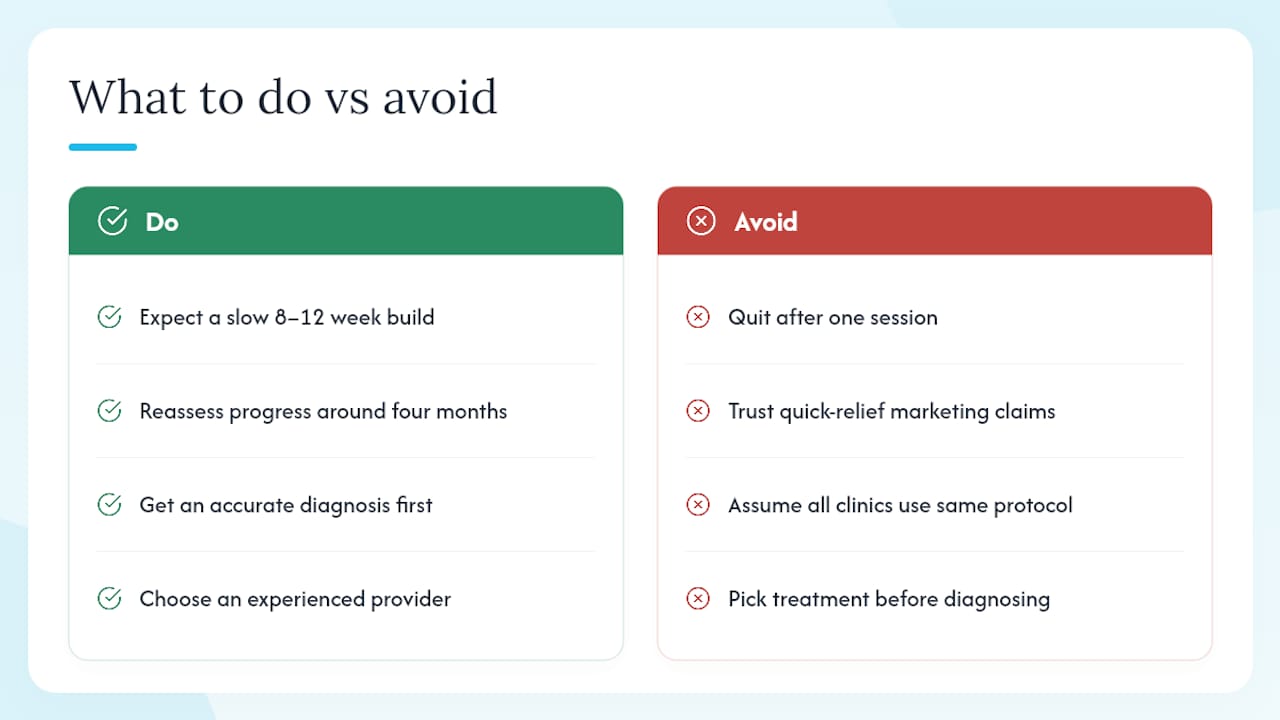
The second gap is protocol variability. Two clinics offering “shockwave therapy” for the same tendon problem might be running meaningfully different energy levels, pulse counts, and session counts, and that variability is a real reason studies sometimes conflict. This is why the provider matters as much as the technology. A skilled clinician using a mediocre device will often outperform an inexperienced one using top-tier equipment.
What I’d prioritize first, if I were weighing this: get an accurate diagnosis before anyone talks devices. Shockwave works best on a small, well-defined list of conditions. Outside that list, you’re paying for a treatment with thinner evidence behind it than the sales pitch suggests.
— Chris
A Hands-On Alternative Worth Considering First
If shockwave sounds like a bigger commitment than you want before trying manual care, A different starting point is hands-on treatment that addresses the biomechanical and fascial issues often driving chronic tendon and joint pain, without equipment sessions or a multi-week device protocol.
Using the Fascial Distortion Model, soft tissue restrictions behind conditions like plantar fasciitis, tennis elbow, and chronic tendinitis can be addressed, often producing noticeable change within a handful of visits. For patients who’d rather try focused manual therapy before committing to a shockwave protocol, or who want a complementary approach alongside it, this is a practical next step. If tendinitis or a similar chronic issue has been slowing you down, book an evaluation at Thetxroom to find out whether hands-on care can get you back to normal activity faster than you expected.
Sources
- Randomized clinical trial comparing ESWT with corticosteroid injection for lateral epicondylitis
- Shockwave treatment: A new wave for musculoskeletal care — Mayo Clinic
- Extracorporeal Shock Wave Therapy for the Treatment of Musculoskeletal Pain: A Narrative Review
This article is general information, not a substitute for advice from a qualified doctor. Consult a qualified healthcare professional about your own circumstances before acting on anything here.
FAQ
Does Shockwave Treatment Actually Work?
For select conditions like plantar fasciitis, calcific shoulder tendinopathy, and chronic tennis elbow, yes, with a randomized trial showing 89% effectiveness at 52 weeks for lateral epicondylitis compared with 50% for steroid injections. Results depend heavily on correct diagnosis, device choice, and provider skill.
Are You Awake for Shockwave Treatment?
Yes. Musculoskeletal shockwave therapy is done while you’re fully awake, and providers generally avoid local anesthetic during focused treatment so your pain feedback helps confirm accurate targeting.
What Are the Negative Side Effects of Shockwave Therapy?
Most people experience mild, short-lived effects like skin redness, minor bruising, or soreness at the treatment site, and serious complications are uncommon when a trained provider performs the procedure.
How Long Do Shockwave Therapy Results Last?
Improvements that appear by the eight to twelve week mark tend to be durable rather than temporary, since the treatment aims at actual tissue repair rather than short-term symptom masking. Many providers reassess around four months to confirm the gains are holding.