
Plantar Plate Tear Treatment: What Clinicians Do Before Surgery
Most plantar plate tears are treated first with protective offloading, taping or splinting, stiff-soled footwear, orthotics, and progressive rehab exercises. Surgery is reserved for cases with persistent pain, joint instability, or fixed toe deformity after an adequate conservative trial. Imaging, particularly dynamic ultrasound and MRI, helps confirm the diagnosis and guides surgical planning when conservative care falls short.
TL;DR:
- If symptoms persist beyond two to three weeks, ask a clinician about an orthotic with a metatarsal pad and structured exercises.
- With conservative care, pain and swelling should begin easing by weeks two to six; meaningful walking gains often appear around three months.
- Radiographs usually come first; dynamic ultrasound can reveal tears during toe motion, while MRI is reserved for unclear scans or surgical planning.
- Seek surgical consultation if pain persists despite consistent care, or instability, progressive toe drift, or a fixed deformity remains.
- Studies report pain reductions near five points and function gains near 40 points through two years after repair, but longer term durability remains uncertain.
Table of Contents
- A Quick Treatment Roadmap by Severity
- Conservative Treatment Options That Work
- How Clinicians Diagnose a Plantar Plate Tear
- When Surgery Becomes the Right Option
- Recovery Milestones and Returning to Activity
- How Hands-On Care Fits Into a Conservative-First Plan
- Why Conservative-First Still Makes Sense
- Get Hands-On Help for Your Foot Pain
- FAQ
- Sources
A Quick Treatment Roadmap by Severity
How aggressively you treat a plantar plate tear usually depends on grade: mild sprains and partial tears respond well to offloading and bracing, while higher-grade partial tears or early instability need a structured rehab program, and full-thickness tears with a fixed or dislocated toe are more likely to need surgical input. An adequate conservative trial generally means a period of consistent taping, footwear changes, and guided exercise for some time before anyone considers an operation.
In the first days, the priority is simply reducing load on the joint. That means backing off the activity that aggravates it, icing after activity, and avoiding barefoot walking on hard floors.
- Start with activity modification and short-term offloading to calm acute irritation.
- Add toe taping or a splint to hold the toe in a slightly flexed position and limit upward bending at the joint.
- Switch to a stiff-soled shoe or a supportive sandal to reduce motion through the forefoot.
- If symptoms persist past two to three weeks, move to a clinician-fitted orthotic with a metatarsal pad and a structured exercise plan.
If pain, swelling, or a visible gap between the toes continues despite these steps, that is the signal to get a clinical exam and imaging rather than pushing through it on your own.
Conservative Treatment Options That Work
Taping and toe splints are often the first tool a clinician reaches for because they physically hold the metatarsophalangeal joint in a plantarflexed position, taking tension off the damaged plantar plate while it heals. A simple strapping pattern looping under the toe and around the forefoot can be taught for home use between office visits.
Footwear matters just as much as bracing. A stiff-soled shoe, a carbon fiber insole, or in more irritable cases a walking boot limits the toe from bending back with each step, which is the motion that keeps re-aggravating the tear.
- Begin with protection: taping, a stiff-soled shoe, and activity changes for one to two weeks.
- Add an orthotic with a metatarsal pad placed just behind the painful joint to offload it during walking.
- Reintroduce ankle and toe mobility work once acute pain settles.
- Progress to strengthening, including intrinsic foot muscle exercises and toe curls with resistance.
- Gradually reload the forefoot with walking, then light jogging or sport-specific drills, watching for recurring swelling.
Pro Tip: Check shoes for excessive flexibility at the forefoot by trying to bend the toe box in half; if it folds easily, it is working against your recovery.
Most people who stick with this sequence notice less pain and swelling within a few weeks, and a patient-facing treatment overview notes that successful conservative treatment can take anywhere from several weeks to a few months. A case report also described a recreational athlete with a full-thickness tear who became pain-free through conservative care alone, remaining active years later, which underscores that even significant tears can respond to well-structured offloading and rehab. If pain plateaus or worsens despite consistent use of taping, footwear changes, and orthotics over that timeframe, it is worth returning for re-evaluation rather than continuing the same plan indefinitely.
How Clinicians Diagnose a Plantar Plate Tear
Diagnosis starts with a hands-on exam. The drawer test checks for abnormal up-and-down movement at the base of the toe, the toe purchase test looks at whether the toe can press down against the floor or a surface with normal strength, and the Kelikian push-up test evaluates whether pushing up under the metatarsal head restores a drifted toe to normal position. A positive drawer test or reduced toe purchase points toward plantar plate insufficiency rather than a simpler cause like capsulitis.
- Weight-bearing radiographs are typically ordered first to rule out stress fracture, arthritis, or significant toe deformity.
- High-frequency dynamic ultrasound is often the next step because it lets a clinician watch the joint move in real time and can reveal tears that only show up under dorsiflexion stress.
- MRI, including dorsiflexion-stress variants, is reserved for preoperative planning or when ultrasound findings are unclear.
- Imaging also helps separate a plantar plate tear from a Morton neuroma, since the two conditions can feel similar but need different treatment.
A recent narrative review on clinical and imaging approaches to plantar plate injuries found that dynamic ultrasound is increasingly favored as the first advanced imaging test, with MRI kept for cases where surgery is being planned or ultrasound results remain inconclusive. Ultrasound shows hypoechoic clefts in partial tears and a more complete anechoic gap in full-thickness tears, and a detailed imaging reference on the lesser MTP joint notes that dorsiflexion stress views can expose tears that look normal at rest.
When Surgery Becomes the Right Option
Surgery is generally considered when conservative care has been given a fair trial over an adequate period, and the toe still shows instability, progressive drift, or a fixed deformity that no longer corrects with a Kelikian push-up. Persistent pain that limits walking despite these measures is another trigger for surgical consultation.
- Dorsal direct repair is the most-studied technique and is often combined with a Weil osteotomy to shorten the metatarsal and reduce tension across the repair.
- A plantar surgical approach is an alternative route used in select cases.
- Tendon transfer is reserved for joints that cannot be directly reconstructed due to chronic, severe damage.
A systematic review and meta-analysis of plantar plate repair outcomes found a pooled mean VAS pain reduction near 5 points and an AOFAS functional score improvement of roughly 40 points at follow-up of up to two years, suggesting direct repair produces consistent gains in pain and function within that window. The same body of evidence notes that long-term durability beyond two years is still not well established. Possible postoperative issues include joint stiffness, a “floating toe” that does not touch the ground normally, and arthrofibrosis, all worth discussing before committing to surgery.
Recovery Milestones and Returning to Activity
Recovery looks different depending on whether you are managed conservatively or surgically, but both follow a staged pattern rather than a straight line.
- Weeks two to six of conservative care: expect swelling and pain to start easing if taping, footwear, and offloading are consistent.
- Around three months: most people doing structured rehab should notice meaningful improvement in walking tolerance and reduced need for taping.
- After surgery: plan on a period of protected weightbearing or limited motion, since protocols commonly restrict forceful upward bending of the toe for several weeks to protect the repair.
- Return to sport or high-demand activity is gradual and guided by how well the toe tolerates reloading, not by a fixed calendar date.
Pro Tip: Track toe purchase (whether the toe presses firmly into the ground) as a simple at-home checkpoint; improvement there usually tracks with overall healing.
How Hands-On Care Fits Into a Conservative-First Plan
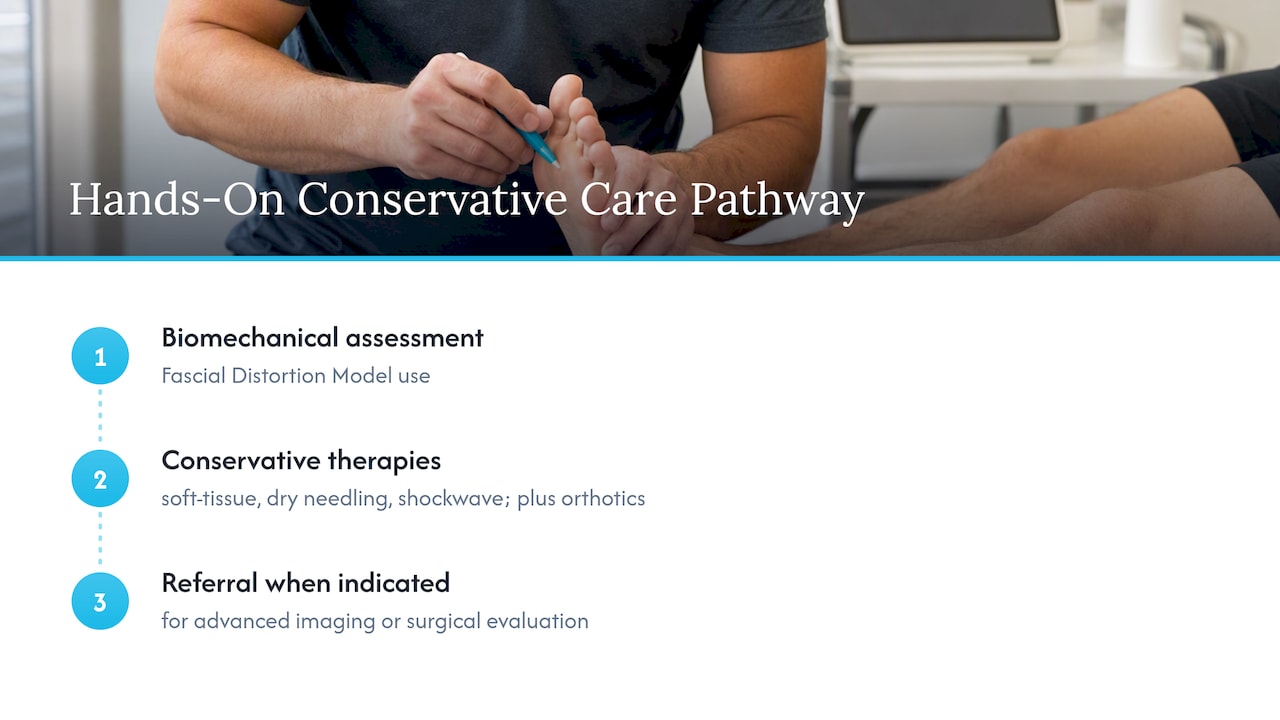
We use the Fascial Distortion Model to address the soft-tissue and biomechanical patterns that often accompany forefoot overload, working to improve how force moves through the foot rather than treating the joint in isolation. Depending on presentation, we may pair soft tissue therapy, dry needling, or focused shockwave therapy with orthotic guidance as part of a staged plan. When exam findings suggest instability or imaging is warranted, we coordinate referral for advanced imaging or surgical evaluation rather than delaying appropriate care.
Why Conservative-First Still Makes Sense
Toe instability is unsettling, and the instinct is often to ask about surgery right away. But the evidence supports giving offloading, bracing, and rehab a genuine chance first, since many tears, even some full-thickness ones, respond well when that plan is followed closely rather than attempted half-heartedly.
The right intensity of treatment depends on your goals: a runner chasing a racing season tolerates a different recovery timeline than someone who mainly needs to get through a workday comfortably. What matters most is reassessing early if the toe keeps drifting or pain plateaus, instead of waiting months to find out the current approach is not working.
— Chris
Get Hands-On Help for Your Foot Pain
If taping and shoe changes have not resolved your forefoot pain, hands-on treatment can address the soft-tissue and biomechanical contributors that generic advice misses. Our Fascial Distortion Model approach at The Tx Room pairs manual therapy with practical offloading strategies tailored to your foot and your activity level.
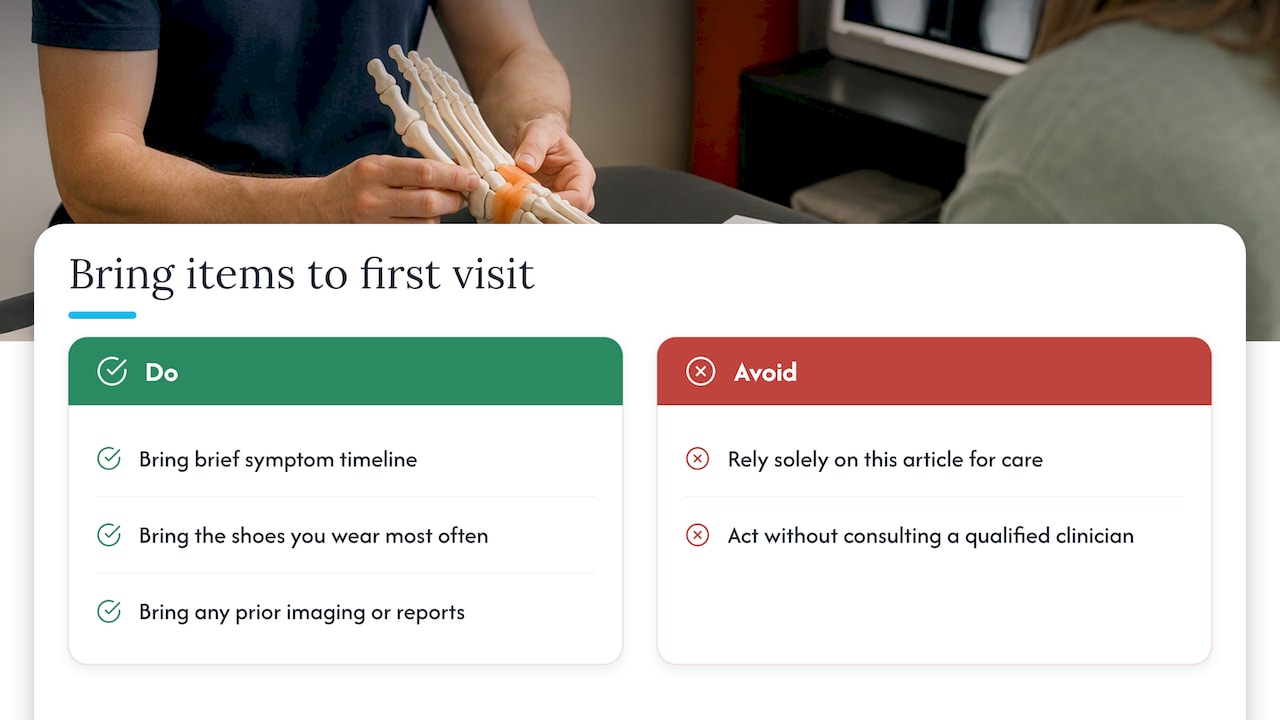
Bring a brief symptom timeline, the shoes you wear most often, and any prior imaging to your first visit so we can build a plan around what has and hasn’t worked for you.
This article is general information, not a substitute for advice from a qualified doctor. Consult a qualified healthcare professional about your own circumstances before acting on anything here.
FAQ
Can a plantar plate tear heal on its own?
Mild sprains and some partial tears can improve with rest, taping, and footwear changes alone, though most people recover faster with a structured conservative plan. A case report of a full-thickness tear managed conservatively showed the injury can resolve well even without surgery when offloading and rehab are followed consistently.
Can you walk on a plantar plate tear?
Walking is usually possible but often painful, especially push-off, and continuing high-impact activity without offloading tends to aggravate the injury further. Stiff-soled shoes, taping, or a walking boot reduce the motion that causes pain and allow more comfortable daily walking while healing.
How do you fix a plantar plate tear without surgery?
Non-surgical management combines toe taping or splinting, stiff-soled or carbon fiber footwear, an orthotic with a metatarsal pad, and a progressive rehab program moving from protection to mobility to strengthening. A patient-facing overview of plantar plate tears notes this approach can take several weeks to a few months to produce lasting improvement.
How long does it take to recover from plantar plate tear surgery?
Postoperative recovery typically involves a period of protected weightbearing and restricted toe motion for several weeks to protect the repair, followed by a gradual return to normal footwear and activity. A systematic review of repair outcomes found meaningful pain and function improvements within two years, though data beyond that window remains limited.
What other options exist alongside standard conservative care?
Some clinics offer regenerative approaches such as PRP injections as an adjunct for soft-tissue healing, which may be discussed alongside standard offloading and rehab; a resource on PRP for plantar fasciitis outlines how this type of therapy is used for related forefoot conditions. Whether an adjunct like this fits your case is a conversation to have with your treating clinician.
Sources
- Diagnosing Plantar Plate Injuries: A Narrative Review of Clinical and Imaging Approaches
- Imaging of lesser metatarsophalangeal joint (plantar plate) — Bird/Linklater imaging article