
Meralgia Paresthetica Treatment: Your Full Care Guide
Most people with meralgia paresthetica get better without surgery. The condition, medically defined as compression of the lateral femoral cutaneous nerve (LFCN) where it passes under or through the inguinal ligament, causes burning, numbness, or tingling along the outer thigh. According to StatPearls, conservative care that relieves that compression is first-line and works for the majority of patients, with many cases resolving within a few months.
Here is what to do right now:
- Switch to loose-fitting pants or shorts and remove any tight belt or waistband.
- Apply ice wrapped in a cloth to the outer hip for 15–20 minutes to reduce acute discomfort.
- Try gentle hip flexor and abdominal stretches to reduce tension at the inguinal ligament.
- Take an over-the-counter NSAID (ibuprofen, naproxen) for short-term symptom control if tolerated.
Reassess after 4–8 weeks of consistent conservative care. If symptoms are worsening, spreading, or significantly limiting daily function before that window closes, see a clinician sooner. Seek prompt medical attention if you notice progressive leg weakness, bowel or bladder changes, or severe pain that is not responding to anything.
This article is general health information, not a substitute for professional medical advice. Discuss your specific situation with a qualified clinician before starting or changing any treatment.
Key Takeaways
Conservative meralgia paresthetica treatment resolves most cases when the mechanical compression is identified and removed; escalation to injections or surgery is warranted only when conservative measures fail after 4–8 weeks or symptoms are functionally limiting.
| Point | Details |
|---|---|
| Conservative care is first-line | Loose clothing, weight management, and hip flexor stretching resolve most cases within a few months. |
| Escalate at 4–8 weeks | If symptoms persist or worsen, move to medications, then LFCN nerve block before considering surgery. |
| Injections confirm and treat | A positive nerve block both confirms the LFCN as the pain source and provides short- to medium-term relief. |
| Surgery reports ~80% improvement | Retrospective series show approximately 80% symptomatic improvement; neurolysis preserves sensation, neurectomy causes permanent numbness. |
| Thetxroom offers hands-on structural care | The clinic in Plano uses FDM and myofascial techniques to address inguinal ligament tension and coordinates with physicians when injections or imaging are needed. |
Table of Contents
- How clinicians choose meralgia paresthetica treatment
- 1. First-line, noninvasive care you can start today
- 2. Medications commonly used to control neuropathic symptoms
- 3. Diagnosis and treatment with local anesthetic and corticosteroid injections
- 4. Other minimally invasive interventional treatments
- 5. When surgery is considered and how neurolysis compares with neurectomy
- 6. How physical therapy, manual therapy, and FDM address the structural cause
- 7. How meralgia paresthetica is diagnosed and which tests rule out other causes
- 8. Red flags, which specialist to see, and what to bring to your first appointment
- 9. Typical recovery timeline and long-term outlook
- 10. How to reduce recurrence risk and manage symptoms long-term
- Sources
How clinicians choose meralgia paresthetica treatment
Clinicians approach this condition in a stepwise way: start with the least invasive option, reassess at defined intervals, and escalate only when the current step fails or symptoms are severe enough to justify moving faster. The Cleveland Clinic and major clinical reviews consistently reinforce this ladder, and it maps directly to how most U.S. primary care physicians, neurologists, and physiatrists manage the condition.
The decision to escalate turns on three factors: how long symptoms have been present, how much they are limiting function (sleep, work, exercise), and whether the previous step produced any meaningful relief. A patient who has worn loose clothing and taken NSAIDs for six weeks with zero improvement is a reasonable candidate for a diagnostic nerve block. A patient who gets three months of relief from an injection but then relapses warrants a conversation about structural correction or, eventually, surgical consultation.
| Stage | Typical timing | Goal | Consider referral when |
|---|---|---|---|
| Conservative self-care | Weeks 1–8 | Reduce compression, control symptoms | No improvement at 4–8 weeks |
| Oral medications | Weeks 2–12 | Neuropathic symptom control | Inadequate relief or side effects |
| LFCN injection / nerve block | Weeks 6–8 | Diagnostic confirmation + relief | Temporary response only, recurrence |
| Interventional (PRF, PNS) | Months 3–6+ | Sustained relief without surgery | Failure of injections, refractory pain |
| Surgery (neurolysis or neurectomy) | Months 6–12+ | Definitive decompression or ablation | Chronic, refractory, functionally limiting |
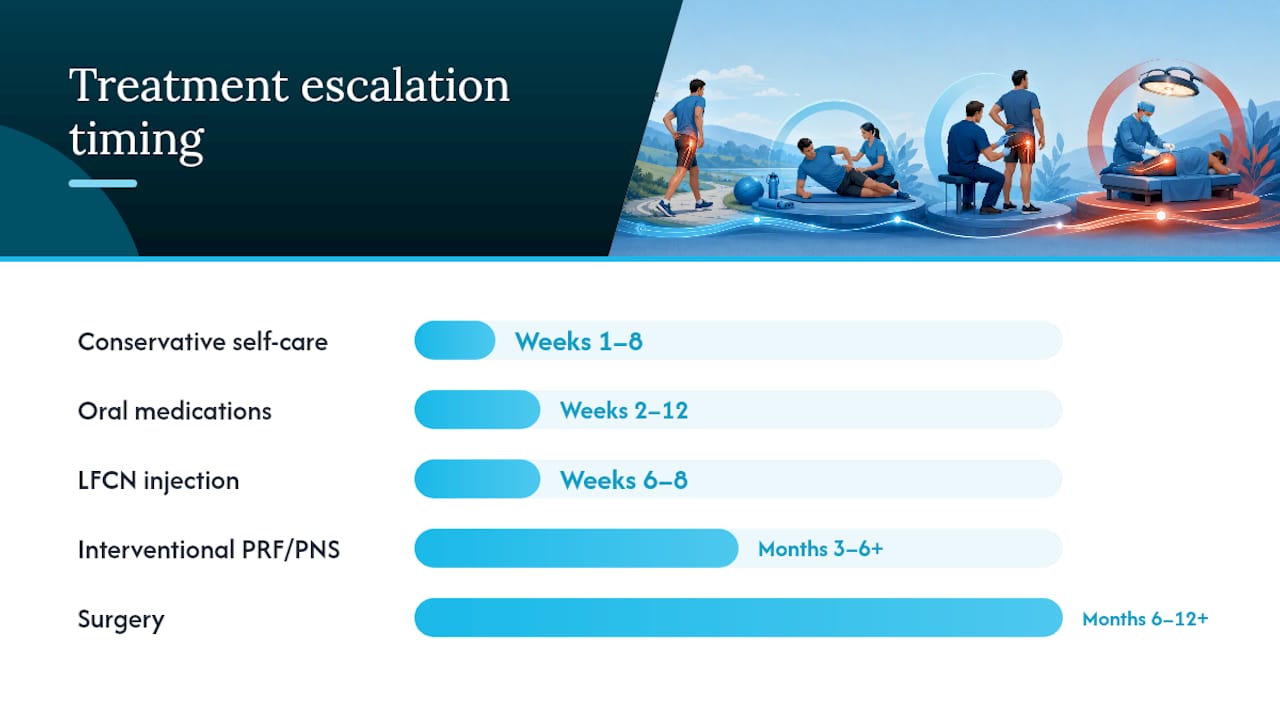
A PMC narrative review confirms that conservative and injection therapies are adequate for most patients and that surgery is appropriate when those measures fail, though high-quality comparative data remain limited.
1. First-line, noninvasive care you can start today
Conservative measures work because they directly address the mechanical cause: pressure on the LFCN at the inguinal ligament. Remove the pressure, and the nerve recovers.
Clothing and compression changes:
- Replace tight jeans, belts, or waistbands with loose-fitting alternatives immediately.
- Avoid hip-hugging athletic wear, tool belts, and anything that cinches at the anterior hip.
- Pregnant patients often find a maternity support belt that redistributes pressure rather than concentrating it at the inguinal crease helpful; pregnancy-related cases typically resolve after delivery.
Weight and posture:
- Abdominal adiposity increases mechanical load on the inguinal ligament. Even modest weight reduction can meaningfully reduce LFCN compression in patients where this is a contributing factor.
- Prolonged sitting with the hip flexed past 90 degrees (deep bucket seats, low chairs) compresses the nerve. Raise your seat height so your hips sit at or above knee level.
Topical agents and short-term symptom control:
- Topical lidocaine patches applied over the symptomatic outer thigh area offer low-risk, localized relief for cutaneous burning. StatPearls lists topical lidocaine and capsaicin among the options for managing localized neuropathic symptoms.
- Capsaicin cream (0.025–0.075%) can desensitize the area over repeated applications, though initial use often causes a temporary burning sensation.
- Short courses of NSAIDs (ibuprofen 400–600 mg with food, naproxen 250–500 mg) address inflammatory components and reduce acute discomfort.
Movement and stretches:
Hip flexor stretching, gentle abdominal strengthening, and piriformis releases reduce tension in the tissues surrounding the inguinal ligament. Medical News Today recommends abdominal and hip stretches as supportive measures, with the caveat that large clinical trials are lacking. A standing hip flexor lunge stretch held for 30 seconds per side, repeated twice daily, is a practical starting point most patients tolerate well.

Pro Tip: Combining a topical lidocaine patch for immediate symptom relief with a daily hip flexor stretch routine addresses both the symptom and one of its structural contributors. Relying on the patch alone without changing compression habits tends to produce a cycle of temporary relief and return.
2. Medications commonly used to control neuropathic symptoms
Medications for meralgia paresthetica do not fix the underlying nerve compression. They manage the neuropathic symptoms (burning, allodynia, tingling) while the structural cause is addressed through other means. That distinction matters when setting expectations with patients.
Gabapentin and pregabalin are the most commonly prescribed agents for neuropathic pain in this setting. Both work by modulating calcium channels in the dorsal horn, reducing aberrant nerve signaling. Gabapentin typically starts at 300 mg at night and is titrated upward over weeks; pregabalin has a more predictable dose-response and is often better tolerated. Drowsiness, dizziness, and peripheral edema are the most common side effects. Both require dose adjustment in patients with reduced kidney function.
Tricyclic antidepressants (TCAs), particularly amitriptyline at low doses (10–25 mg nightly), have a long track record in neuropathic pain management. They are inexpensive and effective for sleep disruption caused by nocturnal burning, but anticholinergic side effects (dry mouth, constipation, urinary retention) limit their use in older adults.
Duloxetine, a serotonin-norepinephrine reuptake inhibitor, is FDA-approved for diabetic peripheral neuropathy and is sometimes used off-label for other neuropathic pain conditions including LFCN entrapment. It typically requires 4–6 weeks to show meaningful benefit.
Carbamazepine and phenytoin are older anticonvulsants occasionally used for lancinating neuropathic pain, though they carry more drug-interaction risk and require monitoring of blood levels and liver function.
Topical agents (lidocaine, capsaicin) are covered in the conservative care section above and are worth combining with oral agents when cutaneous symptoms are prominent.
Evidence note: Neuropathic pain medications provide symptomatic control rather than addressing the mechanical compression that causes meralgia paresthetica. They are most useful as a bridge while structural measures take effect, not as a standalone long-term solution.
Always review the full medication list with the prescribing clinician. Gabapentinoids in particular interact with opioids and central nervous system depressants in ways that increase sedation and fall risk.
3. Diagnosis and treatment with local anesthetic and corticosteroid injections
An LFCN nerve block serves two purposes at once: it confirms the diagnosis and provides therapeutic relief. When an injection of local anesthetic at the inguinal ligament produces immediate, dramatic reduction in outer thigh symptoms, that response is strong evidence that the LFCN is the pain generator rather than a lumbar nerve root or hip joint.
How the procedure works:
The injection is placed just medial to the anterior superior iliac spine (ASIS), below the inguinal ligament, where the LFCN exits the pelvis. Ultrasound guidance has become increasingly common because it allows the clinician to visualize the nerve directly and confirm needle placement, reducing the chance of a missed block. A typical injection combines a short-acting local anesthetic (lidocaine) with a corticosteroid (triamcinolone or methylprednisolone).
What to expect:
- Immediate numbness or significant symptom reduction within minutes of the local anesthetic taking effect.
- Corticosteroid effect builds over 3–7 days and typically lasts weeks to a few months.
- Some patients get durable relief from a single injection; others require repeat injections.
Evidence and limitations:
Injection therapy can provide diagnostic and short- to medium-term symptomatic relief, but reported response rates vary between studies and long-term freedom from pain after infiltration is inconsistent across meta-analyses. A PMC review confirms that injections are effective for many patients but that the evidence base is heterogeneous.
Temporary relief from an LFCN block that does not last is clinically meaningful: it confirms the nerve is the source of pain and signals that the underlying mechanical compression has not been corrected. That finding should prompt a structural assessment rather than simply repeating the injection.
Risks and reasonable limits:
- Infection at the injection site (rare with sterile technique).
- Temporary local numbness beyond the intended area.
- Repeated corticosteroid injections carry a small risk of local tissue atrophy and systemic steroid effects; most clinicians limit injections to two or three before reassessing the treatment plan.
4. Other minimally invasive interventional treatments
For patients who get temporary relief from injections but cannot sustain it, and who are not yet ready for surgery, two interventional options are worth discussing with a pain specialist: pulsed radiofrequency ablation (PRF) and peripheral nerve stimulation (PNS).
Pulsed radiofrequency ablation applies short bursts of radiofrequency energy to the LFCN, modulating pain transmission without the thermal destruction used in conventional radiofrequency ablation. It is performed under imaging guidance, is minimally invasive, and does not cause the permanent sensory loss associated with neurectomy. Case reports and small series describe meaningful pain reduction in patients who failed injections, but the evidence base is limited.
Peripheral nerve stimulation involves placing a small electrode near the LFCN to deliver low-level electrical impulses that interrupt pain signaling. Temporary PNS systems (implanted for 60 days and then removed) have shown promise in peripheral neuropathic pain conditions generally, and some pain centers use them for refractory LFCN entrapment.
Evidence for both approaches is limited to case series and small cohorts; larger randomized trials are lacking. These are options for selected, refractory cases rather than routine care. A recent Springer narrative review also noted that alternative add-on therapies including botulinum toxin, kinesio taping, and acupuncture show early promise in small studies but require larger trials before routine recommendation.
Who is a candidate? Patients who have failed at least two injections, have a confirmed LFCN diagnosis, and are not surgical candidates (or prefer to avoid surgery) are reasonable referrals to a pain management specialist or neuromodulation center. Ask your neurologist or physiatrist for a referral to a center with experience in peripheral nerve interventions.
5. When surgery is considered and how neurolysis compares with neurectomy
Surgery for meralgia paresthetica is reserved for chronic, refractory cases where conservative care, medications, and injections have all failed to provide lasting relief. Two procedures are performed: lateral femoral cutaneous nerve decompression (neurolysis) and neurectomy.
Neurolysis (decompression) releases the LFCN from whatever is compressing it, most often the inguinal ligament or surrounding fascia. The nerve itself is preserved. The goal is to restore normal nerve function and retain sensation in the outer thigh. Recovery is generally faster than neurectomy, and the procedure is considered less invasive.
Neurectomy removes a segment of the LFCN entirely, eliminating the pain signal by eliminating the nerve. It produces permanent numbness in the outer thigh distribution. Some patients find this trade-off acceptable when pain has been severe and prolonged; others find permanent numbness preferable to burning pain. The choice requires direct shared decision-making between patient and surgeon.
| Feature | Neurolysis (decompression) | Neurectomy |
|---|---|---|
| Goal | Relieve compression, preserve nerve | Eliminate pain by removing nerve segment |
| Sensory outcome | Sensation preserved | Permanent numbness in LFCN distribution |
| Recurrence risk | Higher if compression cause persists | Lower (nerve is absent) |
| Invasiveness | Less invasive | Slightly more extensive |
| Recovery timeline | Weeks to a few months | Weeks to a few months |
| Evidence quality | Retrospective series, limited RCTs | Retrospective series, limited RCTs |
StatPearls reports that retrospective series describe symptomatic improvement in approximately 80% of surgically treated patients. A Springer narrative review found that some meta-analyses report higher freedom-from-pain rates after neurectomy compared with decompression, while others show similar outcomes. The literature is heterogeneous and primarily retrospective, so these figures should be interpreted with appropriate caution.
Surgical risks include infection, hematoma, anesthetic complications, and the possibility of incomplete relief or neuroma formation. Postoperative follow-up typically involves wound checks at two weeks and functional reassessment at six to twelve weeks.
6. How physical therapy, manual therapy, and FDM address the structural cause
The evidence for generalized physical therapy in meralgia paresthetica is limited. Large randomized controlled trials do not exist. What clinicians observe in practice, and what a growing body of clinical literature supports, is that targeted, individualized hands-on therapy addressing myofascial and inguinal ligament tension often resolves cases that plateau on generic conservative advice.

The mechanical logic is straightforward. The LFCN is compressed where it passes under or through the inguinal ligament. Chronic hip flexor tightness, anterior pelvic tilt, and myofascial restrictions in the iliacus and psoas increase tension on that ligament and the surrounding fascia. Systemic measures like weight loss and loose clothing reduce external compression but do not release internal myofascial tension. That is where hands-on therapy fills a gap.
The Fascial Distortion Model (FDM), the primary treatment framework at Thetxroom in Plano, Texas, addresses soft tissue distortions directly. Practitioners trained in FDM identify specific fascial distortion patterns through patient-reported symptom descriptions and physical assessment, then apply targeted manual techniques to release them. For LFCN entrapment, this typically involves work along the inguinal ligament, hip flexor complex, and anterior thigh fascia. You can read more about the Fascial Distortion Model approach and how it differs from conventional chiropractic.
A patient at Thetxroom can expect an initial assessment that maps symptom location, identifies contributing postural and biomechanical factors, and produces a hands-on treatment plan. Sessions combine FDM releases, myofascial techniques, and movement reeducation. The clinic also coordinates with physicians when injections, imaging, or surgical referral are warranted.
Pro Tip: Manual therapy works best when it is paired with the structural changes that caused the compression in the first place. If tight hip flexors and anterior pelvic tilt are contributing, a few sessions of hands-on release combined with a daily hip flexor and core routine will hold results far longer than either approach alone.
Honest limitation: the absence of large RCTs means the evidence for FDM specifically in LFCN entrapment is clinical rather than trial-based. That does not make it ineffective; it reflects a gap in the research, not a gap in clinical utility. Combining manual therapy with medical care is the most defensible approach for most patients.
7. How meralgia paresthetica is diagnosed and which tests rule out other causes
The diagnosis is primarily clinical. A patient who describes burning, tingling, or numbness confined to the outer thigh, with no motor weakness, and whose symptoms worsen with prolonged standing or hip extension, has a presentation that fits LFCN entrapment well. Pressing just medial to the ASIS often reproduces or worsens the symptoms.
Common mimics to rule out:
- Lumbar radiculopathy (L2–L3): Also causes anterior and lateral thigh symptoms, but typically includes low back pain and may involve motor deficits or reflex changes.
- Hip joint pathology: Osteoarthritis or labral tears cause groin and lateral hip pain, but the pain is usually deep and activity-related rather than cutaneous.
- Femoral nerve entrapment: Involves the anterior thigh and knee, with potential quadriceps weakness.
Diagnostic tests and their roles:
Electrodiagnostic studies (EMG/nerve conduction): Nerve conduction studies of the LFCN can support the diagnosis by showing slowed conduction or reduced amplitude, but the test is technically demanding and has variable sensitivity. A normal result does not rule out the condition.
MRI and CT: Useful for identifying structural causes of compression (tumors, hematomas, anatomical variants) or ruling out lumbar pathology. Not required for straightforward clinical presentations.
Neurosonography (ultrasound of the nerve): Increasingly used to visualize the LFCN directly, identify focal swelling or entrapment, and guide injections. A Springer narrative review found no single superior diagnostic test, which reinforces a multimodal approach.
Diagnostic nerve block: The most practically useful test in ambiguous cases.
A positive diagnostic nerve block, meaning immediate, significant symptom relief after LFCN injection, both confirms the nerve as the pain source and provides temporary therapeutic benefit. It is the closest thing to a definitive diagnostic test available for this condition.
When the clinical picture is clear, imaging and electrodiagnostics add little. Reserve them for atypical presentations, suspected structural causes, or cases where lumbar pathology needs to be excluded before proceeding with treatment.
8. Red flags, which specialist to see, and what to bring to your first appointment
Red flags requiring prompt evaluation
- Progressive leg weakness or difficulty lifting the foot (could indicate a different, more serious nerve problem).
- Bowel or bladder dysfunction alongside leg symptoms (possible spinal cord or cauda equina involvement).
- Severe, rapidly worsening pain that is not responding to any conservative measure.
- Symptoms following trauma, surgery, or a new mass in the groin or pelvis.
- Unexplained weight loss, fever, or night sweats alongside nerve symptoms.
Any of these features warrants same-day or next-day evaluation, not a wait-and-see approach.
Which clinician to see
- Primary care physician: Appropriate first stop for most patients. Can initiate conservative care, prescribe medications, order imaging, and refer onward.
- Neurologist: Best for electrodiagnostic testing, complex diagnostic workups, and managing neuropathic pain medications.
- Physiatrist (physical medicine and rehabilitation): Skilled in functional assessment, injection procedures, and coordinating conservative and interventional care.
- Pain management specialist: For patients who need nerve blocks, PRF, or PNS evaluation.
- Peripheral nerve surgeon or neurosurgeon: For surgical consultation when conservative and interventional measures have failed.
What to bring to your first appointment
- A written symptom timeline: when it started, what makes it worse, what has helped.
- Any prior imaging reports (lumbar MRI, hip X-ray).
- Your current medication list, including supplements.
- Notes on what you have already tried (clothing changes, stretches, OTC medications) and how each helped or did not.
- A list of your questions, particularly about treatment preferences and timeline expectations.
The first visit will typically include a physical exam, a review of your history, and a discussion of whether to start with conservative care, proceed directly to imaging, or schedule an injection. Use the symptom description tool at Thetxroom to organize your symptoms before any appointment.
9. Typical recovery timeline and long-term outlook
Most patients improve. That is the honest summary of the prognosis literature, and the Cleveland Clinic reinforces it: overall prognosis is good with appropriate care for most patients.
Conservative care: Many cases resolve within a few months of removing the compressive cause. Pregnancy-related cases typically resolve after delivery. Patients who identify and eliminate the mechanical trigger (a new belt, a job that requires prolonged hip flexion, recent weight gain) often see improvement within weeks.
Injection therapy: Relief from a corticosteroid nerve block typically builds over the first week and can last weeks to several months. Response rates vary, and some patients require repeat injections. A temporary response that does not last is still diagnostically useful and does not mean the condition is untreatable.
Surgery: Retrospective series report approximately 80% symptomatic improvement in surgically treated patients, though the literature is primarily retrospective and heterogeneous. Recovery from neurolysis or neurectomy typically spans weeks to a few months for wound healing and initial symptom change, with full functional assessment at three to six months.
Factors that slow recovery:
- Persistent structural compression that has not been addressed (obesity, ongoing belt use, occupational hip flexion).
- Untreated biomechanical faults (anterior pelvic tilt, hip flexor tightness) that maintain inguinal ligament tension.
- Delayed diagnosis, which allows secondary central sensitization to develop.
- Comorbid diabetes or other conditions that impair peripheral nerve recovery.
Measuring recovery functionally matters as much as pain scores. Can you walk a full block without burning? Sleep through the night? Return to your sport or job? Those markers often improve before pain fully resolves and are worth tracking.
10. How to reduce recurrence risk and manage symptoms long-term
Recovery from meralgia paresthetica does not automatically prevent recurrence. The nerve healed because the compression was removed; if the same compressive forces return, symptoms can too.
Lifestyle changes that reduce mechanical compression:
- Maintain clothing and waistband habits permanently, not just during flares.
- If weight was a contributing factor, sustained weight management is the single most durable structural intervention.
- For workers who wear tool belts or equipment harnesses, explore suspension systems that distribute load across the shoulders rather than the hips.
Long-term movement strategies:
- Hip flexor stretching and core strengthening (particularly the transverse abdominis and obliques) reduce anterior pelvic tilt and inguinal ligament tension over time. Targeted hip and abdominal exercises are consistently recommended as supportive long-term measures.
- Address posture and biomechanical imbalances that contribute to chronic hip flexor tightness, particularly if you sit for long periods at work.
- Yoga poses that open the hip flexors (low lunge, pigeon) and strengthen the posterior chain (glute bridges, deadlifts) complement clinical care well.
A practical 6–12 week self-management plan:
- Weeks 1–2: Remove all compressive clothing and equipment. Begin daily hip flexor stretching (2 sets × 30 seconds per side). Use topical lidocaine for acute symptom days.
- Weeks 3–6: Add core strengthening (3 sessions per week). Schedule a clinical assessment if symptoms have not improved by week 4.
- Weeks 7–12: Maintain movement routine. If manual therapy was part of your care, schedule a follow-up session at week 8 to assess tissue status and adjust the plan.
Periodic follow-up: Patients with structural contributors (occupational, postural, or weight-related) benefit from a check-in with their clinician or manual therapist every three to six months, even when symptoms are controlled. Catching early recurrence before it becomes a full flare is far easier than restarting the treatment ladder from scratch.
The Tx Room’s approach to meralgia paresthetica in practice
At Thetxroom, the assessment for outer thigh nerve pain starts with identifying the specific mechanical contributors to LFCN compression: hip flexor tightness, fascial restrictions along the inguinal ligament, anterior pelvic tilt, and postural patterns that load the anterior hip. Using the Fascial Distortion Model, the clinic’s practitioners apply targeted hands-on releases to the tissues most directly involved in nerve entrapment, rather than applying a generic soft tissue protocol.
Thetxroom coordinates with physicians when the clinical picture warrants it. If a patient needs imaging to rule out lumbar pathology, a diagnostic nerve block to confirm the LFCN as the pain source, or a referral to a pain specialist for injection therapy, the clinic communicates with the treating physician to keep care aligned. Manual therapy and medical management are not competing approaches; they address different parts of the same problem.
Patients in the Plano area who have not responded to home care or who want a hands-on structural assessment are welcome to contact Thetxroom for an evaluation.
How Thetxroom can help you move past outer thigh nerve pain
When conservative home care has not moved the needle after four to six weeks, a hands-on structural assessment is the logical next step. Thetxroom, located in Plano, Texas, offers exactly that: a focused evaluation of the myofascial and biomechanical contributors to LFCN compression, followed by a targeted treatment plan using the Fascial Distortion Model, myofascial acoustic compression therapy, and individualized movement reeducation.
The clinic accepts self-pay and insurance, and the initial exam includes a full assessment of hip flexor tension, inguinal ligament mechanics, and postural contributors. Pregnancy-related cases are a particular area of focus; the clinic offers chiropractic care for pregnancy that addresses the specific biomechanical changes that make pregnant patients vulnerable to LFCN entrapment.
Ready to get a clear picture of what is driving your symptoms? Book an evaluation at Thetxroom in Plano and leave with a plan, not just a diagnosis.
Sources
The clinical information in this article draws on the following peer-reviewed and institutional sources. Each represents a different level of the evidence hierarchy, from patient-facing clinical guidance to systematic narrative reviews.
- Meralgia Paresthetica – StatPearls – NCBI Bookshelf
- Treatment for meralgia paraesthetica – PMC – NIH
- The Diagnosis and Management of Meralgia Paresthetica: A Narrative Review | Pain and Therapy | Springer Nature Link
- Meralgia Paresthetica: Causes, Symptoms & Treatment – Cleveland Clinic
The evidence base for meralgia paresthetica treatment is primarily retrospective and observational. Large randomized controlled trials are scarce. Use these sources as a starting point and discuss your specific situation with a qualified clinician before making treatment decisions.