
4 Causes of Hand Pain in Plano and Hands On Relief Without Surgery
Most hand pain traces back to one of four things: arthritis, a compressed nerve like carpal tunnel, an irritated tendon, or plain overuse. The good news is that none of these usually need surgery to feel better. Start by protecting the hand from the motion that provoked it, apply cold if it’s swollen or heat if it’s just stiff, splint the wrist or thumb if that’s where the trouble sits, and get evaluated quickly if you notice deformity, fever, or spreading numbness.
TL;DR:
- Most hand pain from overuse, arthritis, nerve compression, or tendinitis can be managed conservatively without surgery using splints, medication, or physical therapy.
- Symptoms like rapid swelling, deformity, or spreading numbness require urgent medical evaluation, while mild, patterned pain can often be observed with routine visits.
- Diagnostic tests such as Tinel’s and Phalen’s are initial screening tools, but imaging and nerve studies are needed for soft tissue or nerve-related causes.
- Home exercises focusing on range of motion, tendon glides, and nerve slides are safe for many but must be stopped if sharp pain or worsening symptoms occur.
- Combining manual therapy with structured rehab accelerates recovery, especially when tailored to specific fascial restrictions, beyond standard splinting and medication.
Table of Contents
- Common Causes of Hand Pain
- Symptoms That Tell You How Urgent This Is
- How Clinicians Figure Out What’s Wrong
- Treatment for Hand Pain Without Surgery
- Exercises You Can Start Safely at Home
- Why Hands-On Assessment Changes the Treatment Plan
- Getting Hands-On Care for Hand Pain in Plano
- Sources
Common Causes of Hand Pain
Figuring out which condition matches your symptoms is the fastest way to know how worried to be.
Osteoarthritis tends to settle into the base of the thumb and the joints closest to the fingertips, building slowly over months or years. You’ll notice stiffness in the morning, bony bumps at the knuckles, and a grip that isn’t what it used to be. Rheumatoid arthritis behaves differently. It’s symmetrical, hits the knuckles at the base of the fingers on both hands, and often brings swelling and warmth along with the stiffness. Both are recognized as leading drivers of chronic hand pain by Harvard Health.
Carpal tunnel syndrome comes from pressure on the median nerve as it passes through the wrist. It shows up as tingling, burning, or numbness in the thumb, index, middle, and half of the ring finger, frequently worse at night. Pregnancy, diabetes, thyroid disease, and repetitive wrist bending all raise your risk, according to the same Harvard Health overview.
Tendon problems are their own category:
- De Quervain tendinosis causes sharp pain along the thumb side of the wrist, worse when gripping or twisting.
- Trigger finger makes a finger catch or lock when you bend it, sometimes snapping straight with a painful pop.
- Tenosynovitis is general tendon sheath inflammation, often from repetitive gripping or typing.
Beyond those, a ganglion cyst can form a firm lump near a joint or tendon, usually painless unless it presses on a nerve. Fractures and sprains follow an obvious trauma. Gout causes sudden, intense joint pain, often with redness, from uric acid crystal buildup. And peripheral neuropathy, frequently linked to diabetes, causes diffuse tingling or burning that doesn’t follow one nerve’s exact path. Johns Hopkins Medicine and Healthline both cover this broader list, and it’s worth remembering that self-diagnosis here is genuinely unreliable, since several of these conditions overlap in how they present.
Symptoms That Tell You How Urgent This Is
The character of the pain matters almost as much as its location. A dull ache that worsens with activity and eases with rest usually points to overuse or early arthritis. Sharp, localized pain that fires with a specific motion (twisting a jar lid, for instance) suggests a tendon issue. Burning or tingling, especially if it wakes you up at night, is the classic signature of nerve compression like carpal tunnel.
Watch for these signs that call for prompt evaluation rather than a wait-and-see approach:
- Fever, redness, or warmth around a joint (possible infection)
- Swelling that increases rapidly over hours, not days
- Visible deformity or a joint that looks out of place
- Sudden loss of motion or the inability to make a fist
- New weakness in grip strength
- Numbness that’s spreading or getting worse, not staying the same
If you have any of those red flags, skip the wait-and-see approach and get seen urgently. If your symptoms are mild, intermittent, and match a pattern you recognize, like waking with tingly fingers, a routine clinic visit within a week or two is reasonable.
How Clinicians Figure Out What’s Wrong
A hand exam usually starts with a few specific tests, each aimed at a different suspect.
- Tinel’s and Phalen’s tests. The clinician taps or holds pressure over the wrist to see if it reproduces tingling in the median nerve distribution, a strong clue for carpal tunnel.
- The Finkelstein test. You tuck your thumb into your fist and bend your wrist toward your pinky. Sharp pain along the thumb side signals De Quervain tendinosis.
- Tendon glide and grip assessments. These check whether tendons move smoothly through their sheaths and how much strength you’ve actually lost.
None of these maneuvers are definitive on their own. Johns Hopkins Medicine notes they’re screening tools that need to be correlated with the full clinical picture. X-rays come next when a fracture or arthritic joint damage is suspected, since they show bone clearly but miss soft tissue. Ultrasound or MRI gets ordered when the concern is a ganglion cyst, tendon tear, or other soft-tissue detail that a plain film can’t capture. Nerve conduction studies and EMG are reserved for confirming carpal tunnel severity or ruling out a broader neuropathy when numbness doesn’t add up.
Treatment for Hand Pain Without Surgery
Conservative care covers more ground than most people expect, and it’s the first line for nearly every condition listed above.
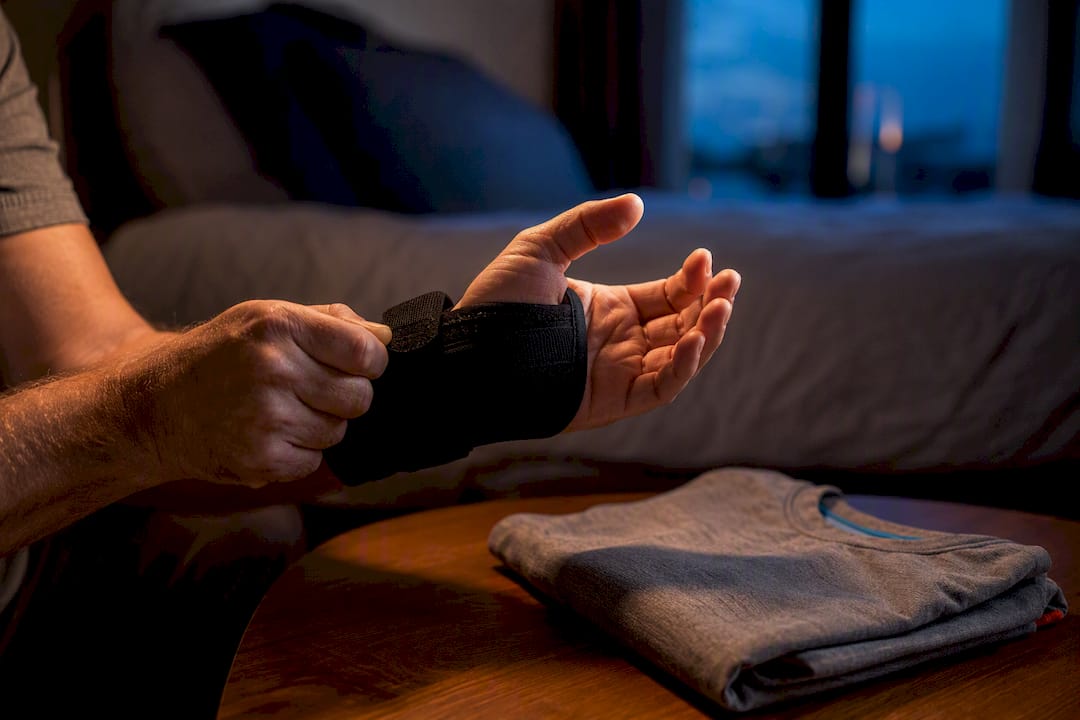
Splinting is often the single most effective early intervention. A wrist splint worn at night interrupts the flexed position that aggravates carpal tunnel symptoms while you sleep. A thumb spica splint offloads the base of the thumb for De Quervain tendinosis or basal joint arthritis. Most clinicians recommend nightly wear for several weeks before judging whether it’s working, and daytime wear only during aggravating activities.
Medication choices matter more than people assume. Topical diclofenac gel delivers anti-inflammatory effect directly to the joint with far less systemic exposure than swallowing a pill, making it a reasonable first choice for localized pain, per Harvard Health. Oral NSAIDs work faster and more broadly but carry real risks to the stomach, kidneys, and cardiovascular system with regular long-term use, so check with a clinician before making them a daily habit.
Steroid injections can knock down inflammation fast and provide months of relief in conditions like trigger finger or tenosynovitis. But relief tends to shrink with each repeat injection, and a review of steroid injection outcomes makes clear they work best as one piece of a rehab plan, not a repeatable fix on their own.
Heat and cold get used incorrectly all the time. Cold is for active swelling and acute flares; heat is for chronic stiffness or as a warmup before exercise. Applying heat to a joint that’s already hot and swollen can make inflammation worse, which is a mistake worth avoiding. Harvard Health also points to contrast bathing, alternating warm and cold water, as a useful way to cut stiffness and swelling at the same time.
Pro Tip: If you’re not sure whether your hand needs heat or cold right now, ask yourself one question: is it swollen and hot to the touch today? If yes, go cold. If it’s just stiff and achy with no visible swelling, heat wins.
Occupational and hand therapists add something injections and pills can’t: they fit splints properly, build a graded exercise progression, and teach ergonomic adjustments that stop the problem from recurring, a point Harvard Health emphasizes for long-term management. That might mean switching to a jar opener, adjusting a keyboard’s height, or, for musicians, rethinking instrument ergonomics that put repetitive strain on the same joints day after day.
Exercises You Can Start Safely at Home
A few categories of movement are safe for most people to try before or alongside professional care, but the rules around them matter as much as the exercises themselves.
- Range-of-motion work. Slowly open and close your fist, then fan your fingers wide, ten repetitions, two or three times a day.
- Tendon glides. Move through straight, hook, fist, and tabletop hand positions in sequence to keep tendons sliding freely through their sheaths.
- Grip strengthening. Squeeze therapy putty or a stress ball for a few seconds at a time, building slowly rather than maxing out on day one.
- Nerve glides. Gentle wrist and finger extension stretches can ease pressure on the median or ulnar nerve for people with early entrapment symptoms.
A little soreness that fades within an hour is normal. Sharp pain, new numbness, or a swollen joint that gets angrier after exercise is not, and that’s your signal to stop and get assessed rather than pushing through it. This caution matters most with arthritis: starting an aggressive hand-strengthening routine without a diagnosis can actually aggravate certain erosive or localized osteoarthritis patterns instead of helping them. Get a clinical read on what type of joint problem you’re dealing with before committing to a program, especially if you’re managing symptoms alongside tendinitis that flares with the wrong movements.
Why Hands-On Assessment Changes the Treatment Plan
The Fascial Distortion Model treats hand pain as a soft-tissue problem first, looking for specific fascial restrictions that a standard exam can miss. Hands-on correction paired with splinting, graded rehab, and activity changes often speeds up what conservative care alone accomplishes. Combining manual therapy with structured rehab tends to produce more durable short-term relief than either approach used in isolation.
— Chris
Getting Hands-On Care for Hand Pain in Plano
Specialized care provides more than a splint and an ice pack: an expert hands-on assessment of fascial restrictions driving symptoms, not just treating the pain it causes. An initial visit typically includes a hands-on assessment, a working diagnosis, and an individualized plan that might include splinting, targeted manual therapy, or a referral for imaging if needed. The clinic’s Fascial Distortion Model approach is built specifically for soft-tissue issues like tendon irritation, nerve compression symptoms, and the kind of overuse patterns that show up in hands and wrists.
If you’re dealing with ongoing wrist or hand symptoms, bring a list of when the pain started, what makes it worse, and any splints or medications you’ve already tried. Check out the carpal tunnel resource if that’s your pattern, or visit the general pain care page to see the range of conditions treated. Ready to get a real diagnosis instead of guessing? Consider booking an appointment with a specialized clinic for a proper hands-on evaluation.

This article is general information, not a substitute for advice from a qualified doctor. Consult a qualified healthcare professional about your own circumstances before acting on anything here.
Sources
- Hand pain and discomfort – Harvard Health Publishing
- Hand pain and problems – Johns Hopkins Medicine
- Pain in hand: 10 possible causes – Healthline
- Steroid injection review — PMC