

Clinic Supination Treatment: Orthoses Cut Muscle Overload in 4 Months
Most symptomatic foot supination is managed without surgery: start with footwear changes, targeted exercises, and orthotics. Surgery is reserved for rare, rigid structural deformities that do not respond to conservative care. For nearly everyone else, the goal is not to force the foot into a “neutral” shape but to control symptoms and reduce injury risk while the foot keeps doing its job.
TL;DR:
- About half of supination cases respond well to conservative treatments like footwear modifications, orthoses, physical therapy, and exercises, avoiding surgery in most situations.
- Custom orthoses with lateral posting or wedging are most effective for rigid or severe high-arch feet, while off-the-shelf inserts may suffice for mild, flexible cases.
- Proper footwear should feature a durable, curved lateral edge and moderate cushioning to support the outer foot and reduce lateral rolling.
- Exercises focusing on strengthening peroneal muscles, loosening the Achilles, and improving ankle stability are crucial for retraining foot control.
- Surgery is only considered when symptoms persist despite comprehensive conservative management and when deformities become fixed or progressive.
Table of Contents
- What causes foot supination in the first place
- How to tell if you supinate
- Conservative treatments that actually reduce symptoms
- Exercises and stretches that retrain the foot and ankle
- Orthotics and footwear: what the evidence actually supports
- When to escalate: medical care and the truth about surgery
- How a hands-on clinic approaches supination-related pain
- What actually matters in the long run
- Getting an evaluation for supination-related pain
- Sources
- FAQ
What causes foot supination in the first place
Supination, sometimes called underpronation, describes a foot that rolls outward at push off instead of landing and rolling through evenly. Some people are simply built this way. An inherited high arch, known clinically as a cavus foot, changes how weight travels through the foot and ankle, concentrating load on the outer edge instead of spreading it across the sole. Others develop supination later from muscle imbalance, a prior ankle sprain that changed movement patterns, or shoes that do not support the foot’s natural mechanics.
The distinction matters because it shapes treatment. A structural high arch usually needs supportive footwear and orthotic strategies for the long term, while supination caused by weak peroneal muscles or an old injury often responds well to targeted strengthening.
- Inherited cavus foot: a rigid or semi-rigid high arch present from childhood or adolescence
- Acquired imbalance: weak stabilizing muscles or tight calves that pull the foot outward
- Prior injury: an old ankle sprain that changed gait and loading patterns
- Footwear: shoes with no lateral support that let the foot roll unchecked
How to tell if you supinate
You do not need imaging to get a reasonable read on your own foot mechanics. A few home checks, paired with what a clinician looks for, will tell you whether self-management is reasonable or whether you need an evaluation.
- Try the wet test: step out of the shower onto a paper bag or dark towel and look at the footprint; a narrow band connecting heel and forefoot, with little to no midfoot contact, suggests a high arch and possible supination.
- Check your shoe wear: worn-down outer edges of the heel and forefoot, especially on running shoes, point to repeated lateral loading.
- Watch your gait: a clinician or physical therapist will often film you walking or running to see how much your foot rolls outward and when in the stride it happens.
- Get a physical exam: expect a clinician to check ankle range of motion, arch flexibility, and calf and peroneal strength.
- Watch for red flags: sudden swelling, numbness, an ankle that gives way repeatedly, or pain that stops you from walking normally warrants a same-week evaluation rather than a wait-and-see approach.
Conservative treatments that actually reduce symptoms
Conservative management, meaning orthoses, footwear changes, bracing, and physical therapy, is the preferred starting point for supination and cavus-related foot pain, according to a conservative management review of cavovarus feet. The same research is clear that a one-size-fits-all plan does not work: treatment has to be built around your specific pattern of tightness, weakness, and arch rigidity.
A typical plan combines several pieces rather than relying on any single fix.
- Footwear changes: shoes with a wider base, moderate cushioning, and a slightly rounded outsole reduce the leverage that pushes the foot further outward
- Activity modification: temporarily reducing high-impact mileage or switching surfaces while symptoms are active
- Orthoses or bracing: supportive inserts or, in more unstable cases, an ankle brace to limit excessive rolling
- Structured physical therapy: a clinician sequences stretching, strengthening, and balance work so the muscles that stabilize the foot catch up with the demands placed on them
Pro Tip: Bring your most-worn pair of running or walking shoes to your first evaluation. The wear pattern tells a clinician as much as a verbal history does.
Exercises and stretches that retrain the foot and ankle
Exercise is not about reshaping the arch. It is about giving the foot and ankle enough strength and control to handle load without overloading the outer edge.
- Calf and Achilles stretch: lean into a wall with one foot back, heel down, and hold for 30 seconds per side to ease the tightness that often accompanies a high arch.
- Plantar fascia stretch: roll the sole over a ball or seated towel stretch, holding for 30 seconds, to loosen the tissue along the bottom of the foot.
- Peroneal strengthening: use a resistance band to push the foot outward against tension, which directly targets the muscles that resist excessive supination.
- Tibialis anterior work: resisted dorsiflexion (pulling the foot upward against a band) builds control on the front of the shin.
- Intrinsic foot strengthening: short-foot exercises and towel scrunches build the small muscles that support the arch.
- Hip and glute activation: clamshells and side-lying leg raises address the hip weakness that often shows up alongside foot instability.
- Balance drills: single-leg stands, progressing to an unstable surface like a pillow or foam pad, retrain the ankle’s reflexive control.
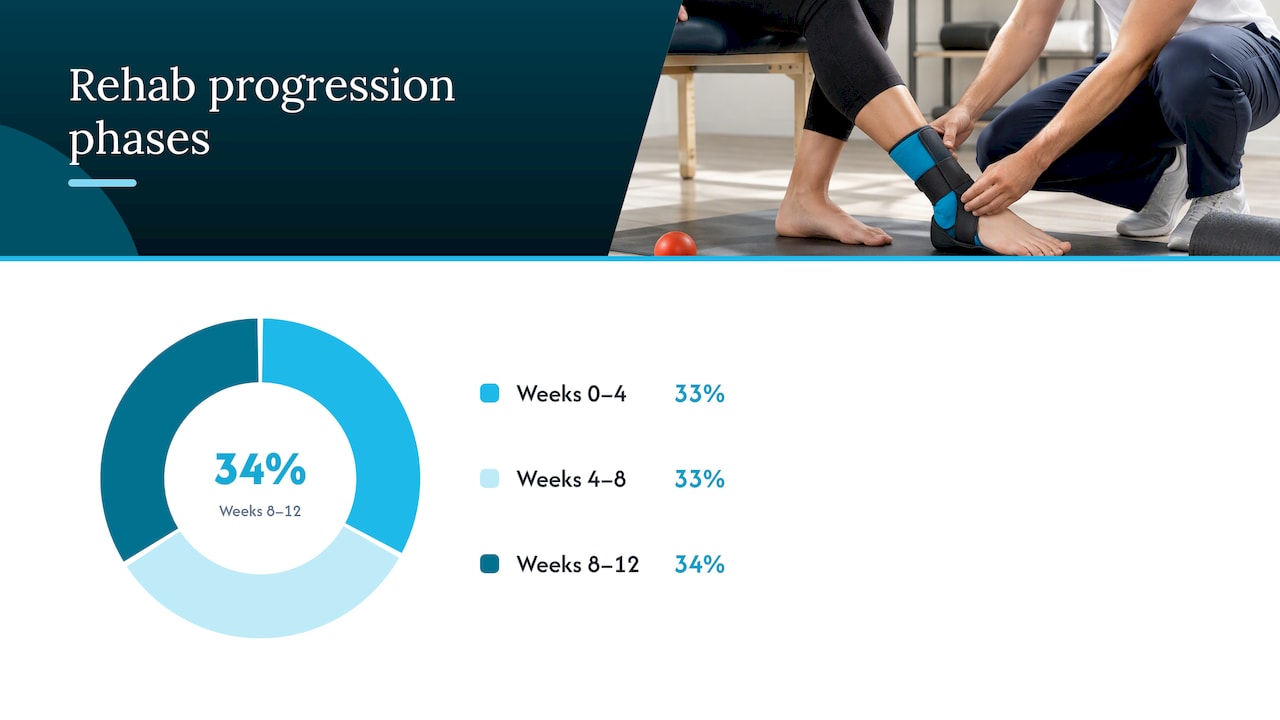
A simple progression runs roughly 0 to 4 weeks of stretching and gentle strengthening, 4 to 8 weeks of resistance-band work and balance drills, and 8 to 12 weeks of adding sport-specific movement back in, as detailed in this injury prevention training for young athletes. Consistency matters more than intensity here.
Pro Tip: Do balance work barefoot when it is safe to, since shoes can mask the small stabilizing corrections your ankle needs to practice.
More structured progressions, including intrinsic foot strengthening ideas, are covered in this foot strengthening exercise guide, and the same adherence principles that speed recovery from overpronation-related knee pain apply here in reverse.
Orthotics and footwear: what the evidence actually supports
Shoe and insole choices are where a lot of supination treatment lives day to day. Look for a shoe with a durable, slightly curved lateral edge and moderate cushioning that resists collapsing under load, since a soft, unsupportive sole lets the foot roll further outward with each step.
- Cushioned midsoles absorb some of the impact that concentrates on the outer foot
- Mild rocker soles ease the transition through the stride instead of forcing a sharp roll
- Lateral posting or wedging in an orthotic redistributes pressure away from the outer edge
- Custom devices are built around your specific arch height and supination pattern rather than a generic template
A study of 71 patients with cavus feet found that custom foot orthoses significantly reduced compensatory muscle activity in the calf and peroneal muscles after one and especially four months of consistent use, according to research on custom insoles for cavus feet. That benefit disappeared when participants walked without the orthoses, which is the practical takeaway: these devices work while you wear them, not as a permanent fix you can set aside. Clinicians increasingly favor a “tissue stress” approach, customizing wedges and posting to a patient’s individual supination pattern rather than issuing a standard insert, according to research on tissue-stress orthotic strategies. Off-the-shelf inserts can help mild, flexible cases; custom orthoses tend to be reserved for more rigid arches or when standard inserts have not controlled symptoms.
When to escalate: medical care and the truth about surgery
Most supination resolves with the conservative steps above, but a subset of cases needs a closer look. Escalate to a podiatrist or orthopedic specialist when pain persists despite weeks of appropriate footwear, orthoses, and rehab, when the deformity appears to be worsening, or when the ankle feels unstable or gives way repeatedly.
- Imaging and formal gait analysis help clarify whether the arch is flexible or fixed
- Targeted physical therapy under specialist guidance addresses cases that have not responded to a general program
- Bracing may be stepped up for chronic instability rather than left as a first-line-only tool
Surgery is reserved for refractory cases involving a rigid or progressive cavovarus deformity, according to AAOS course materials on foot and ankle surgical approaches. The goal is not cosmetic correction but restoring a stable, plantigrade foot that bears weight evenly, and it comes only after conservative measures have genuinely failed.
How a hands-on clinic approaches supination-related pain
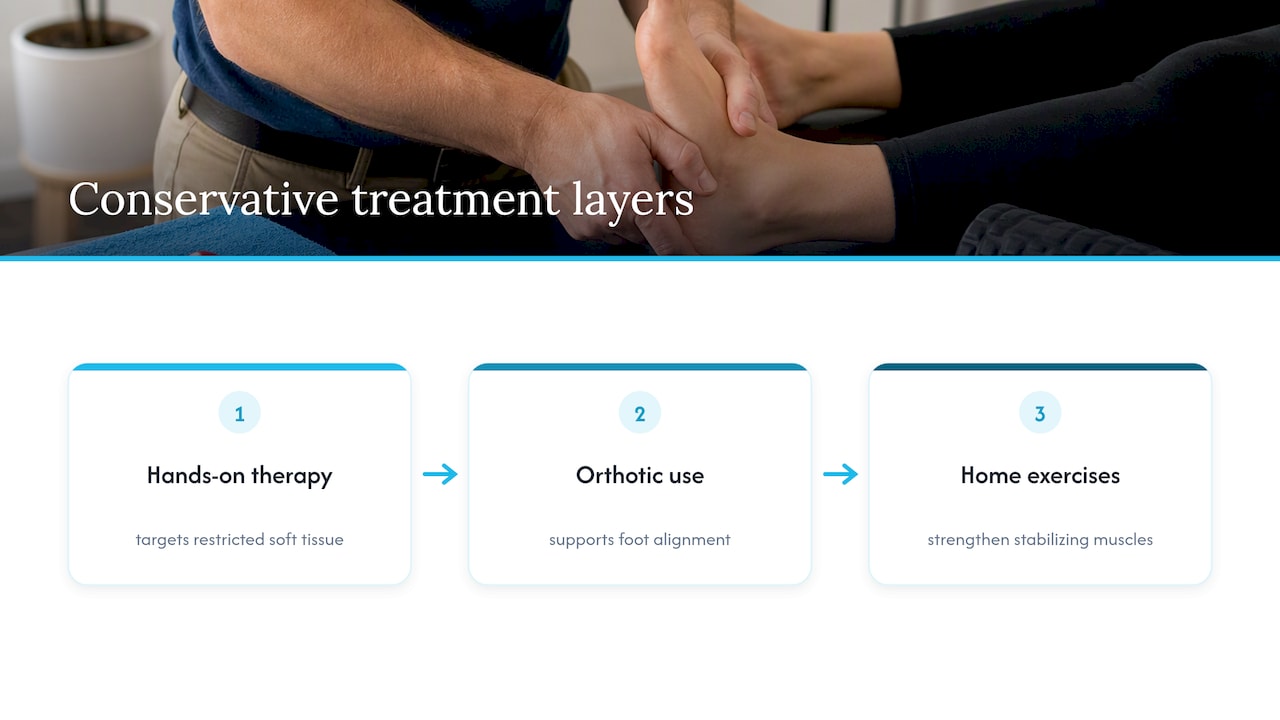
Supination-related pain is sometimes treated through hands-on modalities that pair with a conservative plan. Various hands-on therapies can target restricted soft tissue and address muscle tightness and trigger points that keep the foot rolling outward. These services are typically layered onto orthotic use and a home exercise program rather than replacing them, giving the muscles that stabilize the foot a better chance to respond to strengthening work.
What actually matters in the long run
Treatment succeeds when it controls symptoms and lowers injury risk, not when it forces a “corrected” arch shape that was never realistic to begin with. Evaluate early if pain limits activity or keeps coming back.
— Chris
Getting an evaluation for supination-related pain
If footwear changes and home exercises have not settled your symptoms, an initial visit to a specialized chiropractic clinic may add a hands-on layer to the conservative plan already covered here.
- Assessment: a first visit evaluates gait, tightness, and muscle imbalance alongside your footwear and exercise history
- Treatment options: hands-on therapies can target the restrictions that keep pulling the foot outward
- Fit with your existing plan: hands-on care is designed to complement orthoses and rehab, not replace them
Related conditions like plantar fasciitis and recurrent ankle sprains often travel alongside supination, and the clinic addresses both. Visit The Tx Room to see current services or request an appointment.
This article is general information, not a substitute for advice from a qualified doctor. Consult a qualified healthcare professional about your own circumstances before acting on anything here.
Sources
- AAOS (course materials on foot and ankle — surgical approaches)
- Cavovarus foot: conservative management techniques and outcomes
- Research on customized orthotic strategies and tissue-stress approach
FAQ
Can foot supination be corrected?
The underlying arch shape usually cannot be permanently changed, but symptoms and injury risk can be meaningfully reduced with footwear, orthoses, and targeted exercise. Most people manage supination successfully without ever needing surgery.
What do podiatrists recommend for supination?
Podiatrists typically start with supportive footwear, orthotic devices tailored to arch flexibility, and a structured physical therapy program addressing calf tightness and peroneal weakness. Custom orthoses are considered when off-the-shelf inserts do not control symptoms, according to research on tissue-stress orthotic strategies.
What muscles are weak if you supinate?
Supination is commonly linked to weak peroneal muscles on the outside of the lower leg, along with a weak tibialis anterior and underactive intrinsic foot muscles. Hip and glute weakness can also contribute to poor foot control during walking or running.
What happens if supination is left untreated?
Untreated supination can lead to lateral ankle sprains, peroneal tendon irritation, and chronic foot pain, since the outer foot absorbs disproportionate load with every step. Progressive or rigid cavovarus deformities can also become harder to manage conservatively over time, making earlier evaluation worthwhile.