
Foot Strengthening Exercises for Stronger, More Stable Feet
Do a short barefoot routine multiple days a week: 10 arch dome holds, three toe drills, and one minute of towel scrunches. That’s it.
- Now: Sit barefoot, hold each move for 5 to 10 seconds, repeat 10 times per exercise.
- Progress: Once seated reps feel easy, do the same moves standing, then on one leg.
- Gear: Bare feet, a hand towel, and a handful of marbles. Nothing else required.
Stop immediately if you feel sharp, stabbing pain rather than a normal working burn.
Key Takeaways
Consistent barefoot practice of short-foot, toe-splay, and towel-scrunch exercises three to five times a week builds intrinsic foot strength within 4 to 8 weeks.
| Point | Details |
|---|---|
| Start with the core three | Short-foot holds, toe splay, and towel scrunches cover most of the intrinsic activation you need. |
| Keep toes flat | Curling the toes during short-foot recruits the wrong muscles and blunts the exercise’s benefit. |
| Progress through positions | Move from seated to standing to single-leg to unstable-surface versions as each level gets easy. |
| Expect gradual results | Subjective relief often shows up in 4 to 6 weeks, measurable arch changes closer to 6 to 8 weeks. |
| Know when to escalate | Persistent pain, swelling, or numbness warrants a hands-on evaluation at a clinic like The Tx Room. |
Table of Contents
- Why Foot Strengthening Exercises Actually Matter
- What Are the Best At-Home Foot Strengthening Exercises?
- Stretches and Mobility Work to Pair With Strengthening
- How Often Should You Do Foot Strengthening Exercises?
- Common Mistakes and When to Stop
- What Does the Research Say About Intrinsic Foot Exercises?
- Sources
Why Foot Strengthening Exercises Actually Matter
Your feet aren’t passive platforms. The intrinsic muscles inside them act like a support cable system for the medial longitudinal arch, distributing load every time your heel strikes the ground. When those muscles are weak, more strain lands on the plantar fascia and the tendons running up your lower leg, which is a big reason flat, achy, tired feet often trace back to underused foot muscles rather than bad luck. Physiotherapy researchers describe this network as a “foot core,” and treat it the same way a physical therapist treats a weak trunk before fixing back pain.
Building it back up pays off in a few concrete ways:
- Better balance, since your foot’s tiny stabilizer muscles fire faster than you can consciously react.
- Lower risk of overuse injuries like plantar fasciitis and shin splints.
- More efficient walking and running gait, with less energy wasted on wobble.
- Steadier standing tolerance if your job or hobbies keep you on your feet for hours.
What Are the Best At-Home Foot Strengthening Exercises?
This is the core routine. Do it barefoot whenever you can. Shoes, even minimalist ones, dull the sensory feedback your foot needs to learn these patterns, and going without them is standard advice from Harvard Health’s foot exercise guidance.
- Short-foot exercise (arch doming). Sit with your foot flat, then draw the ball of your foot toward your heel without curling your toes, creating a small dome in your arch. Hold 5 to 10 seconds, 10 reps, twice daily. This is the single most studied intrinsic move, and it only works if your toes stay flat.
- Toe splay (toe yoga). Spread all five toes apart, hold 5 seconds, then relax. Do 10 reps per foot. This trains the small muscles that stabilize your forefoot during push-off.
- Toe curls and towel scrunch. Place a towel flat under your foot and scrunch it toward you using only your toes. Three sets of 20 seconds per foot, once daily.
- Marble pickup. Pick up 10 to 20 marbles one at a time with your toes and drop them into a bowl. Great for isolating flexor control after the scrunch feels easy.
- Single-leg balance progression. Stand on one foot for 20 to 30 seconds. Once stable, close your eyes, then try standing on a folded towel or foam pad.
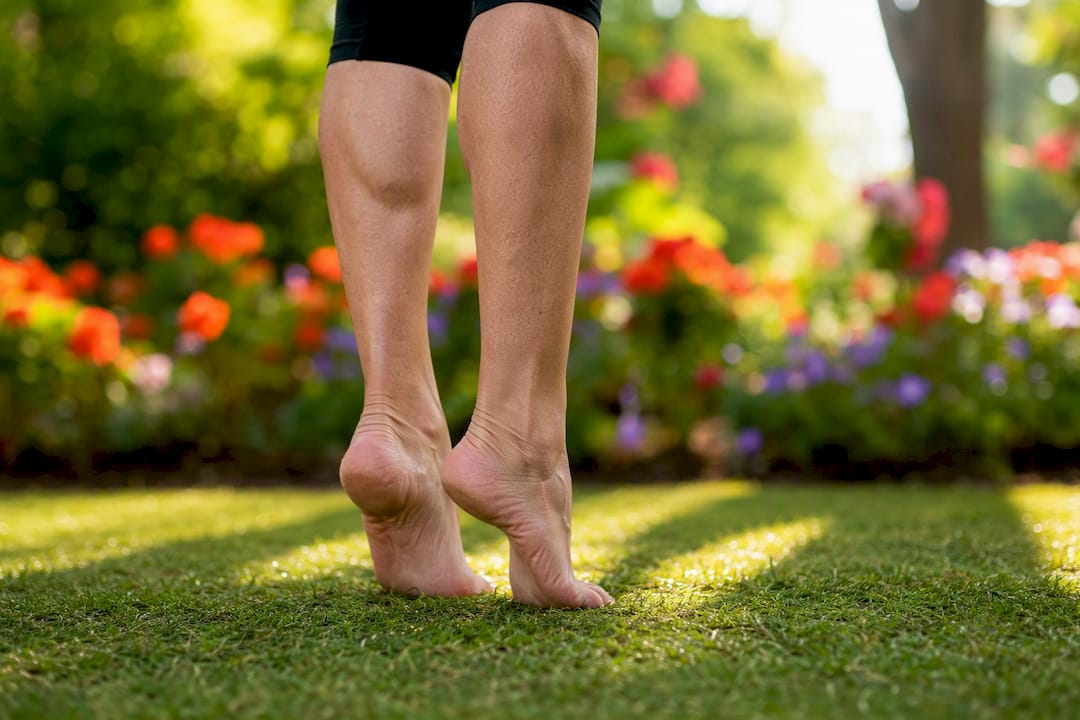
- Heel raises with control. Rise onto your toes slowly over 2 seconds, hold at the top for 1 second, lower over 3 seconds. Ten reps, two sets. This builds calf and ankle strength that supports the arch under load.
- Ankle alphabet or band work. Trace the letters A through Z in the air with your big toe, or use a resistance band for controlled dorsiflexion and plantarflexion, 2 sets of 10 in each direction.
Progression follows a simple ladder: seated, then standing, then single-leg, then on an unstable surface like a folded towel or foam pad. Move up only when the current level feels genuinely easy, not just tolerable.
Equipment stays minimal on purpose. A towel and a handful of marbles cover most of it; a light resistance band adds ankle work once bodyweight moves feel too easy. The OrthoInfo foot and ankle conditioning program uses this same equipment list for post-injury rehab, which tells you it doesn’t take a gym to rebuild foot strength.
Pro Tip: The most common mistake with short-foot exercise is curling the toes to “cheat” the dome shape. That recruits the long toe flexors instead of the small intrinsic muscles you’re targeting, so the exercise stops doing its job even though it looks similar. Keep your toes flat on the floor and let the arch lift on its own.
Stretches and Mobility Work to Pair With Strengthening
Strengthening without flexibility work is like tightening one side of a hinge. Tight calves pull on the Achilles and limit how far your ankle can flex, which caps how much your foot muscles can actually do.
- Calf stretch (gastrocnemius): Straight-leg wall lean, heel down, hold 30 to 60 seconds per side.
- Calf stretch (soleus): Same position with a bent knee, hold 30 to 60 seconds per side.
- Big-toe extension stretch: Pull your big toe gently upward and back, hold 20 to 30 seconds.
- Plantar fascia ball roll: Roll a golf ball or frozen water bottle under your arch for 1 to 2 minutes.
- Ankle circles: 10 rotations each direction, done after sitting for long periods or after your strength routine.
Do these after your strengthening reps or after long stretches of standing, when tissue is warm and more receptive to stretching.
How Often Should You Do Foot Strengthening Exercises?
Aim for 10 to 15 minutes, several days each week. A basic session covers short-foot holds, toe splay, and towel scrunches; rotate in balance work and heel raises every other day so you’re not doing everything at once.
| Level | Sample Focus | Sets/Reps |
|---|---|---|
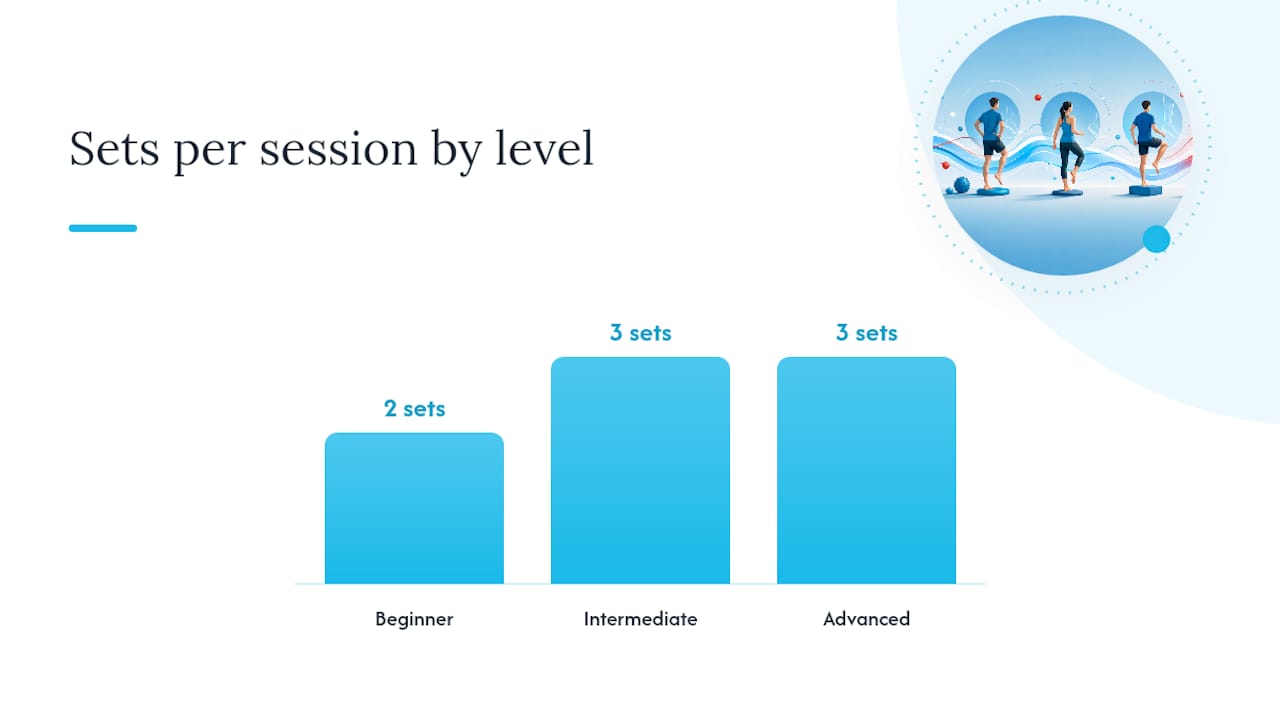
| Beginner | Seated short-foot, toe splay, towel scrunch | 2 sets of 10, daily |
| Intermediate | Standing short-foot, marble pickup, heel raises | 3 sets of 10 to 20, 4x/week |
| Advanced | Single-leg balance on foam, loaded single-leg heel raise | 3 sets of 10 to 15, 3x/week |
Many people notice their feet feel less fatigued after several weeks of consistent exercise, as recommended by experts on Pickle Elbow, FOOSH… — Play On Pickle. Measurable changes in arch support and muscle activation tend to show up after several weeks of consistent practice, a timeline echoed across short-foot exercise research. Results vary by starting point and consistency, so treat that window as a guide, not a guarantee.
Common Mistakes and When to Stop
A few form errors show up constantly: curling the toes during short-foot instead of keeping them flat, and using momentum to bounce through heel raises instead of controlling the descent. Both reduce how much the intrinsic muscles actually work.
- Stop and reassess if you feel sharp, localized pain rather than mild working fatigue.
- Swelling that worsens after exercise, numbness, or tingling are signs to pause the routine.
- Ongoing inability to bear weight comfortably needs a professional look, not more reps.
- If standing or seated versions still hurt, drop to fewer reps or shorter holds before quitting entirely.
Persistent pain beyond a couple of weeks, despite modifications, is a reasonable point to book a clinical evaluation rather than keep pushing through it.
What Does the Research Say About Intrinsic Foot Exercises?
Clinical imaging backs up why these specific moves made the list. A T2 time MRI study found that short-foot, toe-splay, and toe-extension drills increased activation in the plantar intrinsic muscles by 8.9% to 35.2%, with short-foot producing some of the largest gains recorded.
Beyond activation numbers, intervention studies on short-foot exercise programs report improved navicular height, reduced navicular drop, and better pain scores in people with flexible flatfoot or plantar fasciitis after several weeks of consistent practice. The catch: protocols differ across studies, sample sizes are often modest, and long-term data on lasting benefit is still catching up to the short-term evidence. Treat the routine as a well-supported starting point, not a guaranteed fix for every case.
How The Tx Room Uses Foot Strengthening in Care Plans
We build intrinsic foot work into rehab plans for patients dealing with plantar fasciitis, ankle instability, and lower-limb overuse. When pain, gait changes, or biomechanical imbalance don’t respond to home exercises alone, a hands-on assessment and fascial work can identify what a routine can’t fix by itself.
If Foot Pain Persists, Here’s Your Next Step
A home routine solves a lot of foot strength problems, but not all of them. When pain sticks around past a few weeks, or when you suspect a biomechanical issue like uneven gait or chronic ankle instability, exercises alone won’t tell you why the arch keeps collapsing under load. That’s where an in-clinic assessment fills the gap a mirror and a towel scrunch can’t.

A visit to The Tx Room includes a hands-on evaluation of your gait and foot mechanics, Fascial Distortion Model treatment for the soft tissue restrictions often driving plantar fasciitis and chronic strain, and a rehab plan built around your specific pattern instead of a generic list. If you’re in the Plano area and your feet aren’t responding the way they should, explore how range of motion and mobility care works at The Tx Room, or call the clinic to book an assessment.
Sources
- Pmc
- Foot exercises for functional fitness – Harvard Health
- Foot and Ankle Conditioning Program STRENGTHENING EXERCISES
This article is general information, not a substitute for advice from a qualified doctor. Consult a qualified healthcare professional about your own circumstances before acting on anything here.