

4–6 Weeks: What Clinic Chiropractic Can Do for Hip Pain
Chiropractic care tends to help hip pain that comes from mechanical sources: muscle strain, early osteoarthritis, referred pain from the lower back, and soft-tissue irritation like bursitis. It’s usually not the right first step for suspected fractures, infections, or advanced joint collapse. Treatment typically combines manual adjustments, soft-tissue work, and rehab exercise aimed at less pain and better movement, not a permanent cure. If you can’t bear weight, have a fever, or notice sudden numbness, skip the chiropractor and get seen urgently.
TL;DR:
- Chiropractic care is most effective for mechanical hip issues such as muscle strain, bursitis, or early osteoarthritis, and less suitable for fractures, infections, or advanced joint damage.
- Short-term relief from hip pain may occur after a single manipulation session, but meaningful, lasting improvements usually require several weeks of consistent treatment and home exercises.
- Proper assessment before treatment is essential, with urgent care necessary if symptoms include fever, inability to bear weight, sudden severe trauma, or neurological deficits.
- Treatment combines manual adjustments, soft-tissue therapy, and rehabilitative exercises, often involving coordinated care with other healthcare providers for structural or serious conditions.
- Home activation exercises, especially glute strengthening and mobility routines, significantly extend the benefits gained from in-office therapy and improve long-term outcomes.
Table of Contents
- What’s Actually Causing Your Hip Pain?
- How Do Chiropractic Adjustments Help Hip Pain?
- Who Should Avoid Chiropractic Hip Treatment?
- How Many Visits Does It Take to See Results?
- How The Tx Room Approaches Hip Pain
- Why Referral Beats a Quick Fix Every Time
- Ready to Get Your Hip Pain Evaluated?
- Sources
- FAQ
What’s Actually Causing Your Hip Pain?
Where the pain sits usually tells you more than how bad it feels. Groin pain that sharpens when you twist or squat often points to a labral tear or femoroacetabular impingement (FAI), a bony conflict inside the joint. Pain on the outer hip, especially when lying on that side at night, usually means greater trochanteric pain syndrome, commonly called hip bursitis. Deep aching in the buttock that radiates down the leg is frequently sciatica, referred from a lumbar disc or a tight piriformis muscle rather than the hip joint itself.
Osteoarthritis shows up as stiffness that’s worse in the morning and eases somewhat with movement, then returns after activity. Overuse and muscle strain, common in runners and weekend athletes, produce localized soreness that responds to rest and gets worse with repeated loading. Trauma, a fall or direct blow, is its own category and needs a different level of caution.
- Groin pain with clicking or catching: often labral or FAI-related
- Lateral hip pain, worse at night: usually bursitis or tendon irritation
- Buttock pain radiating down the leg: typically referred from the lumbar spine
- Morning stiffness that loosens with movement: classic early osteoarthritis pattern
If you suddenly can’t put weight on the leg, or the pain follows a fall with visible swelling or deformity, that’s not a case for a first chiropractic visit. Head to urgent care or an emergency room for imaging first, as MedlinePlus recommends for any hip pain with red-flag features.
How Do Chiropractic Adjustments Help Hip Pain?
Hip adjustment techniques vary depending on what’s actually restricted. A chiropractor might use a long-axis distraction pull to gently traction the joint, a drop-piece table technique for a quick, low-force thrust, or manual mobilization to work the joint through its range without a thrust at all. Because hip pain is frequently referred from the lumbar spine or sacroiliac joint, a full evaluation almost always includes checking the low back and pelvis, not just the hip itself, and treatment plans often include adjustments to those regions alongside direct hip work.
Soft-tissue therapy does the work adjustments can’t. Myofascial release, instrument-assisted techniques, and dry needling target the tight, guarded muscles around an irritated joint, particularly the hip flexors, glutes, and IT band. Focused shockwave therapy, sometimes called myACT, uses acoustic pressure waves to stimulate healing in stubborn tendon and fascia issues that haven’t responded to standard soft-tissue work.
None of this holds without rehab. Progressive exercise, glute activation drills, controlled mobility work, and movement retraining, is what keeps gains from evaporating after a few weeks. A few simple hip-opening movements done consistently at home often matter more than any single office visit.
- Manual adjustments and mobilization for joint restriction
- Soft-tissue and dry needling for muscle and fascia tightness
- Focused shockwave (myACT) for persistent tendon or fascia pain
- Home exercise and activation work to lock in progress
When findings suggest something structural, a torn labrum needing surgical repair, for instance, a responsible provider coordinates with a physical therapist or orthopedic specialist rather than trying to manage it alone.
Pro Tip: Ask your chiropractor to show you two or three home exercises during your first visit. Patients who practice glute activation between sessions tend to hold their gains longer than those who rely on office visits alone.

Who Should Avoid Chiropractic Hip Treatment?
Screening matters more than technique here. A good provider spends real time ruling out serious causes before ever touching the joint.
- Seek urgent medical care first if you have a fever alongside hip pain, sudden severe trauma, new numbness or weakness in the leg, or you simply cannot bear weight. These are signs of possible fracture, infection, or nerve compression that chiropractic care doesn’t address.
- Flag these conditions before treatment begins: advanced osteoporosis, blood-thinning medication, or bone pain tied to a cancer history. These don’t automatically rule out care, but they call for lower-force techniques and closer coordination with your medical provider.
- Expect a referral, not a runaround, when symptoms point to something non-mechanical. Chiropractic care is a complementary option, and practitioners who take screening seriously will send you for imaging or a specialist consult rather than pushing manual therapy on a joint that needs something else.
Providers who skip this step and adjust first, ask questions later, are the ones giving the whole profession a bad name.
How Many Visits Does It Take to See Results?
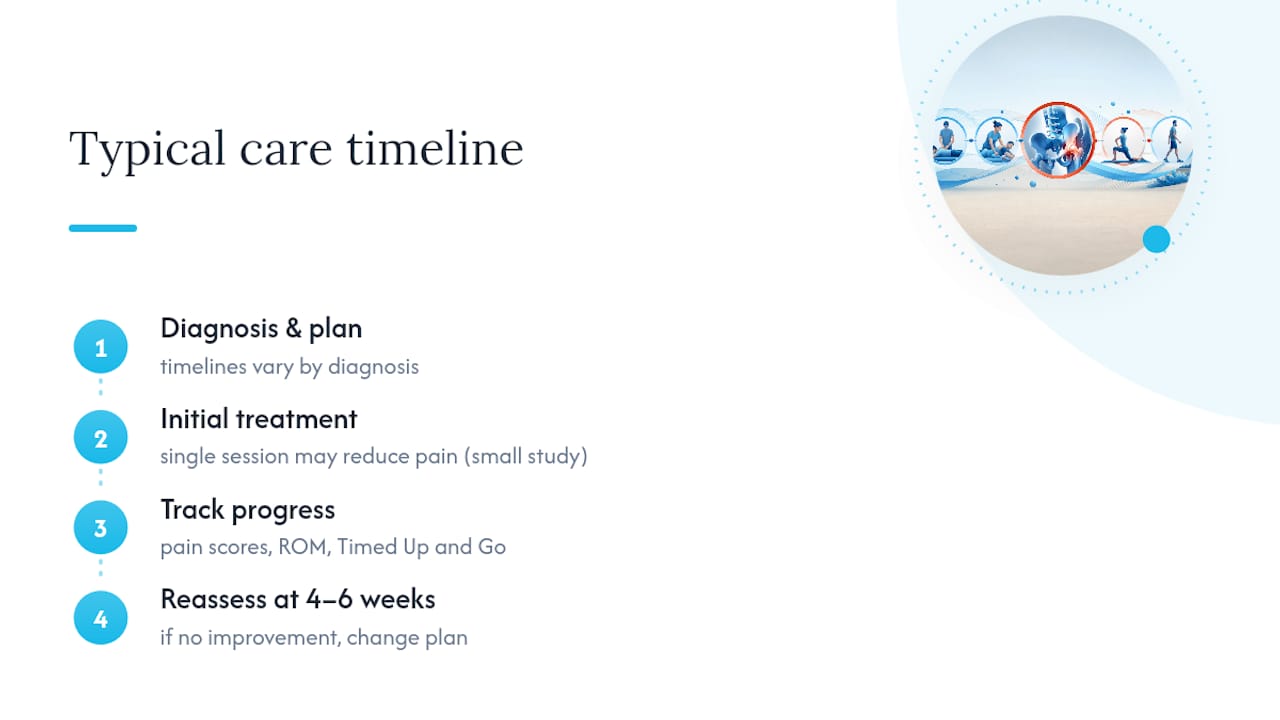
Timelines vary by diagnosis, but the research gives some useful anchors. A 2011 case report followed a 70-year-old with hip osteoarthritis through many visits over a period of several weeks of manipulation, mobilization, and stretching. That’s a multi-week commitment, not a one-visit fix.
For more straightforward mechanical strain, some patients feel meaningful relief in far fewer sessions.
A 2022 randomized crossover trial of 20 young adults found that a single hip manipulation session produced a statistically significant pain reduction of −1.05 points (± 0.81, p<0.0001) along with improved passive hip abduction, compared with a control treatment.
That’s a real signal for short-term benefit, but it’s a small study, and larger randomized trials specific to hip pain are still thin on the ground. Reviews from outlets like Medical News Today note the same gap: case reports and small trials look promising, but the overall evidence base for chiropractic care and hip pain specifically remains limited. Clinicians typically track progress with pain scores, range-of-motion measurements, and functional tests like the Timed Up and Go rather than guesswork, which gives you something concrete to ask about at each follow-up. If you’re not seeing any movement on those measures after four to six weeks, that’s the point to reassess, not push through.
How The Tx Room Approaches Hip Pain
A hands-on evaluation starts every visit at Thetxroom, checking not just the hip but the surrounding kinetic chain for the actual source of restriction. Using the Fascial Distortion Model, treatment targets fascial distortions directly rather than treating pain as a generic joint problem, then layers in soft-tissue work and progressive activation exercises to rebuild strength around the joint.
A typical course looks like this:
- Initial exam to map symptom patterns and rule out red flags
- Targeted manual therapy sessions using hands-on technique
- Progressive rehab exercises with reassessment as function improves
- Adjunct treatments like dry needling or focused shockwave therapy when soft tissue remains stubborn
Chronic cases that haven’t responded to standard physical therapy are exactly where this combination tends to earn its keep.
Why Referral Beats a Quick Fix Every Time
Chiropractic works best as one piece of a bigger plan, not a solo act. When a patient’s hip pain is genuinely mechanical, muscle guarding, joint restriction, referred lumbar tightness, hands-on care can move the needle fast. When it’s not, the right move is admitting that and looping in a physical therapist, an orthopedist, or a primary care doctor. I’d rather see a patient walk out with a referral and a plan than sit through six sessions chasing a problem manual therapy was never going to fix. Function and return to activity matter more than a short-term dip in a pain score.
— Chris
Ready to Get Your Hip Pain Evaluated?
Some chiropractic visits start with a hands-on assessment using focused manual therapy models, then get a treatment plan built around the patient’s specific restriction, not a one-size-fits-all protocol.

The clinic’s chiropractic care and soft tissue therapy services cover the full range described above, from manual adjustment to progressive rehab. For stubborn tendon or fascia issues that haven’t responded to standard treatment, the myACT focused shockwave option is worth asking about at your first visit. A typical first appointment includes a thorough history, movement assessment, and enough hands-on treatment to give you a sense of what a full plan would look like. If regenerative options come up during your evaluation, resources like PRP therapy for hip pain are worth understanding alongside manual care. Book your first visit through Thetxroom and bring a clear description of where the pain sits and what makes it worse. That detail alone speeds up the first exam.
This article is general information, not a substitute for advice from a qualified doctor. Consult a qualified healthcare professional about your own circumstances before acting on anything here.
Sources
- Chiropractic care for hip osteoarthritis: case report (2011)
- Should I see a chiropractor for hip pain? — Healthline (2022)
FAQ
How long does it take a chiropractor to realign hips?
Simple mechanical restrictions can improve within a few visits, but a documented case of hip osteoarthritis needed many visits over a period of several weeks to show measurable functional gains. Expect weeks, not days, for anything beyond a mild strain.
How can I get relief from severe hip pain right now?
Severe, sudden hip pain, especially with inability to bear weight or a fever, needs urgent medical evaluation before any hands-on treatment. For pain that’s intense but mechanical, rest, ice, and a prompt evaluation at a clinic like Thetxroom can help identify the source and start targeted relief.
What could be causing pain on the side of my hip?
Pain on the outer hip that worsens when lying on that side usually points to greater trochanteric pain syndrome, commonly known as hip bursitis, or irritation of the surrounding tendons. It’s one of the most common patterns chiropractors see and typically responds well to soft-tissue therapy and activation exercises.
What are some good exercises for hip alignment?
Glute activation drills, controlled hip circles, and gentle mobility work through the hip flexors are common starting points. A short routine of targeted hip-opening movements done a few times a week supports whatever manual work is done in the office.