
Avoid Failed Surgery: Clinician Protocol for Radial Tunnel Syndrome
Radial tunnel syndrome is usually treated first with prolonged conservative care: activity modification, splinting, NSAIDs, and physical therapy, trialed for 6 to 12 months before anything more invasive. Injections can both confirm the diagnosis and ease symptoms. Surgery is reserved for cases that stay disabling despite that trial, and recovery afterward can take months.
TL;DR:
- Conservative care for radial tunnel syndrome should be trialed for six to twelve months, with activity modification and splinting being especially crucial for recovery.
- Diagnostic injections that provide pain relief and targeted ultrasound or hydrodissection procedures can confirm the diagnosis and offer short-term relief, with about 60% of patients remaining pain-free after two years.
- Surgical release is considered only if symptoms persist despite conservative treatment, with success rates ranging from 60% to 80% and recovery taking several months to over a year.
- Accurate diagnosis is essential to distinguish radial tunnel syndrome from tennis elbow, particularly since tender points and testing differ, and misdiagnosis impacts treatment success.
- Manual therapy techniques, including fascial work and shockwave therapy, can support recovery by addressing mechanical restrictions contributing to nerve irritation.
Table of Contents
- What radial tunnel syndrome is and how it gets diagnosed
- Conservative treatment options and a realistic self-care plan
- Injection and image-guided procedures: what to expect
- When surgery is considered and what outcomes look like
- Rehabilitation roadmap after conservative care and after surgery
- How hands-on fascial and soft-tissue care fits into treatment
- Getting the diagnosis right matters more than any single treatment
- Getting hands-on help at The Tx Room
- Sources
- FAQ
What radial tunnel syndrome is and how it gets diagnosed
Radial tunnel syndrome comes from irritation of the posterior interosseous nerve as it passes through the radial tunnel in the forearm. Pain typically sits 3 to 5 centimeters distal to the lateral epicondyle, which is the first clue that separates it from tennis elbow, where tenderness stays right over the epicondyle itself.
Clinicians rely on a few hands-on tests rather than imaging:
- Resisted long finger extension that reproduces deep forearm pain
- Resisted forearm supination with the elbow extended
- Tenderness over the radial tunnel rather than the epicondyle itself
A diagnostic injection of local anesthetic into the radial tunnel serves two purposes at once: relief supports the diagnosis, and the same needle placement can deliver treatment. Standard EMG and nerve conduction studies often come back normal because they miss the kind of small-fiber irritation involved, so a normal result should not rule out the condition. MRI or ultrasound get added mainly when a clinician suspects a mass or structural cause rather than a straightforward entrapment.
Conservative treatment options and a realistic self-care plan
Nonoperative care is where almost every case starts, and sticking with it matters more than any single tool. Patient adherence to activity modification is the biggest factor in recovery; a splint or a pill without changing the aggravating motion rarely fixes the problem on its own.
- Cut back on repetitive pronation and supination, prolonged elbow extension, and resisted wrist extension, the motions that load the radial tunnel directly.
- Wear a wrist or forearm splint that limits the aggravating motion, typically during work tasks or sleep, to give the nerve a break.
- Use NSAIDs or topical analgesics for short stretches to blunt pain while other changes take hold, not as a standalone fix.
- Start physical therapy focused on nerve glides, gentle stretching, and gradually loaded strengthening once irritation settles.
- Give the plan time: conservative management is typically trialed for 6 to 12 months before surgery enters the conversation.
Pro Tip: Track which specific tasks trigger your pain (typing, lifting with a pronated grip, racquet sports) and eliminate or modify that one motion first; broad rest without a specific target rarely helps.
Manual therapy aimed at the forearm’s soft tissue can run alongside this plan, targeting fascial restrictions that keep irritating the nerve even after activity changes.
Injection and image-guided procedures: what to expect
A diagnostic injection of local anesthetic placed directly in the radial tunnel is read within minutes: pain relief supports the diagnosis. However, the injection must avoid the lateral epicondyle itself, or relief could be wrongly credited to radial tunnel syndrome when tennis elbow is the real issue.
- Corticosteroid injections combine the anesthetic with a steroid for longer-lasting relief.
- Ultrasound guidance, including hydrodissection, aims the needle more precisely and case series report near-complete immediate pain relief, though long-term data remain limited.
- Rest the arm briefly after injection and follow a detailed PRP injection recovery guide when resuming therapy once soreness fades.
One clinical series found that a majority of patients had complete resolution at 6 weeks after a single lidocaine and triamcinolone injection, and 60% stayed pain-free at 2 years. A separate case series reported that about 61% of patients benefited from a targeted steroid injection paired with conservative care, with the rest considered for surgery. Injections are generally avoided in active infection or when a structural mass is suspected.
When surgery is considered and what outcomes look like
Surgery becomes a reasonable option once conservative care and injections have been given a fair trial, commonly the 6 to 12 month window, and pain still interferes with daily function. Surgeons choose among a few approaches depending on where they believe the nerve is compressed:
- The dorsal, or Henry, approach exposes the nerve from the back of the forearm.
- A brachioradialis-splitting approach works between muscle fibers to reach the tunnel.
- An anterior approach is used when compression sits closer to the front of the elbow.
Approach selection matters because an incomplete release is a common cause of surgical failure; picking the wrong angle on the compression site can leave symptoms unresolved. Reported outcomes vary widely across studies: success rates commonly cluster between 60% and 80%, with variability tied to coexisting conditions, how confident the original diagnosis was, and surgeon experience. Recovery and rehabilitation can take 3 to 18 months before patients feel fully recovered. Risks include incomplete symptom relief, nerve injury, wound complications, and stiffness that needs its own rehab plan.
Rehabilitation roadmap after conservative care and after surgery
Rehab unfolds in stages whether a patient avoided surgery or went through with it, and the phases look similar either way.
- Early phase: control pain and swelling, introduce gentle range of motion and nerve glides, and avoid positions that compress the nerve.
- Intermediate phase: add progressive strengthening, correct the ergonomic habits that caused the problem, and increase load gradually.
- Late phase: return to job or sport-specific movements and build in prevention habits like better workstation setup or technique changes.
Early phase work often starts within days of injury or surgery, intermediate strengthening typically runs for several weeks, and the late phase can extend for months depending on the physical demands of the job or sport. A supervised physical therapist or occupational therapist should guide the intermediate and late phases, especially after surgery.
Pro Tip: If pain spikes when strengthening resumes, drop back one phase rather than pushing through; nerve tissue tolerates graded loading far better than sudden increases.
How hands-on fascial and soft-tissue care fits into treatment
At The Tx Room, care for forearm nerve irritation draws on the Fascial Distortion Model, soft tissue therapy, dry needling, and MyACT focused shockwave, alongside supervised rehab guidance.
- Hands-on fascial work targets the restrictions that keep irritating the nerve after activity changes alone have stalled progress.
- Dry needling and soft tissue therapy can support recovery between or after injections.
- MyACT shockwave is used for cases where mechanical irritation persists despite standard conservative steps.
- These approaches complement a diagnosis and treatment plan already established with a physician, not replace it.
Getting the diagnosis right matters more than any single treatment
The overlap between radial tunnel syndrome and tennis elbow trips up more cases than it should. Getting that distinction right, sticking with activity changes, and having an honest conversation about surgical odds before committing to it will serve most patients better than chasing a quick fix. Anyone whose symptoms worsen or stall for months deserves a specialist’s second look.
— Chris
Getting hands-on help at The Tx Room
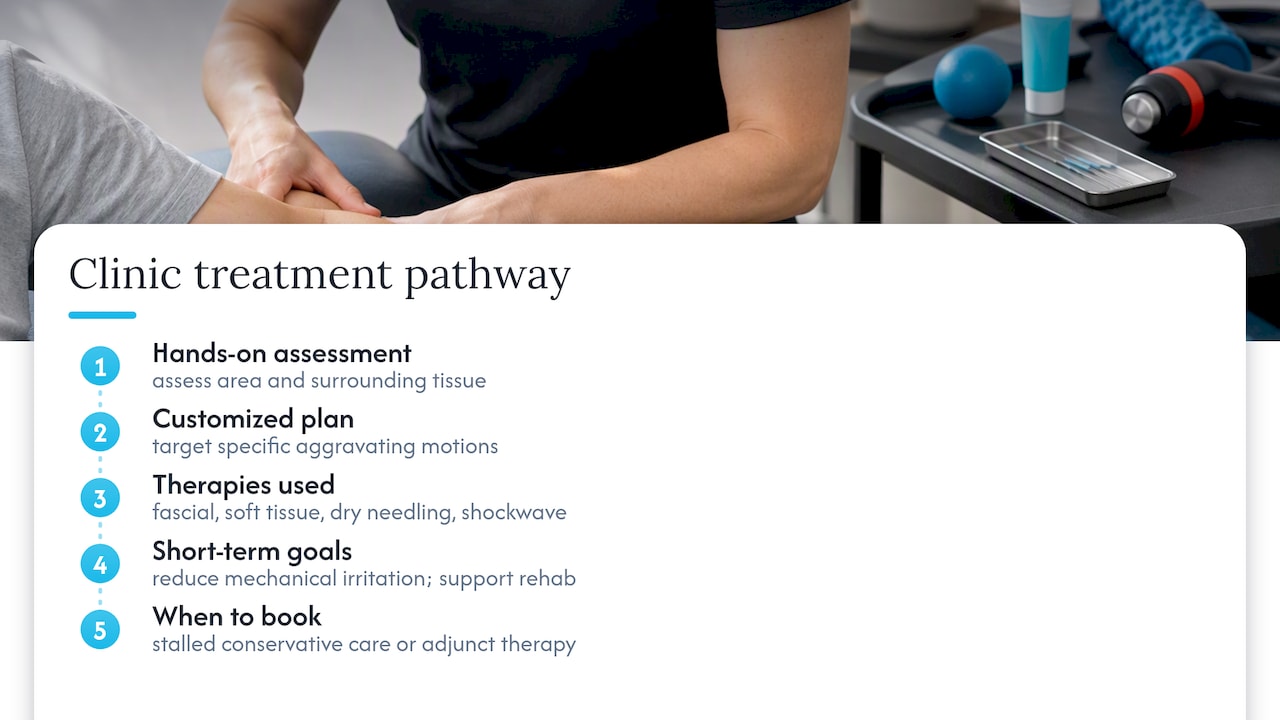
A persistent, nagging forearm ache that outlasts rest and splinting is exactly the kind of case hands-on manual therapy is built for. A specialized clinic may combine fascial distortion techniques, soft tissue therapy, dry needling, and focused shockwave therapy to address the mechanical irritation that often keeps a nerve problem from settling on its own.
Initial visits typically include hands-on assessment of the affected area and surrounding soft tissue.
Treatment plans are customized to specific aggravating motions rather than generic protocols.
Short-term goals focus on reducing mechanical irritation and supporting the current rehab phase.
If conservative care has stalled or you want a complement to an injection or post-surgical plan, book an appointment at The Tx Room to get started.
This article is general information, not a substitute for advice from a qualified doctor. Consult a qualified healthcare professional about your own circumstances before acting on anything here.
Sources
- Radial tunnel syndrome – Cleveland Clinic
- Radial Tunnel Syndrome – StatPearls / NCBI Bookshelf
- Results of surgical treatment for radial tunnel syndrome – PubMed
FAQ
Can radial tunnel syndrome go away on its own?
Many cases improve with sustained activity modification, splinting, and physical therapy, especially when caught early and aggravating motions are removed. Full resolution without any treatment is less predictable, which is why conservative care is typically trialed for 6 to 12 months before considering other steps.
What is the best brace for radial tunnel syndrome?
There is no single brace that works for every patient; splints are chosen to limit whichever motion, such as wrist extension or forearm rotation, triggers the individual’s pain. A physical therapist or physician typically selects the splint type based on the exam findings.
How do you relieve a trapped radial nerve?
Relief usually starts with removing the motions that compress the nerve, paired with splinting, anti-inflammatory medication, and nerve gliding exercises in physical therapy. When conservative steps fall short, a diagnostic and therapeutic corticosteroid injection can both confirm the diagnosis and ease symptoms, and surgical release remains an option for persistent cases.
What is the success rate of radial tunnel syndrome surgery?
Reported outcomes vary across studies, but surgical success is commonly cited between 60% and 80% of patients experiencing good results. Variability comes from factors like how certain the original diagnosis was, coexisting conditions, and surgeon experience, and recovery can take several months to over a year.
How is radial tunnel syndrome different from tennis elbow?
Radial tunnel syndrome causes tenderness about 3 to 5 centimeters below the lateral epicondyle, while tennis elbow causes maximal tenderness right at the epicondyle itself. Resisted finger extension and supination tests help distinguish the two, since the pain patterns and trigger points differ even though both conditions affect the same general area.