
Foot Pain: Map Location to Cause, Try Home Care 1–2 Weeks
Foot pain means discomfort anywhere from your toes to your Achilles, and it usually comes from overuse, the wrong shoes, or a specific, identifiable condition. Try brief home care first: rest, ice, and a shoe change. See a clinician if you can’t bear weight, notice signs of infection, or the pain sticks around past a couple of weeks.
TL;DR:
- Most foot pain from overuse, improper shoes, or mechanical issues is manageable with home care, but persistent pain after two weeks warrants professional evaluation.
- Specific pain locations correlate strongly with certain conditions, such as plantar fasciitis causing morning heel pain or Morton’s neuroma leading to burning between toes.
- Accurate diagnosis often requires imaging, physical exams, and understanding movement patterns, especially when symptoms linger or worsen.
- Conservative treatments include rest, ice, supportive footwear, stretching, and temporary orthotics, with further care involving physical therapy or modifications if needed.
- Addressing underlying mechanics — like tight calves or flat feet — is key to preventing recurrent pain, rather than solely treating symptoms.
Table of Contents
- What Causes Foot Pain by Location
- Common Conditions Behind Persistent Foot Pain
- When Foot Pain Signals an Emergency
- Safe Home Treatment for Foot Pain Relief
- What to Expect From Professional Foot Pain Treatment
- How a specialized chiropractic center approaches persistent foot pain
- Why Most Foot Pain Advice Misses the Point
- Sources
What Causes Foot Pain by Location
Where the pain sits is the single best clue to what’s actually wrong. The foot packs 26 bones, 33 joints, and more than 100 muscles, ligaments, and tendons into a space smaller than a dinner plate, so pain in one spot rarely means the same thing as pain an inch away.
Before you call anyone, try a few quick self-checks: can you put full weight on the foot? Can you wiggle each toe without sharp pain? Is there one exact spot that hurts when you press on it, or is the ache spread out? Those answers matter more than you’d think when describing symptoms to a provider.
Here’s how location tends to map to cause:
- Bottom of the foot / heel / arch: Morning pain that’s worst with the first steps out of bed points to plantar fasciitis. A sudden pop or snap felt higher up near the heel, especially during a push off, suggests an Achilles tear rather than fasciitis.
- Top of the foot: Often tied to tight or improperly laced shoes, tendon irritation, or in some cases a stress fracture, especially if swelling shows up after a spike in running or walking mileage.
- Side of the foot: Frequently linked to ankle instability, old sprains, or pressure from footwear that’s too narrow.
- Ball of the foot: Burning or a feeling like there’s a pebble in your shoe often signals Morton’s neuroma or metatarsalgia from high-impact activity.
- Toes: Bunions, hammertoes, and gout flare-ups tend to concentrate here, along with ingrown toenails that mimic deeper joint pain.
Location isn’t the only clue, but it’s the fastest one you have, and it’s exactly where clinicians start when narrowing down a diagnosis.
Common Conditions Behind Persistent Foot Pain
A handful of diagnoses account for most of the foot pain that sends people looking for answers. Knowing the pattern helps you gauge urgency before you even see a provider.
- Plantar fasciitis: Stabbing heel pain, worst in the morning, caused by strain on the tissue connecting heel to toes. Ice, calf stretches, and supportive shoes help, but relief that doesn’t address arch mechanics tends to be temporary.
- Achilles tendinitis: Dull ache or stiffness above the heel, often from a sudden increase in activity. Rest helps short term, though clinicians increasingly favor controlled movement over prolonged immobilization for tendon healing.
- Stress fractures: Pinpoint pain that worsens with activity and improves with rest; often missed until an X-ray or MRI confirms it.
- Morton’s neuroma: Burning, numbness, or a “bunched sock” feeling between the third and fourth toes, tied to tight or narrow shoes.
- Bunions: A bony bump at the base of the big toe that worsens gradually and is aggravated by pointed or tight footwear.
- Arthritis: Stiffness and swelling across multiple joints, often worse in the morning, and tied to age or joint wear over time.
- Diabetic neuropathy: Numbness, tingling, or burning, sometimes with no obvious injury at all. This one carries different rules entirely, since reduced sensation raises the risk of unnoticed wounds turning serious.
Footwear and biomechanics show up as contributing factors in nearly every one of these, which is worth remembering before assuming the problem is purely structural.
When Foot Pain Signals an Emergency
Most foot pain resolves with a few days of rest. Some signs mean don’t wait:
- You can’t bear any weight on the foot after an injury.
- The foot or toes look deformed, or you heard a pop at the moment of injury.
- You see redness, warmth, swelling, or drainage suggesting infection.
- Numbness, tingling, or a wound appears and you have diabetes or poor circulation.
If none of those apply, give home care one to two weeks. If pain hasn’t improved by then, or it’s getting worse instead of better, book an exam. People with diabetes or vascular disease should call sooner rather than waiting out the full window, since minor issues can escalate fast when circulation or sensation is compromised.
Safe Home Treatment for Foot Pain Relief
For mild, mechanical pain, home care works for most people. Here’s the sequence that actually holds up:
- Rest and ice: Apply ice for a moderate duration at a time, wrapped in a towel rather than directly on skin, a few times a day for the first couple of days.
- Compression and elevation: A snug wrap and propping the foot above heart level cuts down swelling faster than rest alone.
- OTC pain relief: NSAIDs like ibuprofen can ease inflammation short term, but skip them if you have kidney issues, stomach ulcers, or are on blood thinners, and don’t rely on them past a week or two without checking in with a provider.
- Shoe fixes: A wider toe box and better arch support solve a surprising amount of top-of-foot and ball-of-foot pain without any other intervention.
- Stretching: Calf and Achilles stretches, plus rolling the arch over a frozen water bottle, target the two most common trouble spots. Our guide to foot strengthening exercises covers a few worth adding once the sharp pain fades.
- Temporary supports: OTC arch inserts, night splints for plantar fasciitis, or topical lidocaine for neuropathic burning can bridge the gap while deeper causes resolve. Tight calves are a bigger contributor to arch pain than most people realize. If yours are chronically tight, a calf strain treatment approach might matter more than another arch insert.
Pro Tip: Track pain on a simple 1 to 10 scale each morning before you take a single step. If the number isn’t dropping within a week of consistent home care, that’s your cue to stop self-treating and get evaluated.
What to Expect From Professional Foot Pain Treatment
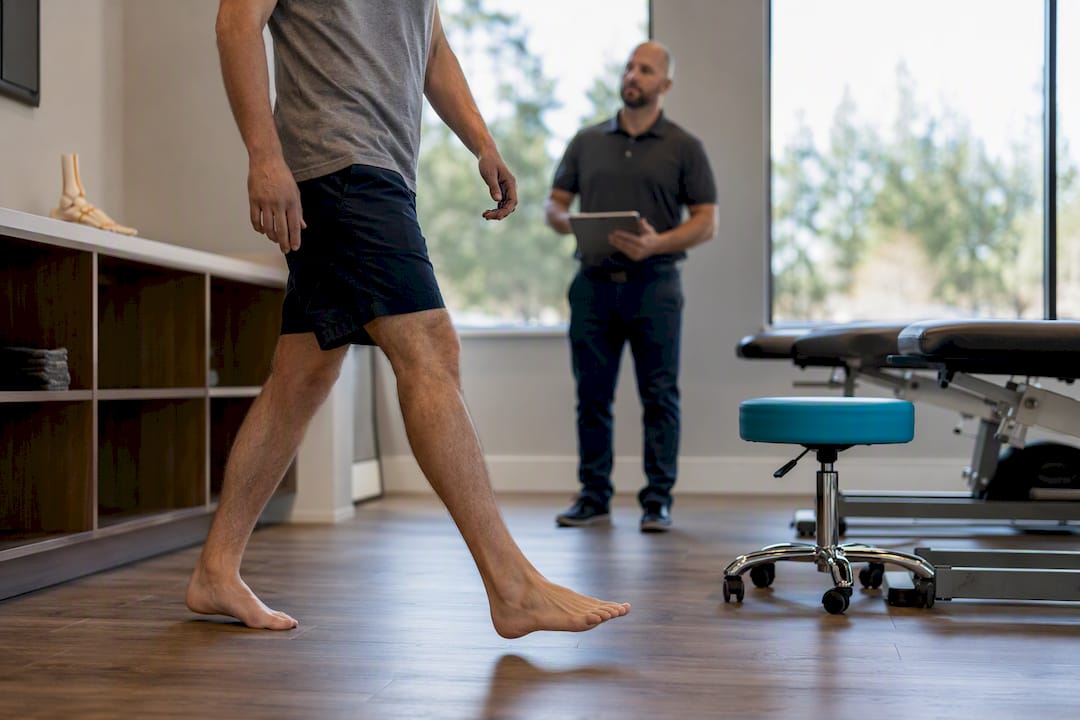
A clinical visit for foot pain usually starts with a history and physical exam: how the pain started, what makes it worse, and a hands-on check for swelling, tenderness, and range of motion. Watching you walk often reveals more than the exam table does.
Imaging gets added when needed. X-rays rule out fractures, ultrasound checks tendons and soft tissue, and MRI catches what X-rays miss, like stress fractures or nerve compression.
Treatment beyond home care typically includes:
- Physical therapy to rebuild strength and correct movement patterns
- Custom orthotics for structural imbalances like flat feet
- Corticosteroid injections for stubborn inflammation
- Bracing or bracing plus footwear modification for tendon issues, similar to what’s used for posterior tibial tendon dysfunction
- Surgery, reserved for cases that don’t respond to months of conservative care
Recovery timelines vary widely. Mild tendinitis can settle in a few weeks; a stress fracture often needs 6 to 8 weeks of reduced load before returning to full activity.
How a specialized chiropractic center approaches persistent foot pain
Some chiropractic centers use the Fascial Distortion Model, a hands-on approach that treats soft tissue distortions directly rather than just managing symptoms with rest and medication. Paired with a rehab plan, this approach is built for conditions where mechanics, not just inflammation, are driving the pain.
- Plantar fasciitis tied to arch instability
- Flat-foot biomechanics contributing to knee or hip strain
- Tendon pain that hasn’t responded to rest alone
Before a first visit, jot down when the pain started, what shoes you’ve been wearing, and any recent change in activity. That history speeds up the exam significantly.
| What to bring | Why it helps |
|---|---|
| Symptom timeline | Shows whether pain is acute or chronic |
| Recent footwear | Flags shoes as a contributing factor |
| Activity log | Reveals overuse patterns |
Most plans run a handful of visits, adjusted based on how the tissue responds. You can review the clinic’s broader pain treatment approach before booking.
Why Most Foot Pain Advice Misses the Point
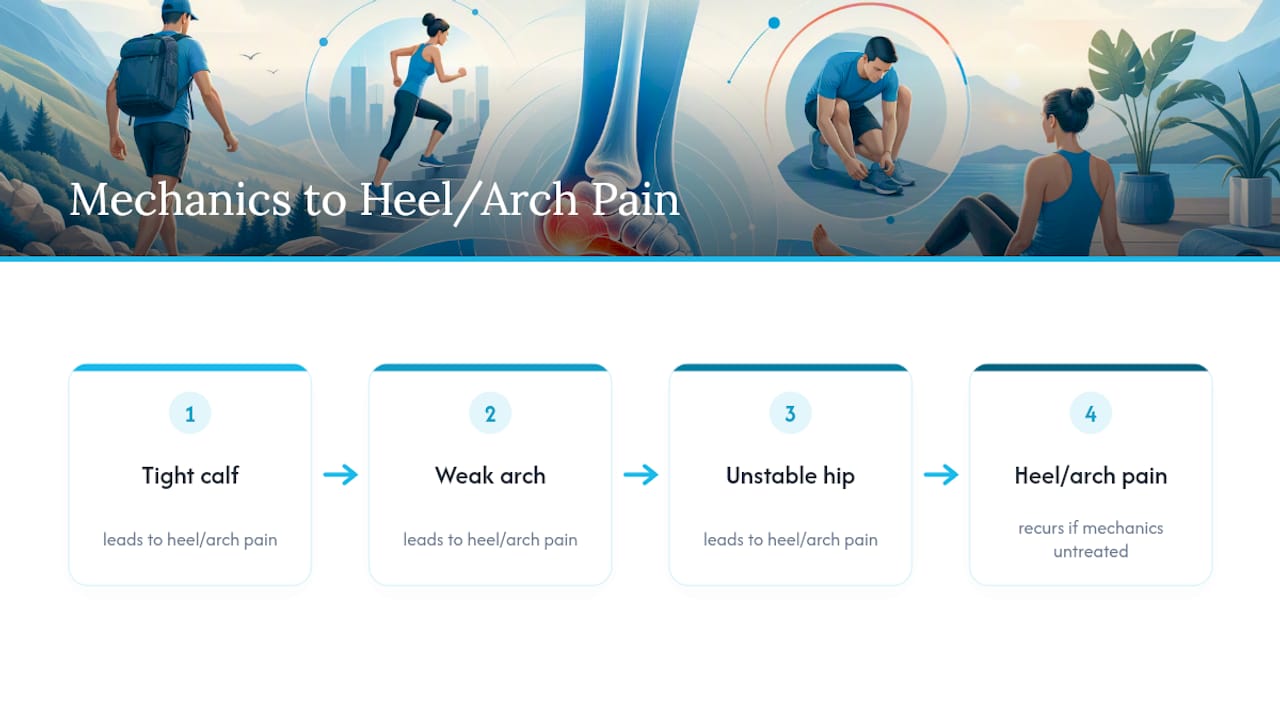
The conventional advice—rest it, ice it, buy better shoes—isn’t wrong. It’s just incomplete. Foot pain rarely stays isolated to the foot. Tight calves, an unstable hip, or years of compensating for one weak arch all show up eventually as heel or arch pain, and treating the symptom without touching the mechanics behind it is why plantar fasciitis keeps coming back for so many people.
What gets underweighted is timing. Waiting three months to see if it “works itself out” almost always makes the eventual fix longer and harder. The pain that seems minor at week two is often the same pain that turns into a chronic mechanical problem by month six.
If there’s one thing worth prioritizing, it’s this: figure out where it hurts, try smart home care for a week or two, and if it’s not trending better, get someone to look at how you actually move, not just where you hurt.
— Chris
This article is general information, not a substitute for advice from a qualified doctor. Consult a qualified healthcare professional about your own circumstances before acting on anything here.
Sources
- Foot pain: A look at why your feet might hurt — Harvard Health
- Foot pain — MedlinePlus Medical Encyclopedia
- Foot pain: Causes & treatment — Cleveland Clinic