
How to Treat Tennis Elbow: What Actually Works
Most tennis elbow improves with targeted conservative care, ice, activity changes, and NSAIDs, paired with progressive rehabilitation over several weeks. Escalate to injections or procedures only after prolonged proper rehab fail to restore function. Surgery stays a last resort, reserved for the small share of cases that don’t respond to nonoperative care.
TL;DR:
- Proper rehabilitation can resolve most tennis elbow cases without the need for injections or surgery, which are only suitable when conservative methods fail.
- A phased rehab program emphasizing eccentric strengthening and pain-guided activity is essential for full recovery over several months.
- Correct placement and use of braces, such as a counterforce strap below the elbow, are crucial for relieving tension and preventing worsening symptoms.
- Long-term solutions focus on mechanical correction of movement and joint restrictions, rather than relying solely on rest or corticosteroid injections.
- In cases where home treatment stalls, hands-on mechanical assessment and correction by a specialist can address underlying dysfunctions more effectively.
Table of Contents
- Tennis Elbow Treatment: Symptoms and What Causes It
- How Is Tennis Elbow Diagnosed, and When Should You See a Provider?
- Home Remedies for Elbow Pain That Actually Help
- Best Exercises for Tennis Elbow: A Phased Rehab Plan
- Braces and Ergonomic Fixes for Elbow Pain Relief
- Injections and Minimally Invasive Procedures for Tennis Elbow
- Tennis Elbow Surgery Options and What Recovery Looks Like
- How the Tx Room Approaches Tendon Injuries Like This
- What Most Advice on Tennis Elbow Gets Wrong
- Get Hands-On Treatment for Tennis Elbow in Plano
- Sources
Tennis Elbow Treatment: Symptoms and What Causes It
Tennis elbow, or lateral epicondylitis, produces pain on the outer elbow that radiates down the forearm when you grip, twist a doorknob, or extend your wrist against resistance. It’s a degenerative change in the tendon fibers attaching to the lateral epicondyle, not simple inflammation, which is one reason it lingers longer than people expect.
Despite the name, most cases have nothing to do with tennis. Repetitive gripping tasks, typing, painting, plumbing, and racket sports with poor stroke mechanics all load the same tendon. Biomechanical faults in equipment and technique often sit underneath cases that keep coming back, which is why fixing a grip size or a keyboard height matters as much as any exercise.
- Pain concentrated at the bony bump on the outside of the elbow
- Worsens with gripping, wrist extension, or lifting with palm down
- Usually gradual onset tied to repetitive forearm use, more common after age 40
- Can mimic radial tunnel syndrome or referred pain from the neck, so location and provocation testing matter
How Is Tennis Elbow Diagnosed, and When Should You See a Provider?
Clinicians typically diagnose tennis elbow through history and a physical exam rather than imaging. A provider will press directly on the lateral epicondyle and ask you to extend your wrist or grip against resistance. Pain reproduced by both tells them what they need to know.
Imaging isn’t usually the first step. Ultrasound or MRI gets ordered when symptoms don’t fit the classic pattern, when a provider suspects a tear rather than tendinosis, or when conservative treatment fails to resolve symptoms after a reasonable trial.
- Try self-care first if pain is mild and function is largely intact
- See a provider if pain limits grip strength, work, or sleep
- Seek evaluation sooner if you notice numbness, tingling, or weakness, which can signal nerve involvement rather than tendon strain
- Persistent pain beyond four to six weeks despite rest and activity changes warrants a professional look
Home Remedies for Elbow Pain That Actually Help
The first two to four weeks are about calming the tendon down without letting your arm go stiff and weak from disuse. None of this fixes the underlying tendon problem on its own, but it buys you the window to start real rehab without constant flare-ups.
- Ice for 15 to 20 minutes, several times a day, especially after activities that provoke pain. Skip the heat early on; it tends to aggravate an irritated tendon.
- Modify, don’t eliminate, activity. Total rest lets the forearm muscles deteriorate. Swap high-load gripping tasks for lighter versions and keep the wrist moving through pain-free range.
- Use oral or topical NSAIDs short-term. Topical diclofenac gel delivers medication locally with less systemic exposure than pills, which some people prefer for a joint this close to the skin.
- Try a counterforce strap during aggravating tasks, placed correctly (more on that below), to offload tension at the tendon’s attachment point.
Pro Tip: Don’t wait for pain to disappear completely before easing back into light activity. Gentle, pain-guided movement during recovery keeps the tendon adaptable; strict immobilization for weeks tends to backfire.
Conservative measures like these resolve a meaningful share of cases before anyone needs a referral for physical therapy or injections.
Best Exercises for Tennis Elbow: A Phased Rehab Plan
Passive rest alone tends to leave the tendon weaker and more prone to re-injury once you go back to normal activity. Progressive, controlled loading, especially eccentric strengthening where the muscle lengthens under tension, does more to rebuild tendon capacity than sitting still ever will.
A typical progression looks like this:
- Weeks 1 to 2, mobility and pain control. Gentle wrist flexion and extension stretches, held 15 to 30 seconds, done without forcing through sharp pain.
- Weeks 2 to 4, isometrics. Static wrist extension holds against light resistance, building tolerance without moving the joint through range.
- Weeks 4 to 8, eccentric loading. Slow, controlled wrist extension lowering phases using a light dumbbell or resistance band, three sets of 10 to 15, typically the phase that drives the most improvement.
- Weeks 8 and beyond, progressive resistance and return to activity. Gradually reintroduce grip-intensive tasks or sport-specific motion, increasing load as symptoms allow.
Progress based on pain response, not a fixed calendar. Mild discomfort during exercise that settles within a day is generally acceptable; sharp pain that lingers means you backed off too little.
Pro Tip: Consistency beats intensity here. Three short sessions a week done properly for eight weeks will outperform one aggressive session that leaves you sore for days.
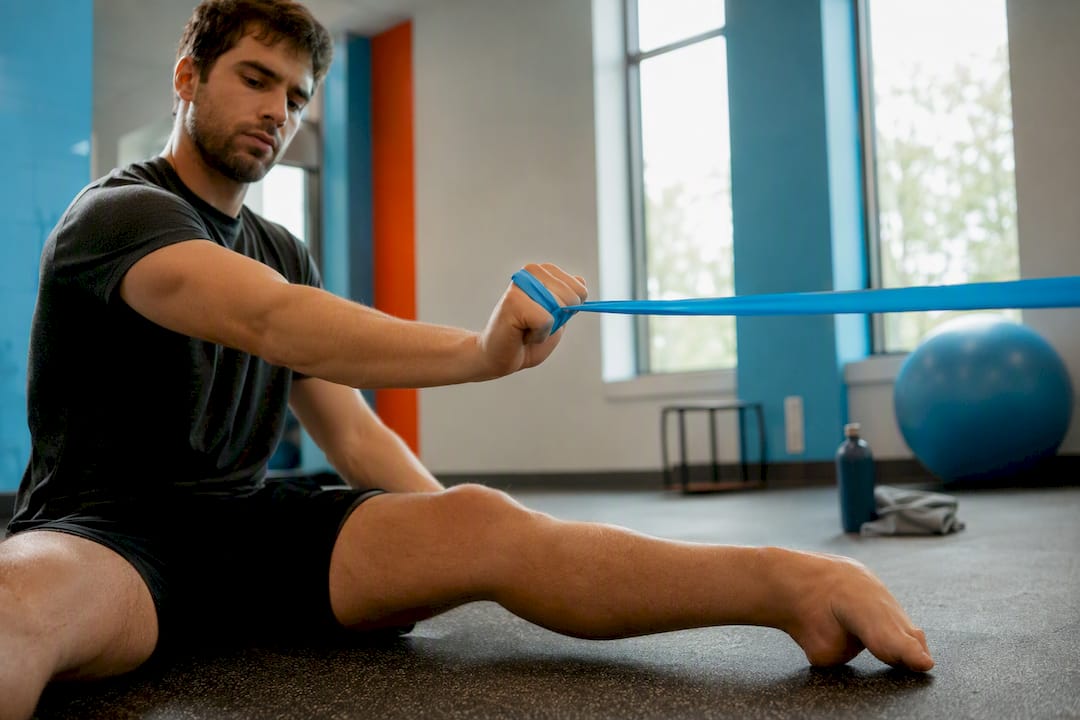
If pain doesn’t trend downward after four to six weeks of a structured program, that’s the point to bring in a physical therapist or hand therapist rather than continuing to guess.
Braces and Ergonomic Fixes for Elbow Pain Relief
A counterforce strap, worn snugly around the upper forearm just below the elbow, reduces tension at the tendon’s attachment during gripping tasks. A wrist splint limits wrist extension entirely, useful for flare-ups or sleep. Compression sleeves offer mild support and warmth but do less mechanically.
Placement determines whether a strap helps or hurts. Positioned or tightened incorrectly, a counterforce strap can increase pain rather than relieve it, particularly if it sits directly over the point of maximal tenderness instead of a few inches below it.
- Fit the strap two to three finger-widths below the elbow crease, never directly on the sore spot
- Adjust racket grip size, tool handle diameter, or keyboard position to reduce repetitive strain
- Treat a brace as a bridge during flare-ups, not a permanent fix. If you rely on it indefinitely, the underlying loading problem hasn’t been addressed.
Injections and Minimally Invasive Procedures for Tennis Elbow
When rehab alone hasn’t cut it after several months, providers weigh procedural options. Corticosteroid injections deliver fast, effective short-term pain relief, but the evidence consistently shows limited long-term functional benefit, and some studies suggest symptoms can rebound or worsen months later.
Platelet-rich plasma (PRP) injections use your own blood components to stimulate tendon healing. PRP shows better long-term pain and function outcomes than corticosteroids in some studies for chronic cases, though study quality varies enough that no provider should promise a guaranteed result.
Other options include:
- Needle fenestration (also called dry needling), which creates small punctures in the damaged tendon tissue to trigger a localized healing response
- TENEX, an ultrasound-guided procedure that removes degenerated tendon tissue through a small incision
- Extracorporeal shockwave therapy, which uses sound waves to stimulate tendon repair, with inconsistent results across studies
Evidence quality across these procedures ranges from moderate to low, and none replaces a proper loading program. They’re typically considered after conservative treatment plus structured rehab hasn’t worked over several months, not as a shortcut around it.
Tennis Elbow Surgery Options and What Recovery Looks Like
Surgery gets reserved for the minority of cases that don’t respond to six to twelve months of legitimate, structured nonoperative care. That’s a real timeline, not a suggestion, because most people improve within three to eighteen months with conservative treatment alone.
- Open surgical release removes damaged tendon tissue through a traditional incision, still common and well studied.
- Arthroscopic debridement achieves a similar result through small portals with less soft tissue disruption and typically a faster initial recovery.
- Postsurgical rehab follows its own phased sequence, starting with gentle range of motion and progressing to strengthening over roughly four to six months before full return to demanding activity.
Outcomes are generally good for patients who reach surgery after failing appropriate conservative care first. Surgery works best as a deliberate last step for a well-defined refractory case, not a way to skip the rehab most people actually need.
How the Tx Room Approaches Tendon Injuries Like This
Tennis elbow is fundamentally a mechanical problem: a tendon that’s been asked to absorb load it can’t handle, often because of a movement pattern or joint restriction elsewhere in the arm. The Fascial Distortion Model, the hands-on framework Thetxroom uses, targets those mechanical distortions directly rather than treating pain in isolation.
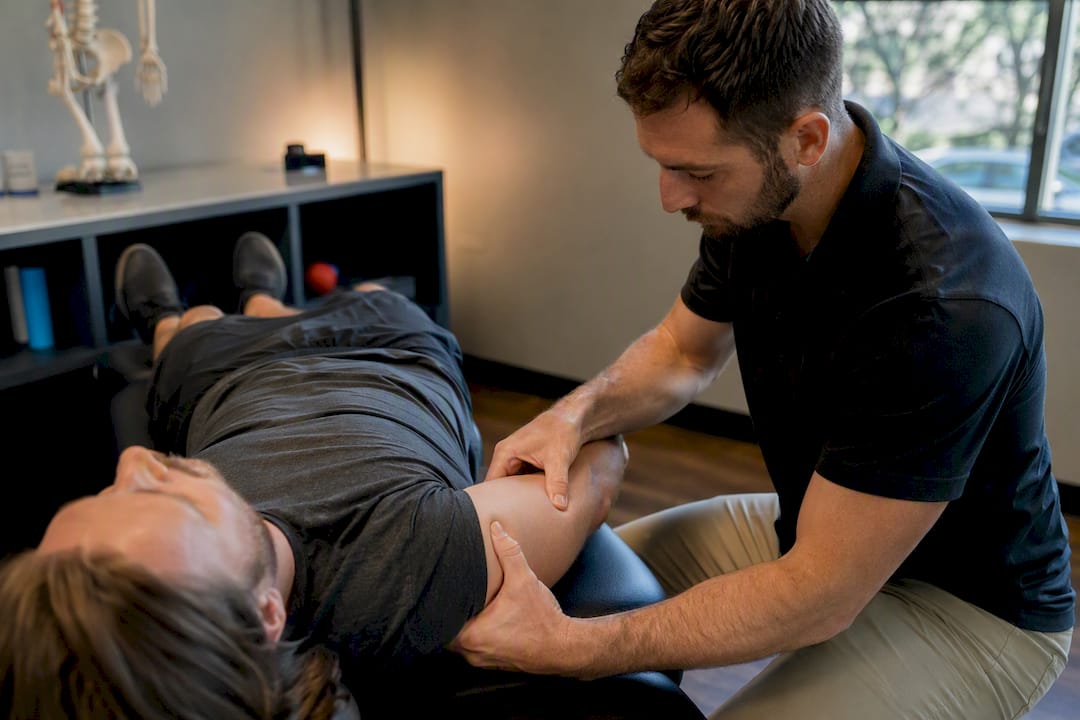
Alongside FDM, the clinic uses myofascial acoustic compression therapy and individualized rehab plans built around the same loading principles covered above. Thetxroom’s broader approach to tendinitis reflects that same philosophy: correct the mechanics first, then load the tissue back to capacity.
If home exercises and rest haven’t moved the needle after several weeks, hands-on mechanical correction is worth discussing with a provider before jumping to injections.
What Most Advice on Tennis Elbow Gets Wrong
The conventional advice, rest it and take some ibuprofen, undersells how mechanical this condition actually is. Pure rest without addressing grip mechanics, tool ergonomics, or joint restrictions upstream in the shoulder and wrist sets people up for the same injury to return the moment they resume normal activity. That’s the pattern I see reflected across the clinical literature: recurrence tracks closely with whether anyone corrected the underlying movement fault, not just whether the pain went away temporarily.
I’d also push back on how casually corticosteroid shots get offered as a default next step. They work fast, which is exactly why they’re appealing, but the evidence on long-term function is thin. If you’re going to accept an injection, know you’re trading short-term comfort for a shot that may not fix the mechanical problem underneath it.
Prioritize the loading program and the mechanics assessment before the needle. That order matters more than most people realize.
— Chris
Get Hands-On Treatment for Tennis Elbow in Plano
If weeks of ice, bracing, and home exercises haven’t resolved your forearm pain, a hands-on mechanical correction can address what a stretching routine alone can’t. Thetxroom treats tendon injuries like tennis elbow using the Fascial Distortion Model, a manual therapy approach built specifically to identify and correct the biomechanical faults driving your pain, not just manage the symptoms.
Your first visit includes a hands-on assessment of the elbow, wrist, and shoulder mechanics feeding into your pain, followed by an individualized treatment plan that folds directly into a progressive loading program. For related tendon and soft-tissue conditions, Thetxroom’s tendinitis care page outlines what that process typically involves.
If your tennis elbow has stalled despite doing the right home exercises, book an evaluation with Thetxroom and find out whether mechanical correction is the missing piece.
This article is general information, not a substitute for advice from a qualified doctor. Consult a qualified healthcare professional about your own circumstances before acting on anything here.
Sources
- Lateral Epicondylitis (Tennis Elbow) – StatPearls – NCBI Bookshelf
- Tennis elbow – Diagnosis and treatment – Mayo Clinic
- Management of lateral epicondylitis (tennis elbow) | The BMJ
- Study on counterforce straps and their effects (PubMed)