
Coccydynia Treatment: What Works First and What to Try Next
Most tailbone pain responds to conservative, multimodal care, activity changes, offloading cushions, and pelvic-floor–focused physical therapy, before anyone needs an injection or surgery. Try these in order:
- Weeks 1 to 4: Offload the coccyx (wedge or U-shaped cushion), short-term NSAIDs, ice or heat, and activity tweaks.
- Weeks 2 to 8: Pelvic-floor–aware physical therapy and targeted stretches if pain limits sitting or daily function.
- Months 2 to 6: Image-guided steroid injection or ganglion impar block if conservative care stalls.
- Rare, last resort: Coccygectomy, only after other options fail and diagnostic blocks confirm the coccyx as the source.
Conservative treatment succeeds in roughly 90% of patients, with many people improving within weeks to a few months. Get urgent care if you develop fever, drainage, unexplained weight loss, or new numbness or weakness.
Key Takeaways
Effective coccydynia treatment follows a strict order: offloading and home care first, pelvic-floor physical therapy next, and image-guided injections or surgery only if those steps fail.
| Point | Details |
|---|---|
| Start conservative | Offloading cushions, short-term NSAIDs, and activity changes resolve most cases within weeks. |
| Prioritize pelvic-floor PT | Muscle-focused physical therapy, not bone-focused treatment, drives outcomes for many patients. |
| Escalate deliberately | Move to steroid injections or ganglion impar blocks only after a genuine multi-week conservative trial. |
| Treat surgery as last resort | Coccygectomy is reserved for refractory cases confirmed by diagnostic blocks, with variable outcomes. |
| Get hands-on care when needed | Thetxroom offers biomechanics-first manual therapy and individualized rehab for persistent tailbone pain in Plano. |
Table of Contents
- What Is Coccydynia and What Triggers It?
- Symptoms That Point to Tailbone Pain (and Warning Signs That Don’t)
- How Doctors Diagnose Coccydynia
- First-Line Coccydynia Home Remedies and Self-Care
- Physical Therapy and Exercises for Tailbone Pain Relief
- Injections and Nerve Blocks: When Conservative Care Isn’t Enough
- Other Non-Surgical Options: Shockwave, TENS, and Kinesiotaping
- Coccygectomy: The Last-Resort Surgical Option
- When to See a Clinician for Tailbone Pain
- Recovery Timeline and How to Prevent Tailbone Pain From Coming Back
- Frequently Asked Questions
- Sources
What Is Coccydynia and What Triggers It?
Coccydynia is pain centered at or just above the tailbone, the small triangular bone at the base of your spine. It often worsens with sitting, especially on hard surfaces, and eases somewhat when you stand or lie down.
Common triggers include:
- A direct fall onto the buttocks or a hard landing
- Vaginal childbirth, particularly with a difficult delivery
- Prolonged sitting on hard or narrow seats (long drives, cycling, office chairs)
- Repetitive microtrauma from activities like rowing or horseback riding
- Idiopathic cases with no clear identifiable cause
Diagnosis is largely clinical. A clinician typically reaches a diagnosis through history and a focused exam rather than routine imaging, which is reserved for unclear presentations or red flags.
Symptoms That Point to Tailbone Pain (and Warning Signs That Don’t)
Coccydynia has a recognizable pattern. You’ll likely notice:
- Pain when sitting, especially on firm chairs, that eases when you stand
- A sharp jab when transitioning from sitting to standing
- Aching or tenderness when leaning back in a chair
- Discomfort during bowel movements or intercourse in some cases
- Localized tenderness you can point to directly over the tailbone
Causes present a little differently depending on origin. Acute trauma tends to produce sudden, sharp pain right after the injury, while childbirth-related coccydynia often shows up as a dull ache that builds over the following days. Prolonged-sitting cases develop gradually, and idiopathic coccydynia can appear with no obvious trigger at all.
If you notice fever, spreading redness, drainage from the area, progressive numbness or weakness in the legs, or unexplained weight loss alongside tailbone pain, that combination isn’t typical coccydynia. See a clinician promptly to rule out infection, a mass, or a neurological problem.
How Doctors Diagnose Coccydynia
Evaluation follows a predictable sequence:
- Focused history covering onset, sitting-related pain, prior trauma, or recent childbirth.
- Palpation exam, checking for localized tenderness directly over the coccyx and reproducing your symptoms.
- Conservative trial, since most clinicians will start treatment before ordering imaging.
Imaging isn’t automatic. Clinicians reserve it for specific situations:
- Plain radiographs or dynamic sitting/standing X-rays when instability or subluxation of the coccyx is suspected
- MRI or CT when red flags suggest infection, tumor, or fracture
- Basic lab work if infection is a concern
Some clinicians also use a diagnostic anesthetic injection directly at the coccyx. If a numbing injection eliminates your pain, that confirms the coccyx as the actual source before anyone considers a more invasive treatment.
First-Line Coccydynia Home Remedies and Self-Care
Home care is where nearly everyone starts, and for good reason: it’s the foundation of nearly every coccydynia treatment plan.
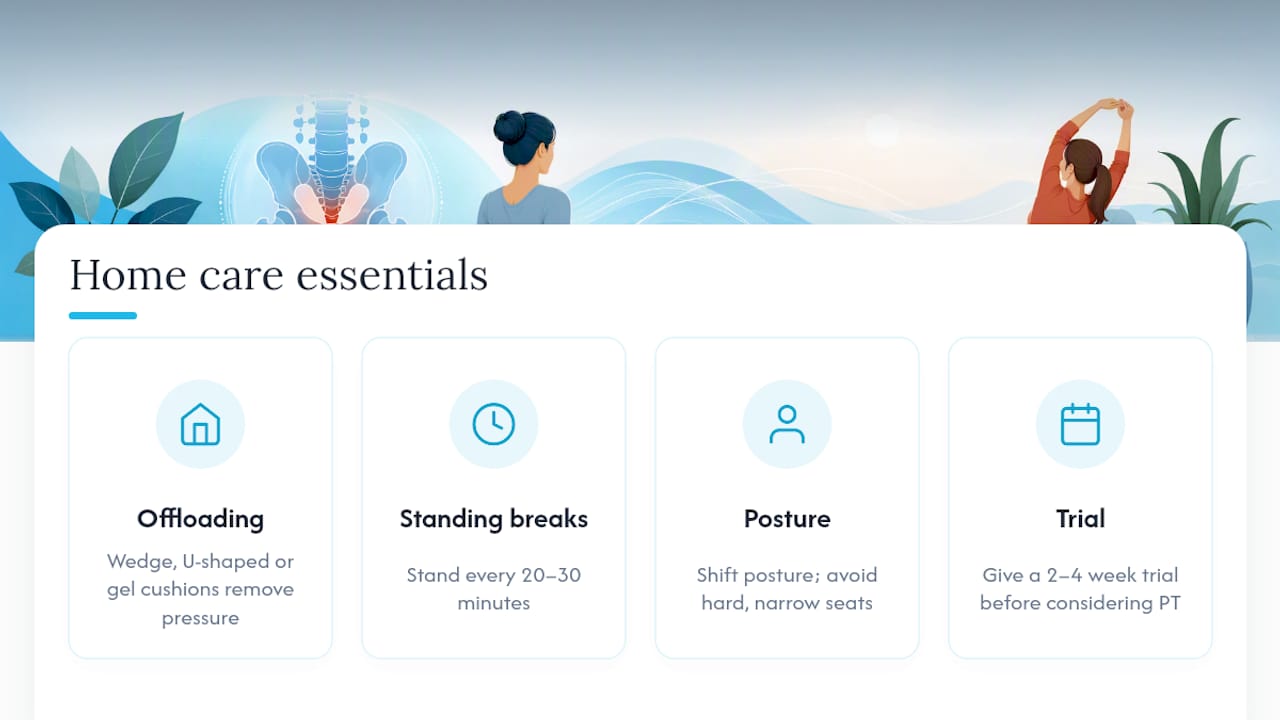
Offloading matters most. A wedge cutout cushion, U-shaped (donut-style) cushion, or coccyx-specific gel cushion removes direct pressure from the tailbone. Standing breaks every 20 to 30 minutes, shifting your seated posture, and avoiding hard, narrow seats all reduce cumulative strain.
Medication has a role, but a limited one. Short-term NSAIDs like ibuprofen or naproxen, or acetaminophen if NSAIDs aren’t suitable, can calm inflammation and pain. Topical analgesics (diclofenac gel, lidocaine patches) sometimes help without systemic side effects. Check with a pharmacist or clinician before regular NSAID use if you have kidney issues, ulcer history, or take blood thinners.
Adjuncts that add up: ice for acute flare-ups, heat for chronic stiffness, kinesiotaping to support the area during activity, and simple pacing, doing less in a single sitting stretch rather than pushing through pain.
Pro Tip: Give yourself a real 2 to 4 week trial of consistent offloading, medication as needed, and posture changes before judging whether conservative care is working. If you’re not at least modestly better by week four, that’s your signal to bring in physical therapy rather than waiting longer.
Physical Therapy and Exercises for Tailbone Pain Relief
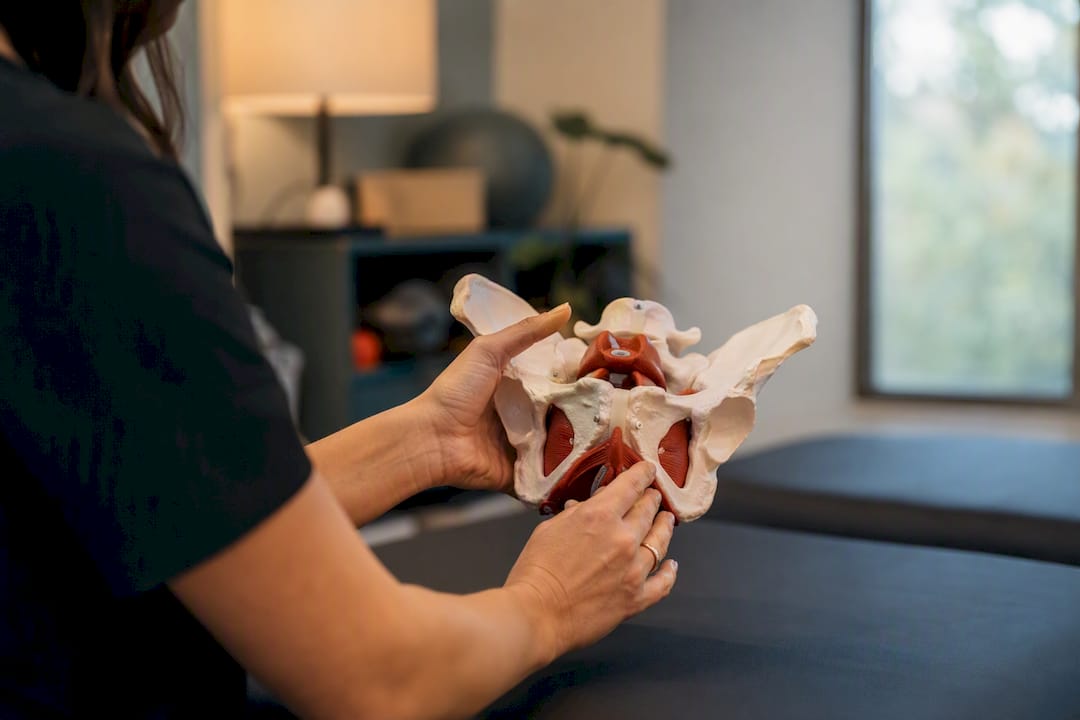
Here’s what a lot of people get wrong: they focus entirely on the bone and ignore the muscles surrounding it. The coccyx connects directly to the pelvic floor, glutes, and hip rotators, and tension or dysfunction in those muscles is often what’s actually driving the pain. Manual therapy that includes levator ani massage or stretch tends to outperform simple joint mobilization for many patients.
Safe starter exercises and stretches include:
- Child’s pose to gently decompress the lower spine and pelvis
- Cat-cow for spinal mobility without direct coccyx pressure
- Figure-four stretch to release tight glutes and piriformis
- Gentle piriformis and iliopsoas stretches
- Bridges to strengthen glutes without loading the tailbone directly
- Pelvic tilts for gentle lumbopelvic mobility
- Diaphragmatic breathing and reverse Kegels to release pelvic-floor tension rather than tighten it
Walking and breathing-based relaxation are safer early steps than complete rest, since they avoid direct coccyx loading while keeping tissue moving. Consistent, moderate exercise programs targeting the glutes, hips, and pelvic floor tend to matter more than any single high-intensity session.
A sensible progression looks like this:
- Pain-free mobility work (breathing, gentle tilts, walking)
- Graded strengthening (bridges, glute activation)
- Functional sitting tolerance (building up seated time gradually)
- Return to sport or full work duties
Combining these movements with broader hip and pelvic mobility work often speeds up the sitting-tolerance phase.
Pro Tip: If pelvic-floor dysfunction is suspected, internal manual work or levator ani massage from a trained pelvic-floor physical therapist can make a noticeable difference within four to six sessions. That’s usually enough to tell whether you’re a responder.
Injections and Nerve Blocks: When Conservative Care Isn’t Enough
When weeks of home care and PT don’t move the needle, image-guided procedures are the next step, not surgery.
- Fluoroscopy-guided corticosteroid injection, delivered directly to the coccygeal area to reduce local inflammation
- Ganglion impar block, a sympathetic nerve block that can interrupt pain signaling for coccyx and pelvic pain
- Coccygeal nerve radiofrequency ablation (RFA) or pulsed RFA, aimed at longer-lasting relief for select patients
- Diagnostic anesthetic blocks, used to confirm the coccyx is truly the pain generator before anything more invasive
Steroid injections and ganglion impar blocks can provide meaningful relief for patients who haven’t improved with conservative measures, and they double as diagnostic tools. Relief duration varies widely: some patients get weeks of benefit from a single steroid injection, while others need repeat rounds. Nerve blocks sometimes provide longer-lasting effects.
Risks worth discussing with your clinician include infection at the injection site, transient numbness, and the possibility of needing repeat procedures if relief fades faster than expected.
Other Non-Surgical Options: Shockwave, TENS, and Kinesiotaping
Beyond cushions and injections, several other modalities show up in coccydynia care with varying degrees of evidence behind them:
- Extracorporeal shockwave therapy, which has among the stronger supporting evidence of the non-invasive options in clinical reviews
- Transcutaneous electrical nerve stimulation (TENS) for symptomatic pain modulation
- Kinesiotaping to offload tissue and provide sensory feedback during activity
- Topical analgesics and therapeutic ultrasound as adjuncts rather than standalone fixes
Evidence strength varies by modality, and kinesiotaping, TENS, and topical treatments tend to have thinner trial support than shockwave therapy specifically. If you’re considering shockwave treatment, ask your provider how many sessions their protocol typically involves and what outcomes they’ve seen in similar cases.
Coccygectomy: The Last-Resort Surgical Option
Surgical removal of the coccyx, coccygectomy, is not a common coccydynia treatment. It’s reserved for a small subset of patients with chronic, function-limiting pain that hasn’t responded to conservative care, interventional procedures, and confirmatory diagnostic blocks.
Who might qualify:
- Pain persisting many months to years despite exhausting nonsurgical options
- Concordant diagnostic block results pointing specifically to the coccyx
- Imaging or exam findings consistent with structural coccyx pathology
What to expect: Outcomes vary. Some carefully selected patients get meaningful pain relief, but recovery takes months, and results aren’t guaranteed for everyone. Complications include infection, wound-healing problems, retained bone fragments, and in some cases persistent pain or new pelvic-floor issues. Careful patient selection is the single biggest factor separating good outcomes from disappointing ones.
When to See a Clinician for Tailbone Pain
- Immediately: fever, drainage, progressive weakness, or unexplained weight loss
- Within a week or two: severe pain that stops you from sitting at all
- After 2 to 6 weeks: mild-to-moderate pain that hasn’t budged with home care
Who to see, in order: primary care first, then a pelvic-floor physical therapist, then a physiatrist or pain clinic, and a spine surgeon only for refractory cases.
Before your appointment:
- Track a symptom diary noting what worsens or eases the pain
- Bring any prior imaging or records
- Ask specifically about diagnostic blocks and realistic timelines for each treatment stage
Recovery Timeline and How to Prevent Tailbone Pain From Coming Back
Realistic expectations matter here. Home care often eases symptoms within days to a couple of weeks. Physical therapy typically needs several weeks to a few months to show its full benefit. Injections can bring relief within days, though the effect sometimes fades over weeks to months. Surgical recovery, when needed, runs months rather than weeks.
The encouraging number to hold onto: conservative therapy succeeds in roughly 90% of patients across clinical reviews, and most of those people never need an injection, let alone surgery.
Prevention comes down to a few repeatable habits:
- Adjust your sitting setup with a proper offloading cushion, especially for desk work or long drives
- Take movement breaks every 20 to 30 minutes rather than sitting through discomfort
- Manage body weight if excess weight is adding pressure during sitting
- Keep up hip, glute, and pelvic-floor conditioning even after symptoms resolve
How Thetxroom Approaches Coccyx Pain
Because the coccyx rarely acts alone, mechanically, it’s tied to the glutes, hips, and pelvic floor, Thetxroom treats the surrounding soft tissue and biomechanics first rather than isolating the bone. When symptoms don’t respond to hands-on care and early rehab, the clinic coordinates referrals to pain specialists or surgeons rather than delaying that step.
Hands-On Care for Tailbone Pain in Plano
If home remedies and stretching have only gotten you partway there, hands-on treatment can close the gap faster than continuing to wait it out. Thetxroom uses the Fascial Distortion Model to address the soft-tissue and biomechanical imbalances around the coccyx directly, rather than treating the tailbone as an isolated problem.
A first visit typically includes a hands-on assessment of your pelvis, hips, and lower back, targeted manual work during the session, and a home exercise plan tailored to your sitting tolerance and activity goals. This kind of individualized care matters most for people whose pain hasn’t fully resolved with cushions and stretching alone, including postpartum patients dealing with pelvic changes after childbirt. If that’s your situation, Thetxroom’s pregnancy-related chiropractic care addresses the pelvic mechanics involved. Self-care resolves most coccydynia cases, but if yours has lingered past a few weeks, book an evaluation and get a plan built around your specific movement patterns.
Frequently Asked Questions
How long does coccydynia treatment take to work?
Most people notice improvement within a few weeks of consistent home care, and conservative treatment overall succeeds in roughly 90% of cases. Physical therapy benefits often take several weeks to a few months to fully show.
What is the best cushion for tailbone pain relief?
Wedge cutout and U-shaped (donut-style) cushions both offload direct coccyx pressure. Which works better depends on your body and chair, so it’s worth trying both if the first doesn’t help within a week or two.
Can occipital neuralgia exercises or occipital headache relief techniques help with tailbone pain?
No. Occipital neuralgia treatment targets nerve irritation at the base of the skull, a completely different condition and location, so those exercises won’t address coccyx pain, though pelvic-floor and hip mobility work will.
When should I worry that my tailbone pain isn’t just coccydynia?
Fever, drainage, progressive leg weakness or numbness, or unexplained weight loss alongside tailbone pain aren’t typical coccydynia symptoms. See a clinician promptly if any of those appear.
Is coccygectomy the standard coccydynia treatment for chronic pain?
No, it’s a rare last resort. Most clinical reviews reserve surgery for patients who’ve failed conservative care, injections, and confirmatory diagnostic blocks, and outcomes vary even in well-selected candidates.
This article is general information, not a substitute for advice from a qualified doctor. Consult a qualified healthcare professional about your own circumstances before acting on anything here.
Sources
- Pmc
- Coccyx Pain – StatPearls – NCBI Bookshelf
- Contemporary Management of Coccydynia
- 9 Exercises for Tailbone Pain Relief
- Hurt Tailbone Exercise: Safe Moves For Relief – Acibadem Hospitals Group