
Knee Osteoarthritis Pain Relief: What Helps and What to Try First
The most reliable relief for knee osteoarthritis (OA) comes from a combination: regular exercise, weight management if it applies to you, heat or cold for flare-ups, a topical or oral medicine used correctly, and, when pain stays severe, an injection or a surgical opinion. No single fix works for everyone, and the order matters. Start with the lowest-risk options, build a plan around movement, and bring in a clinician early rather than late.
This guide walks through each option in the order most U.S. guidelines suggest, with the numbers and the safety points you need. We are a hands-on chiropractic clinic in Plano, Texas, so we also explain where manual therapy fits next to the rest of your plan.
TL;DR
- Exercise is the foundation: a major U.S. orthopedic guideline gives a strong recommendation for exercise over no exercise for knee OA pain and function.
- Heat eases stiffness, cold eases swelling, and topical NSAID gels can help with fewer whole-body risks than pills when they are safe for you.
- Acetaminophen and oral NSAIDs help many people, but both carry real risks, so use the lowest dose that works and talk to your doctor about your health history.
- Steroid injections give short-term relief only, so pair them with exercise rather than relying on repeat shots.
- Hands-on soft tissue care can calm the tight, irritated muscle and fascia around a sore knee and make exercise easier to start.
Table of Contents
- Start with movement, even when the knee hurts
- Weight: small changes count
- Heat, cold and topical options
- Medicines: what they do and what to watch
- Our perspective on knee OA pain
- Where hands-on care fits
- Food and supplements: what the research supports
- When pain stays severe: injections and surgery
- Book a hands-on evaluation in Plano
- FAQ
- Sources
Start with movement, even when the knee hurts
It feels backwards, but the knee usually does better with regular, appropriate loading than with rest. The American Academy of Orthopaedic Surgeons gives a strong recommendation for supervised, unsupervised or aquatic exercise over no exercise to improve pain and function in knee OA.
The 2026 VA/DoD guideline goes further and recommends an individualized self-management program. It includes education, more daily activity such as walking and cycling, regular self-directed strengthening, yoga or tai chi, and weight reduction for people who are overweight or obese.
Mayo Clinic describes low-impact options such as walking, bicycling and water aerobics as ways to build endurance and strengthen the muscles around the joint.
A simple way to begin
- Pick one low-impact activity you can repeat three or four days a week: a flat walk, a stationary bike, or a pool session.
- Start shorter than you think you need. Ten minutes is fine.
- Add two or three strengthening moves for the thighs and hips, such as sit-to-stands from a chair and side-lying leg lifts.
- Expect mild, familiar achiness. Sharp pain, a locking sensation, or swelling that lingers into the next day means scale back and get the knee examined.
- Increase time or effort gradually over several weeks, not days.
If your pain makes even this hard, that is a good reason to see a clinician who can look at how you move, not a reason to give up. Weak hips, a stiff ankle or a foot that collapses inward can all load the knee unevenly. Our pages on overpronation and knee pain and knee valgus correction explain how those patterns are assessed.
Weight: small changes count
For people carrying extra weight, every pound lost reduces the load the knee absorbs with each step. Mayo Clinic notes that even minor weight loss can relieve pressure and reduce pain in weight-bearing joints such as the knees. The AAOS gives a moderate recommendation that sustained weight loss improves pain and function in overweight and obese patients with knee OA.
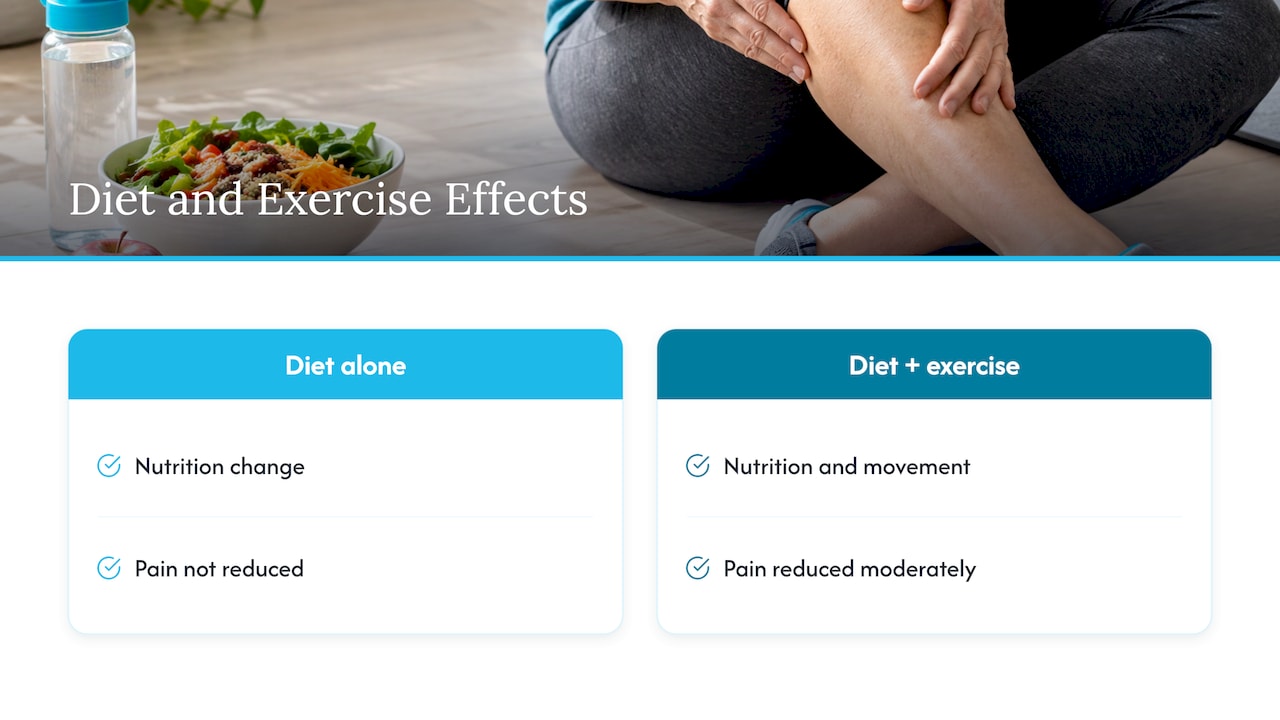
How you lose it matters. A 2019 systematic review found that diet alone did not reduce pain, while diet combined with exercise reduced it moderately in overweight and obese adults with knee OA. The practical takeaway: pair any nutrition change with the movement plan above.
Heat, cold and topical options
These are the easiest tools to try at home, and they are low risk for most people.
- Heat (a warm bath, a heating pad on low, a warm towel) tends to ease morning stiffness. Use it before activity.
- Cold (an ice pack wrapped in a cloth) is better after activity or during a swollen, irritated flare.
- Mayo Clinic states that heat and cold can relieve joint pain and swelling. Limit sessions to about 15 to 20 minutes and keep a layer of cloth between the pack and your skin.
Topical NSAID gels deserve attention. The AAOS gives a strong recommendation for topical NSAIDs to improve function and quality of life in knee OA, when they are not contraindicated. Mayo Clinic adds that nonprescription NSAID gels may relieve pain when applied over the affected joint, and that capsaicin cream might help when applied three to four times a day for several weeks. Follow the label, wash your hands after use, and ask a pharmacist if you take blood thinners or have had a reaction to aspirin or NSAIDs.
Medicines: what they do and what to watch
Medication can make the exercise plan possible. It is not a plan by itself, and each option has trade-offs.
| Option | What the sources say | Safety points |
|---|---|---|
| Acetaminophen | May help some people with mild to moderate OA pain | Exceeding the recommended dose can damage the liver |
| Oral NSAIDs (ibuprofen, naproxen) | The 2019 ACR/Arthritis Foundation guideline strongly recommends oral NSAIDs as the initial oral medication of choice | Can cause stomach upset, cardiovascular problems, bleeding problems, and liver and kidney damage |
| Duloxetine | Approved for chronic pain including OA; the VA/DoD guideline suggests it depending on patient characteristics and preferences | Prescription only, so it needs a doctor’s review |
| Opioids, including tramadol | The VA/DoD guideline suggests against starting them for hip and knee OA | Risk of dependence |
The acetaminophen and NSAID safety details come from Mayo Clinic’s OA treatment page. The opioid and duloxetine positions come from the 2026 VA/DoD guideline.
Four rules keep medicine use safe:
- Check every product label for acetaminophen, since it hides in cold and sleep remedies.
- Take NSAIDs with food and for the shortest time that controls symptoms.
- If you have kidney disease, heart disease, ulcers or take blood thinners, ask your physician or pharmacist before using an oral NSAID.
- If you have been taking stronger pain medicine for a long time and want to come off it, do it with medical supervision. Resources on pain medication detox and keeping pain controlled explain what that process involves.
Our perspective on knee OA pain
Most people who come to us with knee OA have already tried the basics. They have iced it, taken the pills, and been told to “exercise more” while the knee still hurts too much to do it. That gap is where we work.
A painful knee is rarely just the joint. The muscles, tendons and fascia around it tighten, guard and misfire, and that guarding adds to the pain and the stiffness. Our approach is hands-on. We use the Fascial Distortion Model (FDM), myotherapy and individualized rehabilitation plans, and our approach is designed to restore how the soft tissue around the knee moves so you can get back to the strengthening and walking that guidelines recommend.
We also see people whose problems did not improve with standard medical or physical therapy approaches. We take the time to examine the whole chain, from foot and ankle to hip and low back, because a knee often hurts for reasons that start elsewhere.
Our goal is simple: less pain, better function, and a plan you can keep doing without us.
Chris
Where hands-on care fits
The guidelines above focus on exercise, weight, medicine and injections. Manual therapy is not a replacement for any of those, and we do not present it as one. We see it as a way to make the first step easier when pain, stiffness or muscle guarding stand in the way.
At The Tx Room, the tools we use around a sore knee include:
- The Fascial Distortion Model, a hands-on method for soft tissue and fascial restrictions.
- Dry needling for tight, irritable muscle around the hip, thigh and calf.
- MyACT focused shockwave for stubborn soft tissue pain.
- Deep tissue laser therapy as part of a broader plan.
- Myofascial release and muscle activation therapy to improve how the muscles around the knee move and fire.
If your knee pain has a different source, such as the kneecap, a tendon or a fold of tissue in the joint, our pages on chondromalacia patella, patellar tendinopathy and plica syndrome cover those. If hip stiffness is part of the picture, read about managing hip osteoarthritis pain without surgery.
Food and supplements: what the research supports
The nutrition research is more modest than the marketing. A 2025 review of diet in knee OA states that diets high in refined sugars and saturated fats exacerbate systemic inflammation, while diets rich in omega-3 fatty acids, polyphenols and fiber show anti-inflammatory properties. The same review says the role of glucosamine, chondroitin and vitamin D supplements is questioned because of limited evidence.
One small 2018 study found that obese adults with knee OA who ate 50 g a day of freeze-dried strawberries for 12 weeks had lower levels of certain inflammatory markers. The authors say larger trials are needed, so treat it as an interesting lead, not a treatment.
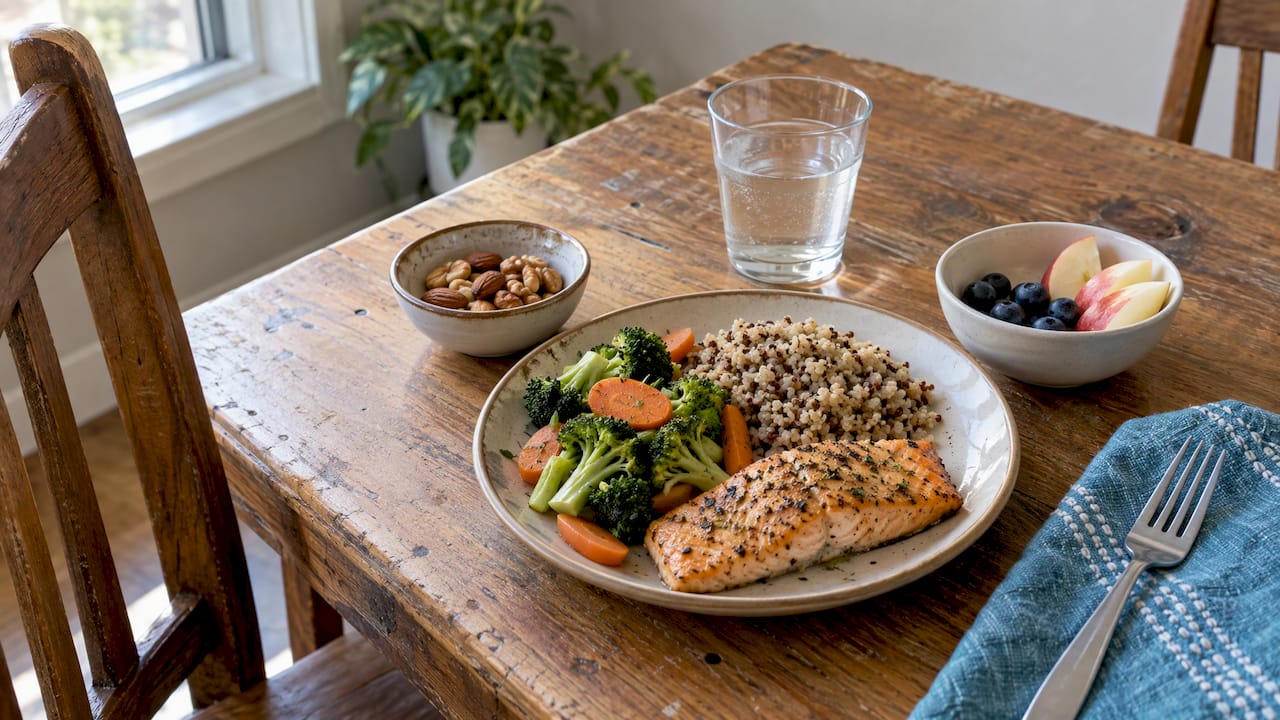
A sensible pattern: more vegetables, fruit, fish, nuts and whole grains, less sugary and ultra-processed food, and a calorie level that supports gradual weight loss if that is your goal. Ask your doctor before starting any supplement, especially if you take prescription medicine.
When pain stays severe: injections and surgery
If you have done the basics for several weeks and the pain still limits daily life, ask your physician about injections.
The 2026 VA/DoD guideline recommends intra-articular corticosteroid injection for persistent knee OA pain not relieved by other interventions. A January 2026 review in CMAJ describes what to expect:
- Relief is modest: on average a 3-point drop on a 0 to 10 pain scale, with a peak response at 1 to 2 weeks and an expected response in 44% of patients.
- Injections suit short-term management of roughly 2 to 6 weeks.
- Repeat injections are generally limited to 3 to 4 per year in a joint.
- They should be avoided at least 3 months before joint replacement.
- They work best alongside education, exercise and weight management.
The AAOS guideline gives a moderate recommendation that corticosteroids could provide short-term relief. It rates the evidence that platelet-rich plasma may reduce pain as limited.
For knee replacement, the VA/DoD pocket card advises avoiding corticosteroid injection in the three months before surgery. Many insurers also expect documented non-surgical treatment first. One example is a Massachusetts policy requiring at least 12 weeks of non-operative care along with persistent pain, loss of function and advanced X-ray changes. Your own plan’s criteria will differ, so call your insurer or ask your surgeon’s office for them.
See an orthopedic physician promptly if the knee is hot, red and swollen, you cannot bear weight, you have a fever, or the pain started after a fall or twisting injury.
Book a hands-on evaluation in Plano
If knee pain is keeping you from walking, training, working or keeping up with your family, we can examine the knee and the movement chain around it and build an individualized plan. We see athletes and non-athletes, and we welcome people whose pain has not improved with other approaches. We accept self-pay and insurance.
Learn more about our approach to knee pain in Plano, read about a more natural option for knee pain, or visit The Tx Room to schedule your first visit.
FAQ
What is the best pain relief for bone-on-bone knees caused by osteoarthritis?
There is no single best option. Guidelines combine exercise, weight management, topical or oral anti-inflammatories, and sometimes a corticosteroid injection for short-term relief. “Bone on bone” on an X-ray does not always match how much pain you feel, so a clinician should look at your function and not only your imaging.
What is the best thing to do for osteoarthritis knee pain?
Stay active in a low-impact way. The AAOS gives a strong recommendation for exercise over none, and Mayo Clinic suggests walking, cycling or water aerobics. Add heat or cold for flare-ups and a topical NSAID if your doctor or pharmacist says it is safe for you.
What is the best diet for people with osteoarthritis?
The evidence favors eating patterns rich in fiber, omega-3 fats and plant foods and low in refined sugar and saturated fat. For people carrying extra weight, a 2019 review found diet plus exercise reduced pain, while diet alone did not. Supplements such as glucosamine have limited support.
How do you live with severe osteoarthritis?
Build a routine: daily low-impact movement, strengthening for the hips and thighs, weight management, and pacing your activities. Use medicines at the lowest effective dose and see your physician about injections or a surgical opinion if pain controls your days. Hands-on therapy can help the soft tissue around the knee move more comfortably.
Sources
- Osteoarthritis: Diagnosis and treatment, Mayo Clinic
- Management of Osteoarthritis of the Knee (Non-Arthroplasty), AAOS
- VA/DoD Clinical Practice Guideline for the Non-Surgical Management of Hip and Knee Osteoarthritis, 2026
- VA/DoD CPG Osteoarthritis Pocket Card, 2026
- 2019 American College of Rheumatology/Arthritis Foundation Guideline
- Diet-induced weight loss alone or combined with exercise in knee OA, 2019 meta-analysis
- Diet in Knee Osteoarthritis: Myths and Facts, 2025
- Strawberries decrease circulating levels of tumor necrosis factor, 2018
- Intra-articular glucocorticoid injections for knee osteoarthritis, CMAJ 2026