
Piriformis Syndrome Treatment: What Works and When
Piriformis syndrome is treated in steps. It starts with activity changes, targeted stretching and strengthening, hands-on soft tissue work and, if needed, pain medicine. Injections come next for stubborn cases, and surgery is rarely needed. The MSD Manual describes this same sequence: rest, analgesics, sometimes steroid injections, and rehabilitation. This guide walks through each step in order, so you know what to try first, what to expect and when to get examined.
TL;DR
- Most people start with conservative care: pausing aggravating activities, changing positions, stretching, and anti-inflammatory or pain medicine.
- Hands-on soft tissue work, dry needling and shockwave-style therapies are used to calm the tight deep hip muscles alongside an exercise plan.
- One source reports that most people feel complete relief within 1 to 3 weeks of starting an exercise program. Skipping the home routine afterward raises the risk of a return.
- Injections and surgery are for cases that have not improved with conservative care, and surgery is usually considered only after several months.
- Buttock pain that keeps traveling into the leg, or comes with fever or unexplained weight loss, needs a medical evaluation.
Table of Contents
- What piriformis syndrome is, and why it feels like sciatica
- Step 1: Calm things down
- Step 2: Stretching and strengthening
- Step 3: Hands-on and in-clinic therapies
- Step 4: Medication and injections
- Step 5: Surgery for the rare stubborn case
- A realistic timeline
- Perspective
- When to get checked
- Get a hands-on assessment in Plano
- FAQ
- Sources
What piriformis syndrome is, and why it feels like sciatica
The piriformis is a small, deep muscle in the buttock. It runs from the sacrum area to the top of the thigh bone and helps rotate the hip. The sciatic nerve sits right beside it. According to Practical Neurology, in about 90% of people the nerve passes below the muscle. In others it can run through or above it, and an enlarged or tight piriformis may press on the nerve.
That closeness explains the symptoms: a deep ache in one buttock, sometimes with pain, tingling or numbness traveling down the back of the leg. It often gets worse with prolonged sitting, climbing stairs or running. Because true sciatica from a spinal source feels similar, the first job is working out where the pain is coming from. If you want to understand the broader picture, our pages on sciatica and sciatic leg pain cover how we sort these out.
Step 1: Calm things down
The first stage is simple and usually done at home. The MSD Manual advises temporarily stopping the activities that cause pain, and standing or changing position when sitting aggravates it. Over-the-counter anti-inflammatory medicines (NSAIDs) or other pain relievers may be used for short-term relief, and your doctor or pharmacist can tell you which are safe for you.
Practical changes that help the people we see most often:
- Desk workers and students: stand up and walk every 30 minutes or so, and avoid sitting on a wallet or phone in a back pocket.
- Runners and gym-goers: cut mileage or hill work for a short period instead of stopping everything, and keep to pain-free ranges.
- Parents: watch the carrying position. Always holding a child on the same hip keeps one side of the pelvis working harder.
Resting does not mean bed rest. The aim is to take the irritation off the muscle while keeping the hip moving.
Step 2: Stretching and strengthening
Stretching the posterior hip and piriformis is a standard part of care. The MSD Manual lists specific stretching exercises as a core treatment, and physical therapy modalities are described in Medscape’s treatment overview.
Three common starting moves
- Supine figure-four stretch. Lie on your back with knees bent. Cross one ankle over the opposite knee, then draw the uncrossed thigh toward your chest until you feel a stretch deep in the buttock. Hold 20 to 30 seconds, repeat 2 to 3 times per side.
- Hip internal rotator stretch. Lie on your back with knees bent and feet wider than your hips. Let one knee fall inward toward the other foot and hold gently. MyHealth Alberta includes this stretch in its exercise guide.
- Glute bridge. Lie on your back, press through your heels and lift your hips. Strong glutes share the load so the piriformis does not have to work overtime.
Doing them safely
A stretch should feel like firm tension in the muscle, never sharp, burning or electric pain down the leg. The same Alberta guide advises easing off if the exercises start to cause pain. If a move sends tingling down the leg, back out of it and have a provider check your technique. Our guides to sciatica stretches and nerve flossing glides go through gentler options and the red flags to watch for.

Consistency matters
Spine-health reports that most people feel complete symptom relief within 1 to 3 weeks of starting an exercise program. It also notes that physical therapists see a high risk of recurrence in patients who finish therapy and then drop their home routine. Treat the exercises as part of how you maintain your hips, not a short course.
Step 3: Hands-on and in-clinic therapies
When stretching alone is not enough, manual and device-based therapies are often added. Medscape lists soft-tissue massage, myofascial release, moist heat, ultrasound, radial shockwave therapy and medical acupuncture with deep needling of the piriformis among the nonoperative options.
The table shows how these map to what we offer in Plano.
| Approach | What it is aimed at | Our related page |
|---|---|---|
| Soft tissue and myofascial work | Releasing tight, guarded tissue around the hip and glutes | Myofascial release |
| Dry needling | Trigger points in deep muscles | Dry needling |
| Focused shockwave (MyACT) | Stubborn, dense areas of soft tissue | MyACT |
| Deep tissue laser | Soft tissue irritation and tightness | Deep tissue therapy laser |
| Fascial Distortion Model | Hands-on correction of specific fascial distortions | Fascial Distortion Model |
| Active release and muscle activation | Moving tissue under tension, then retraining the muscle to fire | Active release |
No single tool fits every person. The best results come from matching the technique to what the exam shows, then pairing it with the exercises above so the change holds.
Step 4: Medication and injections
Medication is usually a supporting player. NSAIDs and muscle relaxants are part of the conservative approach described in a 2024 review in PMC. That review adds that when conservative measures fail, image-guided corticosteroid or botulinum toxin injections can be considered. Corticosteroid injections are often used as a diagnostic block, while botulinum toxin may give longer-lasting muscle relaxation in refractory cases.
According to a 2021 review, studies report pain relief from steroid injections, though it may wear off. Injections and prescriptions are decisions for a physician, who can weigh them against your health history. If you reach this stage, the exam findings and any therapy notes from your hands-on provider help that conversation.
Step 5: Surgery for the rare stubborn case
Surgery is not the usual path. The MSD Manual says it is rarely needed. A 2021 review says it may be considered when conservative treatment fails and symptoms significantly affect daily activities, and one report recommends waiting at least 3 months first.
A 2025 technique guide lists relative indications as failed conservative therapy, pain with daily activities and pain relief after a diagnostic piriformis injection. It also notes that endoscopic approaches are gaining popularity for being less invasive, while an open approach remains more effective at freeing severely adherent sciatic nerves.
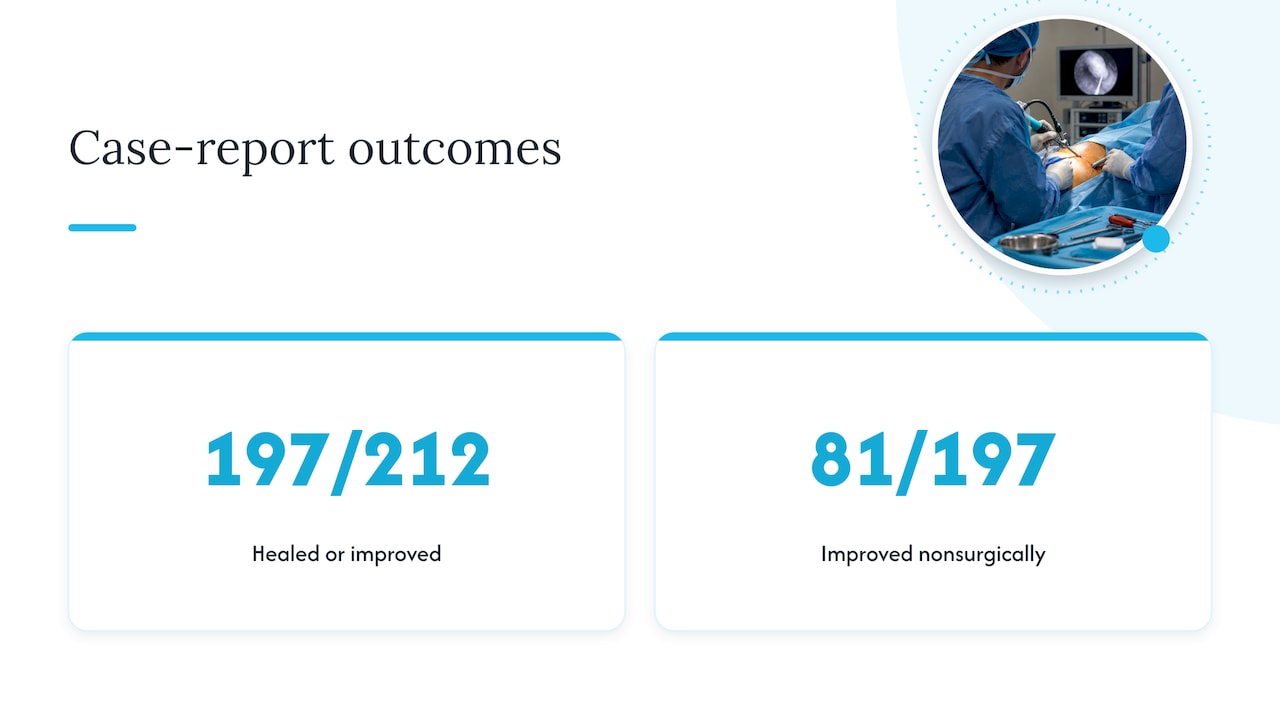
One 2025 comparison study of refractory cases found lower pain scores at 3 and 6 months with endoscopic release than with pulsed radiofrequency, but with more complications, so pulsed radiofrequency remains a safer first option. A systematic review of case reports found that 197 of 212 patients (92.9%) healed or improved after therapy, and 81 of those 197 improved with nonsurgical treatment alone. Case reports are a limited type of evidence, but they show that most people do improve.
A realistic timeline
Here is a general picture, not a promise. Your own course depends on how long the problem has been there, your work and training load, and whether something else, such as a spinal issue, is also involved.
| Stage | Typical focus | What to look for |
|---|---|---|
| Weeks 1 to 3 | Activity changes, stretching, hands-on soft tissue care | Less sitting pain and easier walking |
| Weeks 3 to 8 | Hip and glute strengthening, movement retraining | Return to normal training with fewer flare-ups |
| After about 3 months without progress | Physician review of injections or other options | A clear plan based on imaging and exam |
Perspective
We see piriformis pain as more than a tight muscle. The hip, pelvis and lower back work as one system, and when one area stops sharing the load, the piriformis often takes it all. That is why we begin with a hands-on exam instead of a generic stretching sheet.
Our approach is built on manual therapy. We use the Fascial Distortion Model, myotherapy and individualized rehab plans, and we often add tools such as dry needling or focused shockwave when a specific area calls for it. We focus on people whose problem has not improved with standard medical or physical therapy approaches, because those cases benefit from someone looking closely at the tissue and finding what keeps it irritated.
We also believe the plan has to fit your life. An athlete, a parent who is up and down all day and a desk worker need different things from the same diagnosis. Our goal is to restore function so you return to your routine, and to give you a short home program so the progress lasts.
Chris
When to get checked
Seeing someone early is sensible, and some signs make it important. Verywell Health advises contacting a healthcare provider for persistent, unexplained buttock pain that travels into the leg, or when it comes with fever, fatigue or unexplained weight loss. Get urgent medical care for new loss of bladder or bowel control, numbness in the groin or saddle area, or fast-worsening leg weakness. Those point to a problem that needs emergency evaluation, not stretching.
Pregnant patients should look at our guide to pregnancy sciatica relief before trying new stretches.
Get a hands-on assessment in Plano
If you have had buttock or leg pain for more than a couple of weeks, or home stretching has stalled, we can examine the area and build a plan around what we find. We offer chiropractic care, soft tissue therapy, dry needling, focused shockwave and the Fascial Distortion Model at our Plano, Texas center, and we accept both self-pay and insurance.

You can learn about our chiropractic and soft tissue care or read how muscle activation therapy helps when stretching alone has not been enough.
FAQ
How long does piriformis syndrome take to heal?
One source reports that most people feel complete relief within 1 to 3 weeks of starting an exercise program. Longer-standing or more complicated cases can take longer. Staying with the home routine afterward lowers the risk of the pain returning.
Is walking good for piriformis syndrome?
Gentle walking is generally fine if it does not provoke your symptoms. If walking, running or sitting sends pain down the leg, shorten the activity or change position, as the MSD Manual suggests. A provider can tell you what level is right for you.
What is the difference between piriformis syndrome and sciatica?
Sciatica describes pain along the sciatic nerve, and it has several possible sources, including the spine. Piriformis syndrome is one possible source, where the deep buttock muscle irritates the nerve. An exam of the hip, back and nerve responses helps tell them apart.
When is surgery considered?
Surgery is rarely needed. Published reviews describe considering it when conservative treatment has failed and symptoms significantly limit daily activities, with one report suggesting at least 3 months of conservative care first. A surgeon makes that decision after reviewing your exam and imaging.
Sources
- Piriformis Syndrome, MSD Manual Consumer Version
- Piriformis Syndrome Treatment & Management, Medscape
- Piriformis Syndrome: Exercises, MyHealth Alberta
- Physical Therapy and Exercise for Piriformis Syndrome, Spine-health
- From Piriformis Syndrome to Deep Gluteal Syndrome, Practical Neurology
- Behind the Pain: Understanding and Treating Piriformis Syndrome, PMC
- Surgical and Non-surgical Treatment Options for Piriformis Syndrome, PMC
- Piriformis Tenotomy and Sciatic Neurolysis via a Mini-open Approach, PMC
- Comparison of Pulsed Radiofrequency and Endoscopic Piriformis Release, MDPI
- Piriformis syndrome: a systematic review of case reports, PMC
- Pain in the Buttocks and When It Might Be Serious, Verywell Health