

Recover From Injury Faster With a Clinician Led 72 Hour Plan
Protect the injured tissue for the first 24 to 72 hours, get it properly assessed if pain or swelling is significant, then start moving it in pain-free ranges as soon as you reasonably can. Layer on 1.2 to 1.7 grams of protein per kilogram of body weight and seven to nine hours of sleep, and you’ve covered the four levers that actually move the timeline. Everything else is detail. See a clinician immediately for numbness, deformity, or dark urine.
TL;DR:
- Moving the joint above and below the injury during the first 72 hours helps preserve conditioning without risking further damage.
- The optimal recovery involves staged progressions: early painless range of motion, followed by controlled strengthening, then sport-specific drills within 6 to 12 weeks.
- Protein intake of 1.2 to 1.7 grams per kilogram daily, especially consuming casein before sleep, significantly supports tissue repair.
- Short ice and compression sessions within the first two days manage pain without compromising blood flow necessary for healing.
- For serious signs like deformity, inability to bear weight, or dark urine, immediate medical attention is essential, while moderate injuries can use telehealth or specialist referrals.
Table of Contents
- How Do You Recover from Injury Faster in the First 72 Hours?
- When Should You See a Doctor for an Injury?
- What’s the Right Rehab Progression for a Faster Recovery?
- What Should You Eat and How Much Should You Sleep to Heal Faster?
- Do PRP, Shockwave, and Dry Needling Actually Speed Healing?
- How Does The Tx Room Approach Injury Recovery?
- Why Mindset Matters as Much as the Protocol
- How The Tx Room Can Help You Recover Faster
- Sources
- FAQ
How Do You Recover from Injury Faster in the First 72 Hours?
The old advice was total rest. That’s outdated. Complete immobilization causes muscle atrophy and stiff joints faster than most people expect, and current sports medicine guidance favors relative rest, meaning you protect the injured area while keeping everything else moving. Cross-training the uninjured limb, or even just moving the joint above and below the injury, preserves conditioning while protecting damaged tissue.
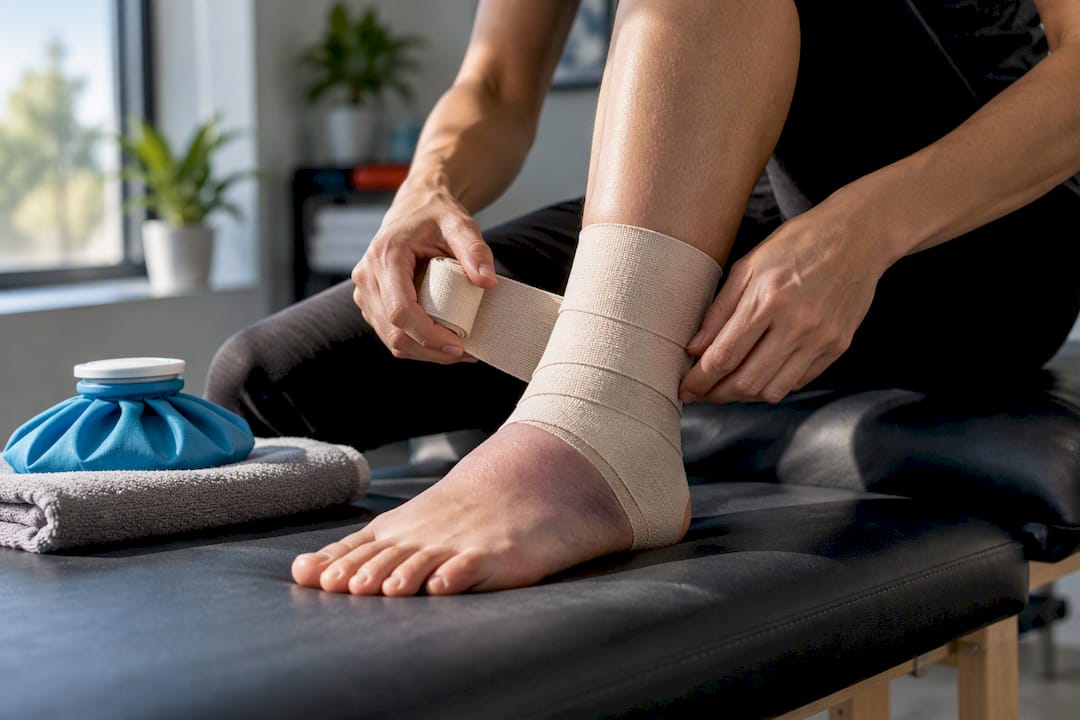
Ice, compression, and elevation still have a place, but the timing matters more than most people realize. Ice in 15 to 20 minute intervals during the first two days controls pain and swelling without shutting down blood flow for hours. Compression wraps help most when swelling is visible and you can still feel your fingers or toes underneath them.
NSAIDs are trickier than they look. They dull pain effectively, but inflammation is the body’s first step in tissue repair, not a malfunction to shut off, and heavy, repeated NSAID use in the first week may blunt that remodeling process. Use them sparingly, for short stretches, and lean on movement and ice first.
Watch for:
- Visible deformity or a joint that looks out of place
- Inability to bear any weight or use the limb at all
- Numbness, tingling, or a cold, pale extremity
- Rapidly worsening swelling paired with severe pain
When Should You See a Doctor for an Injury?
A clinician’s first move is almost always the same: a focused history, a hands-on exam checking range of motion and stability, then a decision about imaging. Not every sprain needs an X-ray or MRI. Most soft tissue injuries don’t.
Certain signs skip that whole process and send you straight to urgent care or the ER. Deformity, sudden loss of function, numbness, or signs of infection like spreading redness and fever all qualify. So does dark, cola-colored urine paired with severe muscle pain and swelling. Those are hallmark signs of rhabdomyolysis, a serious breakdown of muscle tissue that requires blood testing and immediate treatment.
For everything short of that, you have options:
- Telehealth for a same-day opinion on whether you need in-person care
- Urgent care for moderate sprains, strains, or suspected fractures
- Sports medicine referral for anything affecting an athlete’s return-to-play timeline
- Your regular chiropractor or physical therapist for musculoskeletal pain without red flags
What’s the Right Rehab Progression for a Faster Recovery?
Relative rest only works if you follow it with a real progression, and this is where most people either stall out or reinjure themselves. The goal is loading the tissue just enough to trigger adaptation without overwhelming it before it’s ready.
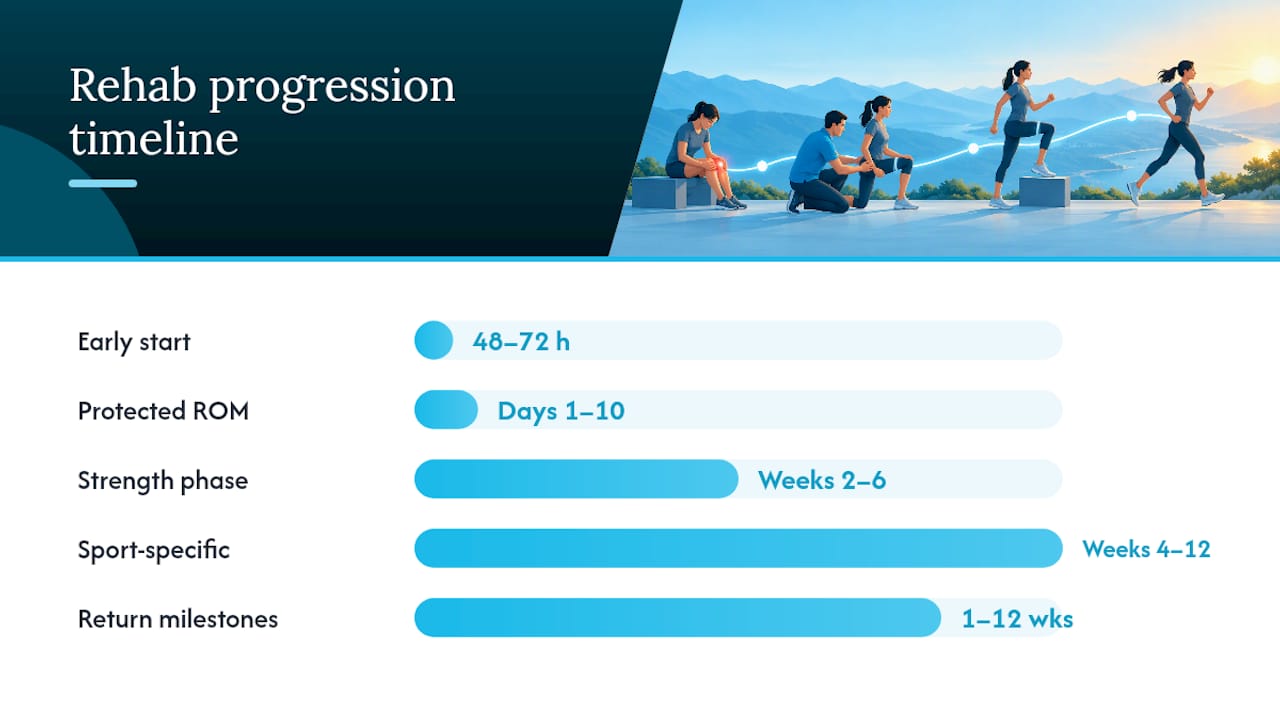
- Protected range of motion (days 1 to 10 for most soft tissue injuries). Gentle, pain-free movement through a limited arc. For an ankle sprain, that might mean alphabet tracing with your foot; for a strained hamstring, slow, unloaded leg swings.
- Strength and controlled loading (roughly weeks 2 to 6). Resistance bands, bodyweight exercises, and light eccentric work. Tendinopathies respond especially well to eccentric loading here, which is why calf raises and slow, controlled lowering movements show up so often in tendon rehab.
- Sport-specific and return-to-activity loading (weeks 4 to 12, depending on severity). Cutting drills, jumping, sprinting progressions, or sport-specific skill work, layered in gradually.
The rule that governs every stage: pain during an exercise should stay mild, and it shouldn’t linger or worsen the next day. Increase load by small increments, roughly 10% at a time, rather than jumping straight to full intensity because a joint “feels fine.”
Return-to-sport testing should be objective, not just a gut feeling. Hop tests, single-leg balance holds, and strength comparisons between the injured and uninjured side give you real data. A ligament sprain typically follows measurable milestones between one and 12 weeks, and an ankle sprain often benefits from starting rehab within the first 48 to 72 hours rather than waiting for pain to disappear entirely.
Pro Tip: Test your injured side against your uninjured side before declaring yourself “ready.” If your injured ankle can’t match 90% of the hop distance of the healthy one, you’re not ready for full sport, no matter how good it feels standing still.
What Should You Eat and How Much Should You Sleep to Heal Faster?
Protein does more heavy lifting in recovery than most people give it credit for. Research on injury rehab points to a target of 1.2 to 1.7 grams of protein per kilogram of body weight daily, spread evenly across meals rather than loaded into one dinner, to limit muscle loss during periods of reduced activity.
One specific tactic is underused: eating protein right before bed. About 40 grams of casein consumed 30 minutes before sleep measurably increases overnight muscle protein synthesis compared with going to bed on an empty stomach. A bowl of Greek yogurt or a casein shake before lights-out is a simple, evidence-backed habit.
Practical steps that support repair:
- Keep calories stable. Cutting calories while injured slows tissue repair and fights your protein intake.
- Replace sodium along with water if you’ve been sweating heavily or icing aggressively.
- Time a protein-rich snack around therapy or rehab sessions, not just meals.
- Keep a fixed bedtime and avoid caffeine within eight hours of sleep.
- Use short 20 to 30 minute naps if you’re behind on sleep. Longer naps tend to leave you groggy without adding recovery value.
Sleep isn’t a passive backdrop to healing. It’s an active phase where the tissue repair triggered by nutrition and rehab actually consolidates.
Do PRP, Shockwave, and Dry Needling Actually Speed Healing?
The evidence on platelet-rich plasma is more specific than most marketing suggests. A 2026 meta-analysis pooling 474 patients found PRP shortened return-to-sport time by a mean of about 7.5 days compared with standard rehab alone. That’s a real, measurable benefit, but the injuries studied varied widely, and 7.5 days isn’t life-changing for a minor strain that would heal in two weeks anyway.
Shockwave therapy and dry needling work through different mechanisms and tend to get used for different problems. Shockwave shows the most consistent results for chronic tendinopathies that haven’t responded to standard rehab. Dry needling targets trigger points and muscle tightness, often as an adjunct to manual therapy rather than a standalone fix.
Before starting any of these, ask the clinic three questions:
- What does the evidence say for my specific injury, not just injuries in general?
- What’s a realistic timeline for noticing a difference?
- What would we try first if this doesn’t work, and what does that cost?
If a provider like Nortex Tissue Regeneration is discussing PRP with you, those same three questions apply regardless of who’s offering the treatment.
How Does The Tx Room Approach Injury Recovery?
Hands-on treatment works best when it’s sequenced to match where the tissue actually is in its healing process, not applied the same way on day one and day thirty. Early on, gentle fascial work using the Fascial Distortion Model addresses the connective tissue restrictions that show up almost immediately after a strain or sprain. As the tissue stabilizes, treatment shifts toward loaded, eccentric-focused rehab, especially for tendinopathies like Achilles or patellar tendon pain.
Many patients notice a measurable difference within a few visits, though chronic or recurring issues take longer to fully resolve. A typical first plan includes:
- A movement and tissue assessment to locate the actual restriction, not just the painful spot
- A hands-on session targeting fascial and soft tissue restrictions
- A home progression matched to the rehab stage the patient is actually in
Pro Tip: If pain hasn’t shifted at all after three to four sessions, that’s the signal to escalate, whether that means imaging, a specialist referral, or a different modality entirely.
Why Mindset Matters as Much as the Protocol
Optimism isn’t fluff. Patients who expect to recover and follow their staged plan consistently tend to outpace those who either panic or get complacent. The two most common errors are rushing back before hitting real milestones and quietly under-eating protein because appetite drops after an injury. Neither one feels like a mistake in the moment. Trust the stages, feed the repair process, and give yourself permission to move again.
— Chris
How The Tx Room Can Help You Recover Faster
If you’ve read this far, you already know rehab isn’t guesswork, it’s sequencing. That’s exactly where a clinic built around hands-on, stage-matched treatment earns its place: Treatment plans are designed around where the tissue actually is in the healing process, rather than applying a generic protocol to every patient.
A first visit typically includes a movement assessment, hands-on treatment targeting restrictions, and discussion of a timeline based on the exam findings. Whether you’re dealing with a fresh ankle sprain, a stubborn case of plantar fasciitis, or tendon pain that hasn’t responded to rest, treatments like Fascial Distortion Model therapy, dry needling, and MyACT focused shockwave therapy get matched to your specific stage of recovery rather than applied as a one-size-fits-all fix. Visit The Tx Room to schedule an initial assessment and get a treatment plan built around your actual injury, not a generic timeline.
Sources
These sources back the specific claims made above, from PRP outcomes to sleep science. Effect sizes like the 7.5-day PRP benefit are averages; your own recovery may land above or below that depending on injury severity.
- Nutritional considerations and strategies to facilitate injury recovery and rehabilitation (2020)
- Pre-sleep casein protein ingestion review
- CDC: Rhabdomyolysis signs and symptoms
This article is general information, not a substitute for advice from a qualified doctor. Consult a qualified healthcare professional about your own circumstances before acting on anything here.
FAQ
Why Do Some People Recover from Injuries Faster Than Others?
Age, baseline fitness, sleep quality, and how quickly someone starts controlled movement all play a role. People who hit their protein target and start rehab early tend to close the gap on genetics and age.
What Injury Heals the Fastest?
Minor muscle strains and mild ligament sprains typically heal fastest, often within one to three weeks, because they involve less tissue damage and better blood supply than tendons or ligaments deeper in a joint. Tendon and ligament injuries generally take longer because those tissues have less blood flow.
How Can I Heal Injuries Faster Naturally, Without Medication?
Prioritize protein intake, sleep, and early controlled movement over rest and medication alone. Getting 1.2 to 1.7 grams of protein per kilogram daily and a consistent sleep schedule does more for natural healing than most supplements or gadgets.
What Body Part Heals the Fastest?
Skin and minor muscle tissue heal fastest among common injury sites, often showing significant improvement within days to a couple of weeks. Bone actually remodels efficiently too, but ligaments and tendons lag behind because of their limited blood supply.
Is It Better to Rest Completely or Keep Moving After an Injury?
Complete rest is rarely the better option for most soft tissue injuries. Relative rest, protecting the injury while moving everything else, preserves strength and circulation without risking further damage to the injured area.