
Runner’s Knee Treatment: What Actually Works to Fix It
Most cases of runner’s knee, the anterior knee pain doctors call patellofemoral pain syndrome (PFPS), improve with conservative care rather than surgery. That means activity modification paired with targeted physical therapy, not months on the couch.
Short-term measures help you get through the acute phase. Icing, over-the-counter NSAIDs, and taping calm symptoms down long enough to start moving again, but they don’t fix why your kneecap hurts in the first place. Only rehab does that.
- First-line treatment: activity modification plus a hip, knee, and core strengthening program
- Symptom control: ice, short-term NSAIDs, and taping bridge the gap so you can exercise
- Timeline: many people feel real improvement within 3 to 12 weeks of consistent rehab
- Surgery: rarely needed and only considered after prolonged conservative care fails
Clinical guidance from Yale Medicine splits treatment into two phases: an acute phase focused on calming pain, followed by a recovery phase built almost entirely around targeted physical therapy. Everything below follows that same sequence.
Key Takeaways
Runner’s knee responds best to hip, knee, and core strengthening combined with activity modification, and most people improve within weeks without ever needing surgery.
| Point | Details |
|---|---|
| Rehab is the fix | Hip, knee, and core strengthening resolves the underlying cause; ice and taping only manage symptoms. |
| Hip strength matters most | Programs combining hip work with knee exercises outperform knee-only training over a six-week period. |
| Watch your pain ceiling | Keep exercise and running pain at or below 3 out of 10, with nothing worse the next morning. |
| Progress runs on control, not calendars | Advance exercises and running mileage only once form and pain allow it, roughly 10% increases at a time. |
| Hands-on care can speed things up | The Tx Room pairs Fascial Distortion Model manual therapy with the same strengthening progressions used in standard rehab. |
Table of Contents
- What Is the Right Runner’s Knee Treatment in the First Two Weeks?
- Which Exercises Actually Fix Patellofemoral Pain?
- How Do You Safely Get Back to Running?
- When Should You See a Clinician Instead of Treating It Yourself?
- Do Braces, Orthotics, and Other Adjunct Treatments Actually Help?
- How Can You Prevent Runner’s Knee From Coming Back?
- What Does Hands-On Treatment for Runner’s Knee Look Like?
- Why Most Runner’s Knee Advice Gets the Order Wrong
- Get Hands-On Help for Runner’s Knee in Plano
- Sources
What Is the Right Runner’s Knee Treatment in the First Two Weeks?
The first two weeks are about protecting the joint without losing fitness. Activity modification is not the same as total rest. It means swapping high-impact loading for options that don’t aggravate your kneecap, like swimming, cycling on a low resistance setting, or using an elliptical, while you sort out what’s driving the pain.
Pain monitoring is the tool that tells you if you’re doing too much. Rate pain on a 0 to 10 scale during and after activity. A widely used rule of thumb from patient guidance at Kaiser Permanente is to keep discomfort at or below 3 out of 10 during exercise, and to back off if pain lingers or worsens the next day. That second part matters more than people think. A little soreness during a session is normal. Waking up worse than you went to bed is the sign you pushed past what the tissue could handle.
Here’s a simple sequence for the acute window:
- Modify, don’t stop. Replace running with low-impact cardio for 1 to 2 weeks, or until pain during daily activities drops noticeably.
- Ice after activity, not before. Apply ice for 15 to 20 minutes, three to four times a day in the first 48 to 72 hours, then as needed after exercise.
- Elevate and compress if swelling shows up. A simple knee sleeve or wrap plus elevating the leg above heart level for 15 to 20 minutes reduces fluid buildup.
- Consider short-term NSAIDs. Over-the-counter options like ibuprofen can reduce pain and inflammation for a few days, but they carry risks for people with stomach ulcers, kidney issues, or certain heart conditions. Check with a clinician or pharmacist if you’re unsure, or if you need them for more than a week.
- Use taping or a patellar strap as a bridge. McConnell taping or a simple infrapatellar strap can reduce pain enough to let you complete your exercises with better form, which is the whole point. It’s a tool to enable rehab, not a substitute for it.
Pro Tip: Set a phone reminder to check your pain level the morning after any activity. If it’s higher than it was the day before, that’s your cue to scale back before you try again, not push through.
Which Exercises Actually Fix Patellofemoral Pain?
The single biggest shift in how clinicians treat runner’s knee over the last decade is this: the hip matters as much as the knee. A 2025 study comparing hip-focused protocols to quadriceps-only programs found that combining hip, knee, and core strengthening produced greater pain and function improvements over six weeks than knee-isolated training alone, and hip-focused work brought faster pain relief for some patients. If your rehab plan is just leg extensions and quad sets, it’s missing half the picture.
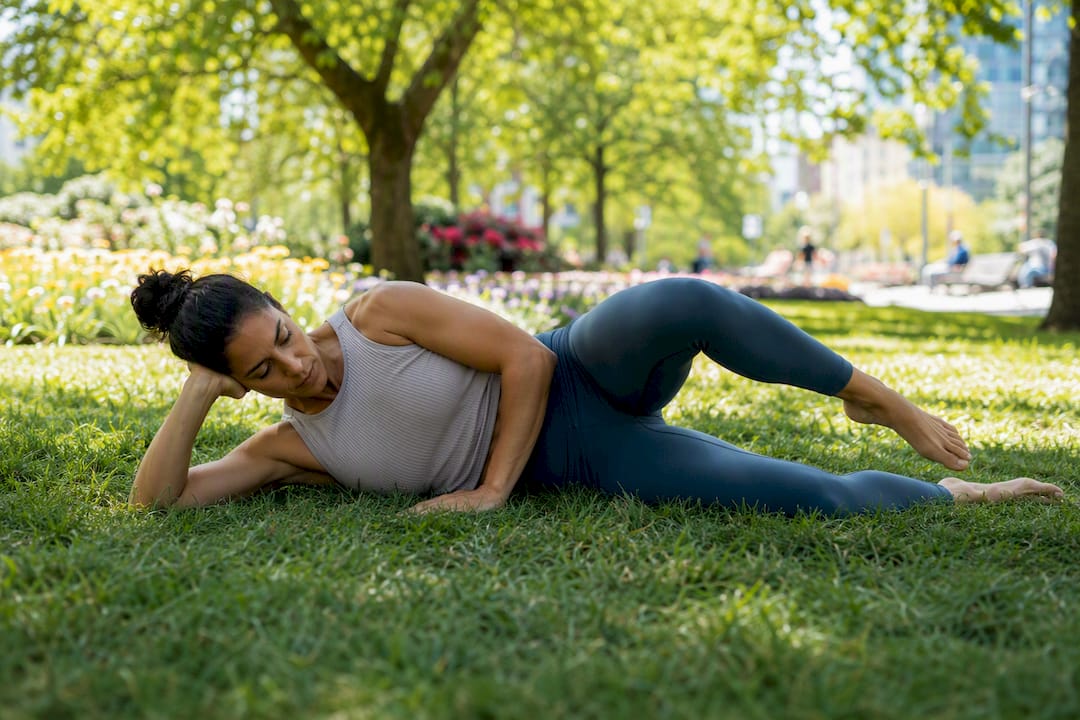
Weak hip abductors and external rotators let your thigh bone rotate inward when you run, which drags the kneecap out of its groove with every stride. Strengthening the glutes and deep hip rotators restores control at the top of the chain, and the knee stops absorbing the consequences.
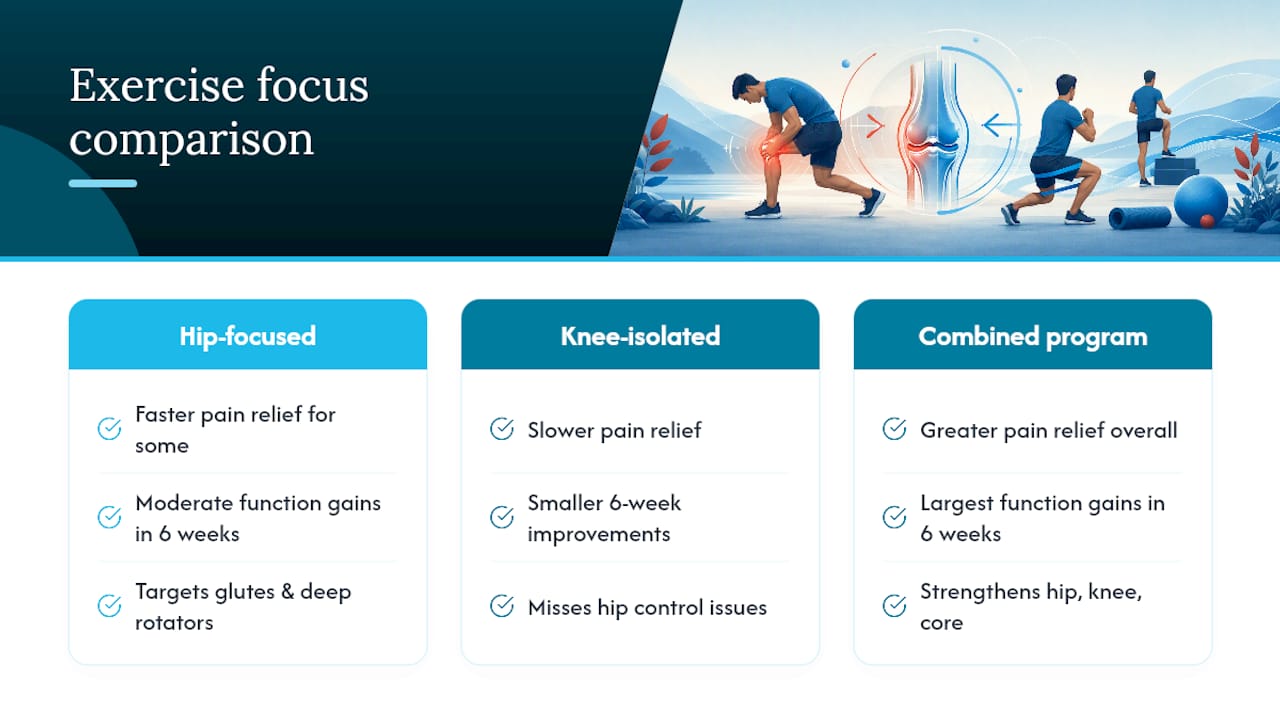
The core exercise list
These five movements show up across most evidence-based rehab protocols, including patient guides from Cleveland Clinic:
- Clamshells — Lying on your side with knees bent, lift the top knee while keeping feet together. 2 to 3 sets of 12 to 15 reps per side. This targets the gluteus medius directly.
- Glute bridges — Lie on your back, feet flat, and lift your hips until your body forms a straight line from shoulders to knees. 2 to 3 sets of 12 to 15 reps. Progress to single-leg bridges once double-leg feels easy and pain-free.
- Wall slides or wall squats — Back against a wall, slide down to a comfortable knee bend (start shallow, around 30 to 45 degrees) and hold for a few seconds before rising. 2 to 3 sets of 10 reps. Depth matters less than control.
- Straight-leg raises — Lying down with one knee bent for support, lift the other leg straight up to about 45 degrees. 2 to 3 sets of 10 to 15 reps. This builds quad strength without loading the kneecap through a painful range.
- Step-ups — Using a low step or curb, step up and down with control, focusing on keeping the knee tracking over the middle of the foot rather than caving inward. 2 to 3 sets of 8 to 10 reps per leg once early exercises feel solid.
Every one of these should stay under that same pain threshold, roughly 3 out of 10 during the movement, with nothing worse the following day. That guidance holds whether you’re doing rep one or rep fifteen.
Quality beats quantity, especially early on
Here’s something that surprises a lot of runners: doing the exercise correctly at low volume beats grinding through high reps with sloppy form. Research on movement quality in PFPS rehab points to glute activation and hip control as the priority in early-stage recovery, ahead of how many reps you can bang out. If your hip drops or your knee caves inward during a clamshell or a step-up, that’s the pattern that caused the problem, and repeating it under fatigue just reinforces it.
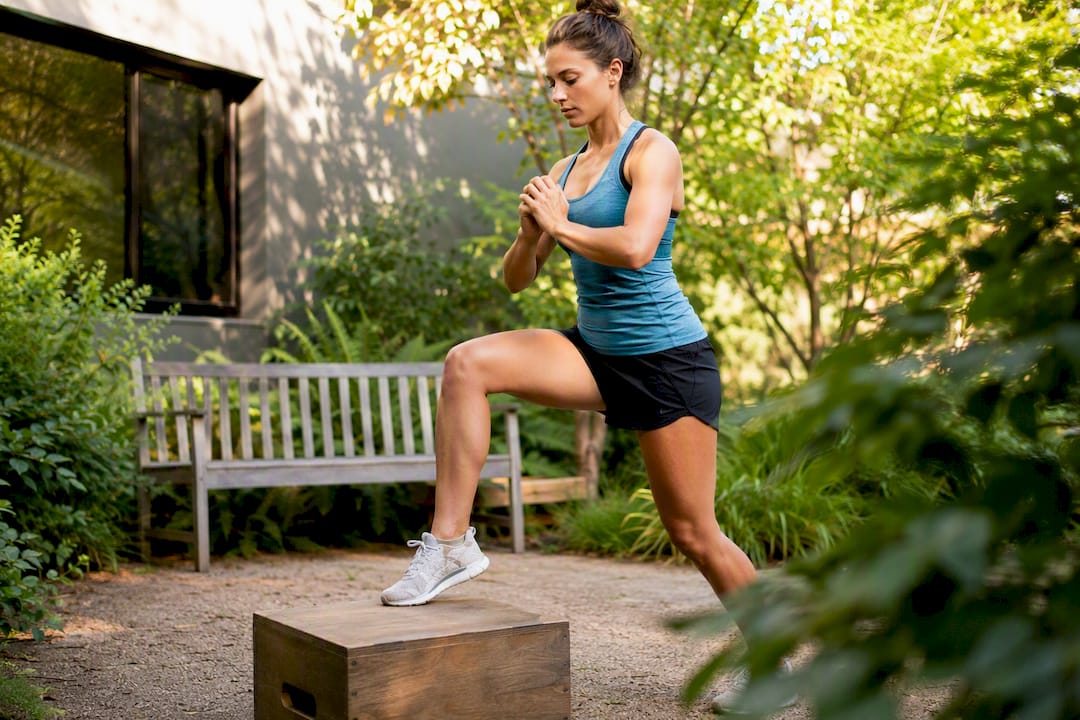
Slow the tempo down. A two-second lift, a one-second hold, a two-second lower teaches your nervous system the right pattern before you add speed or load. Cue yourself to feel the outer hip working during clamshells and bridges rather than the front of the thigh. If you can’t feel the target muscle firing, the exercise isn’t doing its job yet, no matter how many reps you complete.
Pro Tip: Film yourself from the front during step-ups on your phone. Most people can’t feel their knee drifting inward in real time, but you’ll see it instantly on video, and that feedback speeds up correction more than any verbal cue.
When and how to progress
Progression follows pain and control, not a calendar. Once you can complete a full set of an exercise with good form and pain at or below that 3 out of 10 mark, you’re ready to add difficulty. That usually looks like:
- Moving from double-leg to single-leg variations (single-leg bridges, single-leg wall sits)
- Adding resistance bands around the knees during clamshells and bridges
- Introducing lateral movements, like side steps with a band, to challenge hip stability in more directions
- Layering in balance work, such as single-leg stands on an unstable surface, once basic strength returns
For aerobic conditioning while your knee tolerance builds, cycling with a higher seat position, swimming (avoiding a heavy breaststroke kick if it aggravates symptoms), or using a rowing machine at moderate resistance all let you maintain fitness without the repetitive impact loading that running demands.
How Do You Safely Get Back to Running?
Returning to running is where most people either succeed quietly or reinjure themselves loudly. The principle behind a good return-to-run plan is graded exposure: you reintroduce load in small, trackable increments and let pain and function tell you whether to advance or hold steady, rather than following an arbitrary date on a training plan.
A conservative 6 to 12 week ladder gives you structure without locking you into a rigid schedule. Adjust the pace based on how your knee responds, not on how many weeks have passed.
- Weeks 1 to 2: Walk/jog intervals, such as 1 minute jogging to 2 minutes walking, repeated for 15 to 20 minutes total, on flat ground only.
- Weeks 3 to 4: Increase jogging intervals to 2 to 3 minutes with 1 to 2 minutes of walking, still flat terrain, capping total running time around 20 to 25 minutes.
- Weeks 5 to 6: Move to continuous easy running for 15 to 20 minutes, avoiding hills and speed work entirely.
- Weeks 7 to 9: Extend continuous runs gradually, no more than a 10% increase in weekly mileage, and introduce gentle rolling terrain if pain-free.
- Weeks 10 to 12: Reintroduce one hill session or one light interval session per week, keeping the rest of your mileage at easy, conversational pace.
A few non-negotiable rules keep this ladder from turning into a setback:
- Cap weekly mileage increases at roughly 10%, since sudden spikes in training load are one of the most consistent triggers for PFPS flare-ups.
- If pain climbs above your 3 out of 10 ceiling during a run, or you’re sore the next morning, drop back one stage and repeat it before advancing again.
- Skip hills and speed work until you can run your baseline distance pain-free for at least a week.
- Keep doing your hip and core strengthening work throughout the entire return-to-run process. Stopping the exercises once running resumes is one of the most common reasons runner’s knee comes back.
- Track objective markers beyond just pain: how stairs feel (especially going down), whether you can squat to a chair without discomfort, and how the knee feels the morning after a run.
If symptoms flare at any point, that’s not a failure. It’s information. Back off the running, lean harder into the strength work, and revisit whether your progression jumped too far too fast.
When Should You See a Clinician Instead of Treating It Yourself?
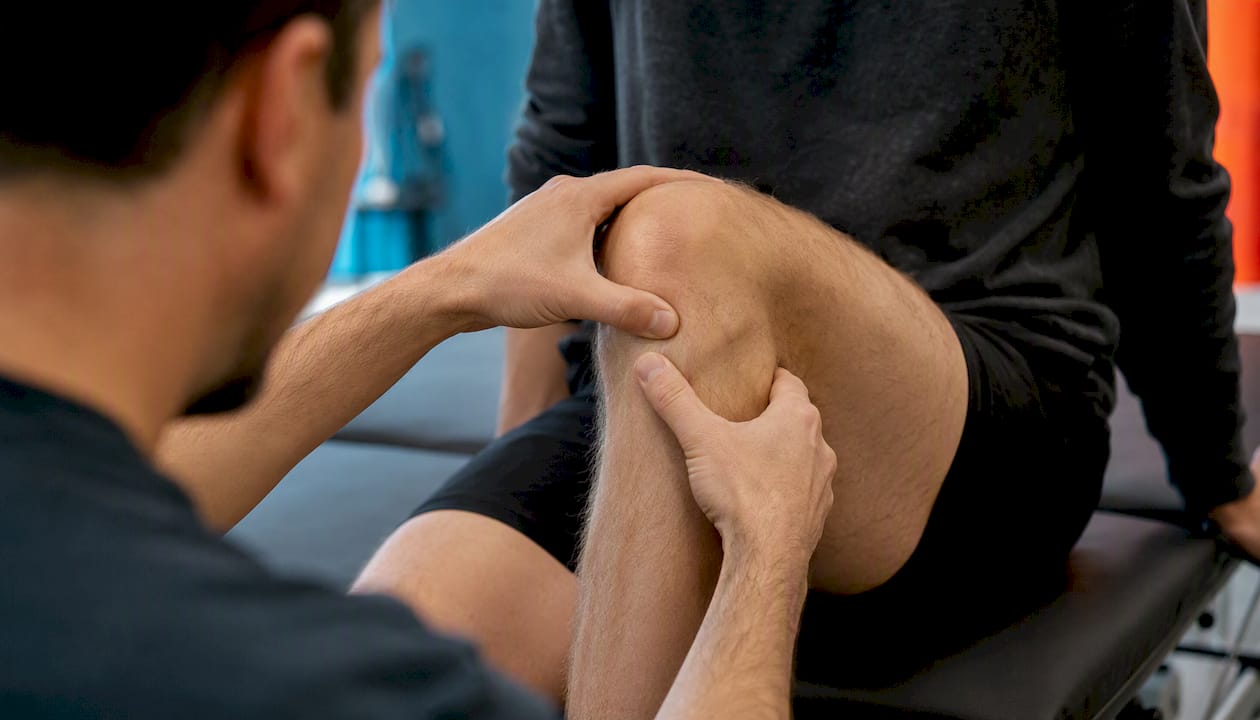
Runner’s knee has a distinct pattern: dull, aching pain around or behind the kneecap, worse with squatting, kneeling, climbing stairs, or sitting for long periods with the knee bent (the “movie theater sign”). But several other conditions mimic it, and treating the wrong one delays recovery.
Common mimics include patellar tendinopathy (pain concentrated at the bottom of the kneecap, worse with jumping), a meniscal tear (often accompanied by clicking, catching, or a specific twisting injury), IT band syndrome (pain on the outer side of the knee rather than the front), and early osteoarthritis in older runners (stiffness that’s worse in the morning and eases with movement).
Clinical overviews describe PFPS as a diagnosis of exclusion, meaning a clinician typically rules out these other causes through functional tests, gait assessment, and palpation before confirming the diagnosis. Imaging like X-rays or MRI usually isn’t necessary unless the exam suggests a structural issue such as a meniscal tear, cartilage damage, or a stress fracture.
Certain symptoms mean you should stop self-treating and get evaluated promptly:
- The knee locks, catches, or gives way unexpectedly
- Significant swelling that appears suddenly or doesn’t improve
- Fever alongside knee pain (a sign of possible infection)
- Pain that wakes you up at night or occurs independent of activity
- No improvement at all after 4 to 6 weeks of consistent, well-executed rehab
That last point matters. Most people see measurable progress within 3 to 12 weeks of proper exercise therapy. If you’re doing the work and seeing nothing, that’s a signal for a second look, not a reason to double down on the same plan.
Do Braces, Orthotics, and Other Adjunct Treatments Actually Help?
Runners spend a lot of money on gear that promises to fix knee pain, and the evidence on most of it is mixed at best. A 2019 review of conservative treatment options for common knee injuries in runners found variable support across manual therapy, taping, and orthoses, with exercise-based rehab standing out as the consistent, well-supported foundation.
Here’s how the common adjuncts actually stack up:
- Taping and patellar straps: Genuinely useful as a short-term analgesic bridge. They reduce pain enough to let you complete strengthening exercises with better form, but they don’t build strength themselves.
- Foot orthoses: May help a subset of patients, particularly those with excessive foot pronation, but they work best paired with an exercise program rather than as a standalone fix.
- Manual therapy and soft-tissue work: Useful adjuncts for improving joint and soft-tissue mobility, which can make exercise more tolerable and comfortable, though they don’t replace the strengthening itself.
- Electrophysical modalities: Ultrasound, TENS, laser therapy, and iontophoresis show inconsistent or insufficient evidence for meaningful symptom relief in reviews of PFPS treatments. Don’t build a treatment plan around these.
- Injections and surgery: A limited role. Surgery is reserved for persistent, well-defined mechanical problems, such as a torn meniscus or significant cartilage damage, after months of properly executed conservative care haven’t worked.
The pattern across nearly every review of runner’s knee treatment is the same: passive treatments can support the process, but active rehabilitation is what actually resolves the underlying problem. Braces and tape buy you comfort. Strength buys you a fix.
How Can You Prevent Runner’s Knee From Coming Back?
Preventing a repeat episode comes down to managing the same variables that caused it the first time: training load, strength, and mechanics.
- Manage weekly mileage increases. Keep increases around 10% per week and avoid sudden jumps in distance, speed, or hill volume, especially after a break from running.
- Keep a maintenance strength routine going year-round. Two sessions per week of hip and core work, the same clamshells, bridges, and step-ups from your rehab plan, is enough to maintain the gains once you’re pain-free.
- Check your footwear every 300 to 500 miles. Worn-out shoes lose shock absorption gradually, often before it’s obvious just by looking at them. If you have significant pronation or a leg-length difference, a podiatrist or sports medicine specialist can advise on orthotics.
- Pay attention to running mechanics. A cadence that’s too low (long, pounding strides) increases impact forces on the knee. Many runners find that a slightly quicker cadence with shorter steps reduces kneecap loading. A running coach or physical therapist can assess this more precisely with video analysis if you’re not sure where you stand.
None of this is complicated, but it does require consistency after symptoms resolve, which is exactly when most runners stop doing the exercises that got them better.
What Does Hands-On Treatment for Runner’s Knee Look Like?
Some runners recover fully with a home exercise program. Others get there faster with hands-on treatment layered in alongside it. At The Tx Room in Plano, Texas, treatment uses the Fascial Distortion Model, a manual therapy approach that targets restrictions in the fascia and soft tissue surrounding the knee and hip.
The idea is straightforward: manual work addresses tissue restriction that can limit mobility and slow progress, while the same hip, knee, and core exercises covered above remain the backbone of recovery. One doesn’t replace the other.
- Initial visits typically focus on assessment and hands-on treatment to reduce restriction and improve movement
- Follow-up visits combine manual therapy with guided progression through strengthening exercises
- Most patients need a handful of visits over several weeks to see meaningful change, alongside home exercise between sessions
Pro Tip: If you’ve been doing the right exercises for a few weeks with only partial relief, hands-on manual therapy can help resolve mobility restrictions that exercise alone doesn’t reach. Readers dealing with persistent knee pain can find more detail on what a visit involves and what to expect from a treatment plan.
Why Most Runner’s Knee Advice Gets the Order Wrong
The biggest mistake I see in how runner’s knee gets discussed online is the obsession with gadgets before the basics. Braces, tape, fancy orthotics, expensive gait analysis. All of it gets marketed as the answer before anyone mentions that hip strength is doing most of the heavy lifting in the research.
Conventional advice also tends to treat “rest” as binary: run or don’t run. That’s lazy and it costs people fitness they didn’t need to lose. Activity modification, swimming, cycling, rowing, protects your engine while your knee catches up.
If I had to boil this down to one priority, it’s this: do the hip and core work before you worry about anything else, and do it correctly rather than a lot. Volume without control just teaches your body the same bad pattern faster. Tape, straps, and manual therapy have a real place, but only as a bridge to that strength work, never as a replacement for it.
— Chris
Get Hands-On Help for Runner’s Knee in Plano
If you’ve been grinding through home exercises with only partial results, or you’d rather have a professional assess what’s actually driving your knee pain, that’s exactly the gap The Tx Room fills. Rather than a generic printout of exercises, treatment combines Fascial Distortion Model manual therapy with the same hip, knee, and core progressions covered in this guide, adjusted to what your body actually needs.
The Tx Room in Plano works with active adults and athletes dealing with anterior knee pain, IT band irritation, and related overuse injuries, using hands-on assessment to find restrictions that home stretching and generic programs often miss. If persistent knee pain has you sidelined or second-guessing your return-to-run plan, explore knee pain treatment options at The Tx Room and schedule a visit to get a plan built around your specific knee, not a template.
Sources
- PubMed listing: study on hip-focused vs quadriceps-only protocols (2025)
- Evidence based treatment options for common knee injuries in runners (PMC)
- Exercises for patellofemoral pain syndrome | Cleveland Clinic Health Essentials
- Runner’s knee: why it happens and what actually helps | Yale Medicine