
Flat Feet Pain Relief: Exercises and Support That Work
Start a short program of targeted foot exercises plus supportive insoles and a few activity changes, and most flat-foot pain starts easing within weeks. That combination, not rest alone, is what clinical research keeps pointing to as the fastest route to relief.
Do this today:
- Cut back on high-impact activity (running, jumping, long standing shifts) for a few days.
- Ice a sore arch or heel for 15 minutes after activity, and use an OTC anti-inflammatory if your doctor says it’s fine for you.
- Slip a basic arch-support insole into your regular shoes.
- Start calf stretches and simple arch-lift drills tonight.
A network meta-analysis of adult flatfoot treatments found that combining exercise with foot orthoses reduced pain more than either one used alone.
Key Takeaways
Consistent, correctly performed exercise paired with supportive insoles relieves flat-foot pain faster and more reliably than either approach used alone.
| Point | Details |
|---|---|
| Start active, not passive | Begin calf stretches and arch-strengthening exercises within the first week rather than relying on insoles alone. |
| Combine exercise with orthoses | Research shows the combined approach outperforms either exercise or orthoses used in isolation. |
| Expect symptom relief, not a cured arch | Pain and function improve over weeks to months, but navicular drop typically stays unchanged. |
| Know your red flags | Numbness, weakness, worsening pain, or visible deformity mean it’s time to see a clinician. |
| Get hands-on help when pain persists | Thetxroom assesses the full kinetic chain and pairs manual therapy with exercise and orthotic guidance. |
Table of Contents
- What Actually Relieves Flat Feet Pain Right Now?
- What Exercises Actually Fix Flat Feet Pain?
- Should You Use OTC Insoles or Custom Orthotics?
- How Do Doctors Diagnose and Evaluate Flat Feet?
- How Long Until Flat Feet Pain Actually Improves?
- When Does Flat Feet Pain Require Surgery?
- What Does the Research Actually Show About Treatment?
- What Do Clinicians See When They Treat Flat Feet Long-Term?
- Ready to Get Your Flat Feet Pain Properly Assessed?
- Where to Read More on Flat Feet Treatment
- Frequently Asked Questions
- Sources
What Actually Relieves Flat Feet Pain Right Now?
The first goal is calming the irritated tissue, not fixing your arch overnight. That takes a mix of rest, cold, and smart support.
Swap high-impact workouts for swimming, cycling, or an elliptical for a week or two. Your feet still move, but without the pounding that’s aggravating them. Ice for 15 minutes after activity, and if your doctor has cleared you for it, an NSAID like ibuprofen or naproxen can knock down inflammation faster than acetaminophen alone, though acetaminophen works fine for pain without the stomach considerations. Never exceed the label’s dosing window, and check with a physician first if you have kidney issues, ulcers, or take blood thinners.
For quick support:
- Drop a basic OTC arch insert into your everyday shoes.
- Re-lace sneakers so the midfoot locks down snugly instead of loosely.
- Try a heel lift if your Achilles feels tight along with your arch.
If pain spikes suddenly, spreads up your leg, or comes with numbness, tingling, or a foot that looks visibly different than usual, skip the home remedies and get evaluated.
What Exercises Actually Fix Flat Feet Pain?
Passive supports like insoles hold your arch up. Exercise trains your foot to hold itself up. That’s the real distinction, and it’s why active work outperforms passive support alone in the research on adult flatfoot pain: strengthening the intrinsic foot muscles and the posterior tibial tendon reduces how much your arch collapses under load, which is where a lot of the pain originates.
Here’s a routine to run four to five days a week for four to eight weeks, adding reps as things get easier:
- Calf stretch: Lean into a wall, back leg straight, heel down, 30 seconds per side, twice.
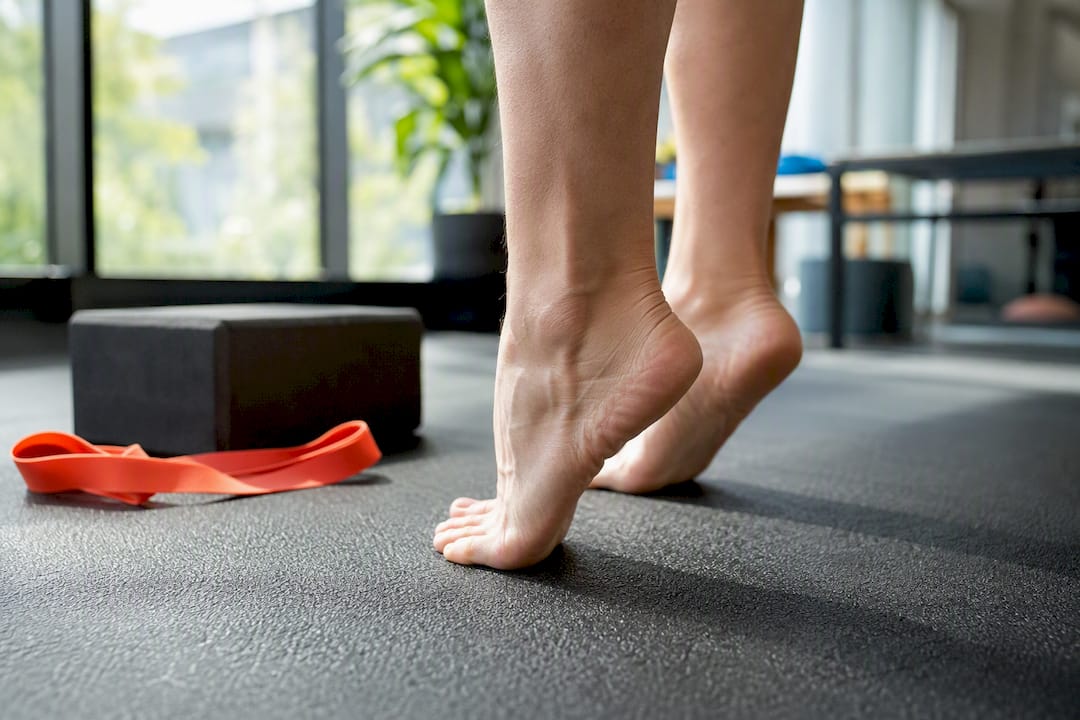
- Heel raises: Rise onto your toes slowly, hold two seconds, lower with control. Start with 2 sets of 10.
- Toe yoga / arch lifts: Sit with your foot flat, lift just the arch without curling your toes. Ten reps, both feet.
- Towel scrunches or marble pickups: Use your toes to drag a towel or pick up marbles. Two minutes per foot.
- Single-leg balance with arch lift: Balance on one foot for 20 to 30 seconds while actively lifting your arch, not letting your ankle roll inward.
The most common mistake is curling the toes instead of isolating the arch during step three. If your toes are doing the work, your intrinsic muscles aren’t. The second mistake is skipping the calf stretch. A tight Achilles pulls your heel and worsens arch collapse no matter how strong your foot muscles get.
Pro Tip: Attach these to something you already do, like brushing your teeth for heel raises or waiting for coffee to brew for toe yoga. Track weekly progress with a simple pain rating (0 to 10) before and after activity so you can see the trend instead of guessing. Practitioners who focus on dynamic drills like toe yoga and arch-lifting over static stretches alone tend to see faster functional gains.
Should You Use OTC Insoles or Custom Orthotics?
Both can help. They just help differently, and knowing the difference saves you money.
OTC insoles run $20 to $60, sit in stores or online, and work well for mild to moderate symptoms. Custom orthotics, molded to your foot by a podiatrist or orthotist, cost more and take a fitting appointment, but they distribute pressure more precisely for severe pronation, structural asymmetry, or cases where OTC options haven’t helped after a few weeks.
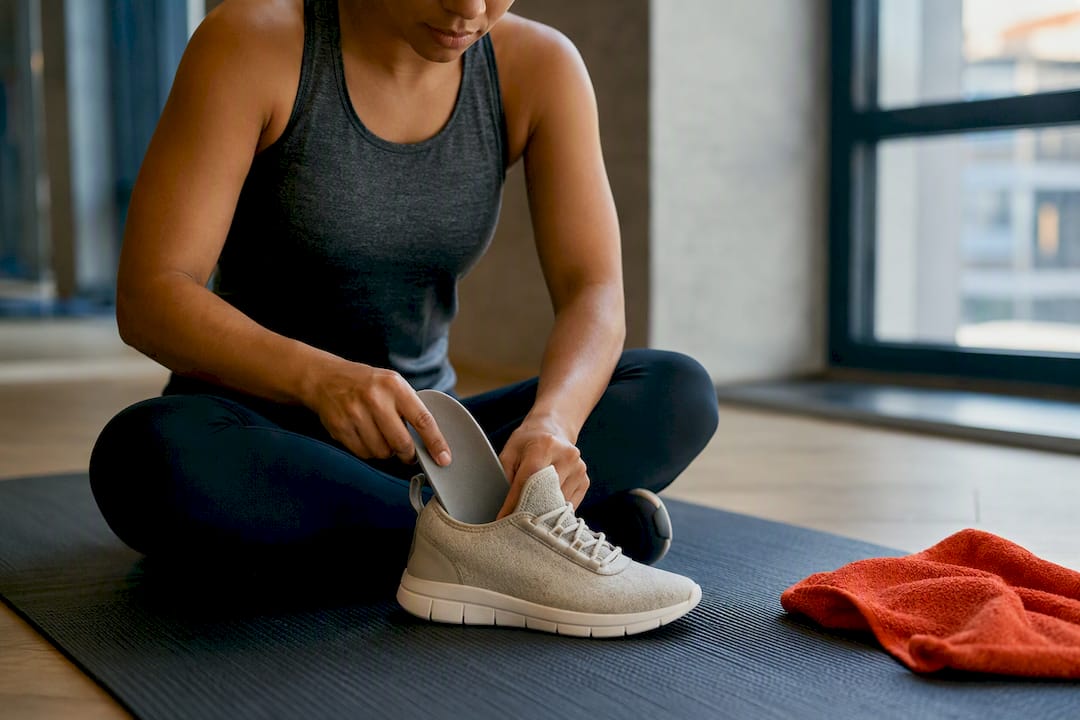
Neither one reshapes your arch permanently. What they do is redistribute load and reduce strain while your foot is under stress, which is exactly what the Cleveland Clinic’s overview of flat feet describes as the realistic goal of supportive devices.
When shopping, look for:
- Firm arch contouring, not a soft, squishy insert that flattens under weight.
- A snug heel cup that keeps your heel from sliding side to side.
- Enough depth in the shoe to fit the insole without crowding your toes.
- A trial period or return policy, since fit varies by foot shape.
If OTC inserts haven’t eased your pain after four to six weeks of consistent use, that’s the point to ask a clinician about a custom device or bracing.
How Do Doctors Diagnose and Evaluate Flat Feet?
A clinician usually starts with your history, then watches you stand and walk to see how much your arch flattens under load. They’ll often check navicular drop, which measures how much that midfoot bone descends between sitting and standing, and may order X-rays or imaging if something looks structurally off.
See a provider if you notice:
- Pain that’s getting worse instead of better after a few weeks of self-care.
- Numbness, tingling, or weakness in the foot.
- A visible or progressive change in foot shape.
- Fever or swelling that suggests something beyond simple overuse.
For kids with flexible flatfoot, guidelines generally recommend a structured trial of conservative care lasting around six months before surgery even enters the conversation.
How Long Until Flat Feet Pain Actually Improves?
Most people notice real change within four to eight weeks of consistent exercise and supportive footwear, though full functional gains can take a few months. The goal is pain reduction and better function, not a rebuilt arch.
- Keep weight in a healthy range, since extra load directly increases strain on an already flattened arch.
- Rotate supportive shoes and replace worn-out pairs before the cushioning collapses.
- Keep progressing your exercise routine rather than stopping once pain fades.
- Pair active strengthening with orthotic support rather than picking one or the other.
Around 20% to 30% of adults have flat feet, and for many the associated risks include plantar fasciitis, shin splints, and bunions if the underlying mechanics go unaddressed long term.
When Does Flat Feet Pain Require Surgery?
Surgery is a last resort, reserved for severe, progressive deformity or pain that hasn’t responded to a genuine trial of conservative care. Procedures may involve tendon repair, bone realignment, or fusion, depending on what’s driving the collapse.
- Most symptomatic flat feet respond to exercise, orthoses, and activity changes.
- Surgical referral typically follows months of consistent, correctly performed conservative treatment.
- Recovery from surgical correction runs longer than conservative care and involves a structured rehab phase.
What Does the Research Actually Show About Treatment?
The clearest finding across pooled clinical studies is that active interventions like exercise reduce pain more than passive ones like orthoses used alone, and combining both produces the strongest results.
- Exercise alone outperforms orthoses alone for pain reduction.
- Combined exercise and orthoses gave the best outcomes across the reviewed trials.
- Neither approach reliably changed navicular drop, meaning the structural flattening often stays the same even as pain drops.
The takeaway is straightforward: consistent, correctly performed exercise deserves priority, with orthoses layered on for symptomatic support rather than treated as the whole plan.
What Do Clinicians See When They Treat Flat Feet Long-Term?
Foot pain rarely stays isolated to the foot. Hip and knee mechanics often compensate for a collapsing arch, which is why an interprofessional view of pes planus management looks at the whole kinetic chain rather than just the arch itself.
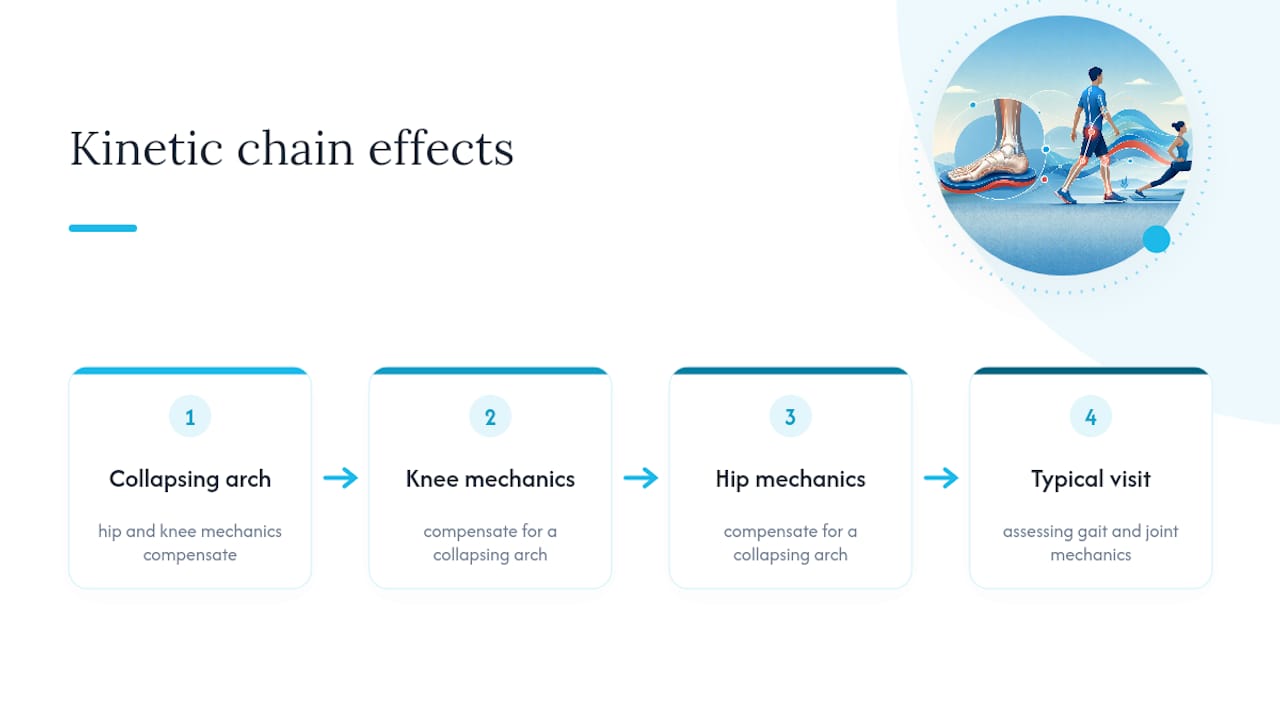
A typical visit involves assessing gait and joint mechanics, hands-on soft-tissue work through methods like the Fascial Distortion Model, a home exercise prescription guided by the Mobility Restoration Checklist for Athletes, and an orthotic recommendation when the case calls for one. The aim is pain relief and getting back to normal activity, not a single quick fix.
Ready to Get Your Flat Feet Pain Properly Assessed?
Exercises and insoles solve a lot of flat-foot pain on their own, but when pain keeps returning or seems tied to your knees or hips too, a hands-on evaluation gets to the mechanics that a generic stretching routine can’t reach. Thetxroom in Plano assesses how your foot, ankle, knee, and hip are working together, then applies manual therapy, such as the Fascial Distortion Model, alongside a tailored exercise plan and orthotic guidance where it’s warranted.
A first visit typically includes a movement assessment, hands-on treatment for the tissues driving your symptoms, and a home program you start right away, not weeks later. For soft-tissue work specifically aimed at pain relief and normalizing tissue function, myofascial acoustic compression therapy is one of the manual approaches used in clinic. If limited motion in your ankle or hip is part of the picture, the clinic’s approach to restoring range of motion addresses that directly. Call Thetxroom to schedule an evaluation and find out what’s actually driving your flat-foot pain.
Where to Read More on Flat Feet Treatment
- Mayo Clinic’s guide to flatfeet diagnosis and treatment covers the standard conservative-first approach.
- The PMC review of exercise and orthoses for adult flatfoot is the clinical basis for prioritizing active treatment.
- Cleveland Clinic’s overview of pes planus explains symptoms and when treatment is actually needed.
Frequently Asked Questions
Can flat feet cause pain elsewhere in the body, not just the foot?
Yes. Flat feet change how your leg absorbs impact, which can contribute to shin splints, knee strain, and even lower back pain as the body compensates further up the chain.
What’s the fastest flat feet pain relief method for a bad flare-up?
Ice, a short break from high-impact activity, and a properly fitted arch insert calm things down within days. Exercise then rebuilds the support that prevents the next flare.
Are custom orthotics worth the extra cost over OTC insoles?
Only if OTC insoles haven’t helped after four to six weeks, or your case involves significant structural asymmetry. Many people do fine with a good OTC option.
Do flat feet exercises actually change the shape of your arch?
Not usually. Clinical studies show exercise reduces pain and improves function, but the physical arch height and navicular drop tend to stay the same.
How often should someone with flexible flatfoot do arch exercises?
Four to five days a week for four to eight weeks is a reasonable starting frequency, with gradual progression in reps and difficulty after that.
This article is general information, not a substitute for advice from a qualified doctor. Consult a qualified healthcare professional about your own circumstances before acting on anything here.
Sources
- The impact of foot orthoses and exercises on pain and navicular drop for adult flatfoot (PMC)
- Network meta-analysis on exercise and orthoses for adult flatfoot (PubMed)
- Flatfeet — diagnosis & treatment (Mayo Clinic)